Event 1
El Sauzal massacre
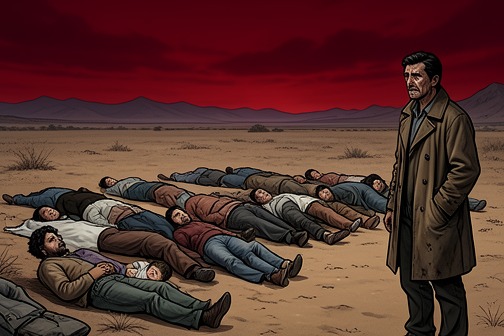
The [El Sauzal massacre](entity:event-recall-event-el-sauzal-massacre-63dcdfd918a6) is the [1997](entity:time-recall-time-1997-ea4cc00b4673) killing of nineteen people in Baja California, [Mexico](entity:location-recall-location-f1c6a91e03ea), an event that forces [Art Keller](entity:character-recall-character-art-keller-31aa2337649c) to face the consequences of his own actions. The victims included ten men, three women, and six children; the scene is not merely another casualty in Keller’s long conflict with [Adán Barrera](entity:character-recall-character-ad-n-barrera-0383f92d92cf), but a family’s destruction connected to Keller’s attempt to manipulate suspicion.
## Background and Setting
The massacre is introduced at [El Sauzal](entity:location-recall-location-el-sauzal-977a3b175da6) in Baja California in 1997. Keller reads the victims’ arrangement as evidence that a mother had tried to protect her child. That image makes the number and composition of the dead—nineteen people, among them three women and six children—impossible for him to treat as an ordinary tally of the drug war.
The killing is tied to the belief that someone in the family had informed. Keller understands why the perpetrators suspected an informer: he had led them to believe that the family was connected to one. The massacre therefore carries a specific consequence of his deception. Although his plan had worked in the sense that suspicion had been redirected, the scale of what followed was beyond what he says he had imagined, and he accepts responsibility for bringing the danger to these people.
## The Prologue’s Moral Frame
The scene closes not with an investigation or an answer, but with Keller making the sign of the cross over the mother and child and whispering a prayer. A Mexican officer murmurs, “[The power of the dog](entity:expression-recall-expression-the-power-of-the-d-5b27ae3f6339).” The brief exchange places religious ritual beside the language of violence: Keller’s prayer acknowledges a human cost he cannot undo, while the officer’s phrase gives the massacre a bleak, emblematic force at the novel’s opening.
## Family Loss and the Work of Remembrance
The novel places the 1997 killings within a wider chronology in which families are repeatedly caught in cartel violence, without presenting the earlier deaths as a direct cause of the El Sauzal massacre. In [1994](entity:time-recall-time-1994-2c6f52c72808), Adán Barrera spent a day visiting nine graves and arranging small shrines and meals for nine relatives killed by [Güero Méndez](entity:character-recall-character-g-ero-m-ndez-9416e102d10e)’s men. The victims were two uncles, an aunt, and six cousins; the killings had followed a campaign in which men wearing federal uniforms took relatives from homes or streets in [Mexico City](entity:location-recall-location-mexico-city-78f19f654410) and [Guadalajara](entity:location-recall-location-guadalajara-1fbbdc6cee32). The episode establishes that the destruction of a family is not confined to the prologue’s victims, but recurs across the novel’s account of the drug war.
The [Day of the Dead](entity:time-recall-time-day-of-the-dead-6b1dfe2fd16d) scenes give that loss a form of continuing remembrance. At the Jardines del Valle cemetery in [Culiacán, Sinaloa](entity:location-recall-location-be79c09c9df1), Güero visits the tombs of his wife and children, bringing toys and sweets for them and flowers and foods associated with his wife. He lays out offerings, water, candles, and a meal, then sits with the tombs and recalls family picnics, swims, and games. The contrast is not a resolution of violence: the living preserve intimate memories through ritual even as the larger conflict keeps producing bereavement. Read against those scenes, the El Sauzal massacre’s opening image of a mother and child makes the cost of the war legible not as a statistic alone, but as the rupture of ordinary family bonds.
## The Violence Behind the Network
The massacre’s immediate logic is personal suspicion, but the novel’s wider account shows how violence and trafficking operate within a system built to survive disruption. Art Keller reflects that [Operation Condor](entity:event-recall-event-operation-condor-b497472664f4), intended to suppress Sinaloan trafficking, instead dispersed it across Mexico. The [Federación](entity:organization-recall-organization-federaci-n-3cfed113330e) then profited from its position along the two-thousand-mile [United States](entity:location-recall-location-united-states-2f533bc8d0b9) border, shifting from drug cultivation to transportation: Colombian cartels paid $1,000 for each kilogram delivered safely to them inside the United States. This account does not identify the massacre’s perpetrators or make the trafficking arrangement its direct cause; it places Keller’s failure to foresee the family’s fate within a broader conflict whose consequences repeatedly outrun any single plan.
Adán Barrera’s organization likewise illustrates that resilience. He replaced the vulnerable pyramid structure with two tiers: the Barrera brothers above independent operators, who paid a 12 percent fee for moving product through their territory. Within two years of the Peso Crisis windfall, Adán had acquired twenty-three Boeing 727s to move cocaine from [Cali](entity:location-recall-location-cali-2672b6865915) to Mexican landing sites; the shipments then traveled toward the border in vehicles rebuilt with concealed compartments. The contrast between these elaborate, expanding networks and the family destroyed at El Sauzal sharpens the prologue’s moral emphasis: systems can adapt and profit, while their human costs are borne by people who have no control over them.
Event 2
Operation Condor
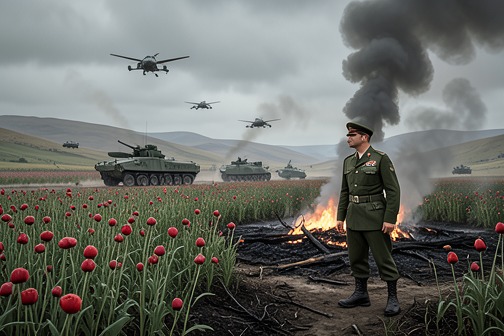
[Operation Condor](entity:event-recall-event-operation-condor-b497472664f4) is a Mexican-led military and aerial campaign against opium cultivation in the Sinaloan mountains. It brings together thousands of Mexican troops, federal police, and American-backed aircraft in an effort to destroy the source of Mexican heroin. Its decisive significance lies in the reversal that follows: the campaign disperses the Sinaloan trafficking network rather than ending it, helping push its members toward cross-border transportation and giving [Tío](entity:character-recall-character-t-o-00e2ebb81c20) the opportunity to build a larger organization. For [Art Keller](entity:character-recall-character-art-keller-31aa2337649c), who helps direct the operation, that reversal eventually means recognizing that his success against one drug network helped another take shape.
## Campaign and Setting
The operation advances through a valley near [Badiraguato](entity:location-recall-location-badiraguato-c5530b7e426b), where the crop being targeted is opium poppy rather than rice. The surrounding Sierra Occidental offers the altitude, rainfall, and soil conditions needed to grow the poppy. Its opium can be converted into Mexican Mud, a cheap and potent heroin reaching American cities. The campaign’s stated objective is to destroy this source by poisoning poppy fields, burning what remains, and scattering the growers, known as gomeros.
The ground operation is extensive: ten thousand [Mexican Army](entity:organization-recall-organization-86a9a46dbc81) troops push through the valley alongside units of the [Municipal Judicial Federal Police](entity:organization-recall-organization-municipal-judici-7af8e151cea2), commonly called the federales, and a small group of [Drug Enforcement Administration](entity:organization-recall-organization-drug-enforcement-85b22b2a9f98) advisers that includes Art. Most soldiers travel on foot; others ride horses, moving through the terrain as if driving cattle. The scale makes Operation Condor a military sweep as well as an eradication effort, extending the American [War on Drugs](entity:expression-recall-expression-war-on-drugs-a87c72b6c1eb) into [Mexico](entity:location-recall-location-f1c6a91e03ea) under Mexican official command.
The aircraft make the operation’s joint character more complicated. They are officially Mexican, and the campaign is presented as a joint operation of the Ninth Army Corps and [Sinaloa, Mexico](entity:location-recall-location-5037f2a49f9f). Yet the planes were paid for by the Drug Enforcement Administration and flown by its contract pilots, many of whom had previously worked for the [Central Intelligence Agency](entity:organization-recall-organization-central-intellig-55def823fc61) in Southeast Asia. The arrangement recalls an earlier history of American aviation in the region: some of these pilots had once flown heroin for Thai warlords and now flew missions spraying Mexican poppy fields.
## Aircraft, Chemicals, and Art Keller’s Role
Fixed-wing aircraft carry out the spraying while helicopters circle above them, helping protect the planes from occasional gunfire by growers who continue to resist. Art understands that even a brief, accurate burst from an AK-47 could bring down a helicopter. The aircraft have not been hit, but their exposure to fire makes clear that eradication is not a distant administrative procedure; it is conducted in contested terrain under armed protection.
The proposed use of Agent Orange meets Mexican resistance. The aircraft instead spray 24-D, a different compound that Mexican officials find more acceptable in part because growers already use it to kill weeds around their poppy fields. That detail links the eradication effort to the agricultural practices it is intended to defeat: a chemical familiar from cultivation becomes part of the campaign against it.
Art’s importance is not limited to advising the operation. He has a remarkably detailed understanding of the province’s poppy fields, processing sites, and laboratories, and he can direct forces toward their targets with something close to a personal map. Even as the broader sweep succeeds, however, the Drug Enforcement Administration remains focused on capturing [Don Pedro Áviles](entity:character-recall-character-11e00cd97fc4). The campaign’s measurable destruction of fields does not displace the agency’s pursuit of the trafficker it considers its central prize.
The name gives the campaign an image that complicates its official purpose. Art reflects that no condor has been seen in Mexican skies for decades and learns that the bird is more scavenger than hunter, often feeding on an animal killed by something else. The name is meant to make an operation feel real, but its association with scavenging also shadows a campaign conducted amid death and destruction. Its airborne machinery and the book’s image of death from the sky give the eradication effort an echo of [Vietnam](entity:location-recall-location-11e77564f811), a memory Art recognizes in the sound of helicopter rotors and would rather leave buried.
## Immediate Results and Hidden Advantage
From the authorities’ perspective, Operation Condor succeeds. Sinaloan fields are burned, the ground is poisoned, the gomeros are scattered, and Don Pedro Áviles is killed. American officials believe they have destroyed the source of the problem and can turn their attention elsewhere. The appearance of victory encourages complacency: they assume Mexico’s drug trade has been broken rather than driven into a different form.
Tío sees the result differently. With the old fields destroyed and a major rival removed, he recognizes that American confidence in the campaign’s success will give him time and freedom to organize. Art later understands the personal cost of his own role: during the Condor period, Tío used him to take out rivals, allowing Art to believe he was dismantling the network when his actions were helping Tío prepare a larger one. The operation’s military effectiveness and its political consequences therefore move in opposite directions. What appears to be a decisive defeat for trafficking becomes an opening for consolidation.
The transition takes organizational form in the [Federación](entity:organization-recall-organization-federaci-n-3cfed113330e). Tío anticipates that the Americans will return to sleep as far as Mexico is concerned, while he uses their mistaken confidence to develop an organization they will be less able to reach. In [Guadalajara](entity:location-recall-location-guadalajara-1fbbdc6cee32), the new structure offers protection and connections in exchange for a fee, extending the logic of the group beyond field production and into business and political relationships. Operation Condor does not itself create every later arrangement, but the resulting diaspora and the false belief that the trade has been eliminated form part of the opportunity in which the federation expands.
## From Cultivation to Transportation
Art later identifies the operation’s unintended consequence as a transformation of the Sinaloan network. Instead of remaining dependent on growing drugs in the mountains, its members learn to make use of their more durable advantage: the two-thousand-mile border with the [United States](entity:location-recall-location-united-states-2f533bc8d0b9). Fields can be burned, crops poisoned, and people displaced; the border remains. A commodity worth little on one side can be worth thousands on the other, making the ability to move it across the boundary more valuable than control of a particular growing area.
The Federación accordingly shifts from drug cultivation toward transportation. It makes an arrangement with the [Medellín Cartel](entity:organization-recall-organization-medell-n-cartel-aa091d54d244) and [Cali Drug Cartel](entity:organization-recall-organization-6bf6673e476c) under which Colombian traffickers pay the Mexicans for safely delivering cocaine inside the United States. The Mexicans receive the cocaine, move it to staging points near the border, take it across, and transfer it to safe houses and back to the Colombian organizations. Those organizations then process it into crack. The arrangement places the federation in the route between Colombian supply and the American market, turning geography and reliable movement into its principal commercial assets.
The later scale of the business exposes the limits of the operation’s official narrative. When Art reports evidence of Mexican cocaine trafficking, senior officials dismiss it as invention, insisting that Operation Condor destroyed the trade and that the cocaine comes from [Colombia](entity:location-recall-location-colombia-03c1898e601e). The resulting gap between what the authorities claim and what Art observes is part of the campaign’s aftermath: success has become a reason not to recognize the network’s changed form. Operation Condor suppresses a crop, but its consequences help shift trafficking toward a border-based business capable of growing beyond the campaign’s original target.
Event 3
Assassination of Don Pedro Áviles
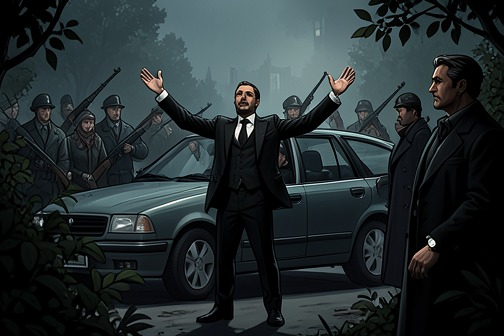
[Don Pedro Áviles](entity:character-recall-character-11e00cd97fc4) is assassinated in an operation presented as an arrest for American observers. The killing exposes the bargain beneath the performance: [Art Keller](entity:character-recall-character-art-keller-31aa2337649c) is allowed to pursue Don Pedro, while [Tío](entity:character-recall-character-t-o-00e2ebb81c20) ensures that the old patrón will not survive to face custody. Art’s realization that the supposed arrest is an assassination marks the scene’s decisive turn, and his choice to take Don Pedro’s body makes him a participant in its aftermath.
## Setup and False Arrest
Tío tells Art that he knows not merely where Don Pedro is, but where he is going to be. Art waits crouched in the brush as the ambush takes shape; Tío watches him, then pointedly checks his watch. The gesture is a message that the operation is proceeding on Tío’s timetable, and Art understands that the moment is near.
Don Pedro, however, reads the approaching force as reassurance. Seeing Barrera in a black suit, he believes that the arrest is a show for the Americans and that, if he goes to jail at all, he will be out within a day. He slowly stands in his car with his arms raised and orders his men to do the same. The scene therefore begins with two incompatible understandings: Don Pedro believes he is cooperating in a temporary performance, while the men around him have prepared a lethal ambush.
## The Shooting and Art’s Recognition
The surrender lasts only until Tío nods. His men open fire, and the bullets shake Don Pedro in the car. Art rises and shouts, “What are you doing?!” and “He’s trying to—” but the gunfire drowns him out. [Güero Méndez](entity:character-recall-character-g-ero-m-ndez-9416e102d10e) crouches on the car floor with his hands over his ears as Don Pedro’s blood falls across him; even through the rifles’ roar, he hears the old man screaming.
When the shooting stops, Art opens the ruined car door and Don Pedro’s body falls out. His chest is still heaving. Art thinks there may be a chance if they can evacuate him by air, but Tío walks over, points a .45 at the back of the old patrón’s head, and pulls the trigger. Don Pedro’s neck jerks off the ground and drops again. Tío then claims that Don Pedro reached for his gun, repeating the excuse as the [DFS](entity:organization-recall-organization-dfs-be207b3081ba) troops collect weapons from the dead and fire into the air. Looking at the bodies, Art understands that this was not an arrest; it was an execution. A moment later, he recognizes the more deliberate truth: it was an assassination.
## Trophy, Bargain, and the Political Order
Tío’s final exchange with Art turns the killing into a transaction neither man can pretend was simply lawful enforcement. Tío nods toward Don Pedro’s body and tells Art, “You got what you wanted.” Art replies, “So did you.” The exchange acknowledges their separate gains without making them equivalent: Art has pursued Don Pedro, while Tío has ensured the old patrón’s death. Tío then shrugs, “Pues . . .” and offers the body as a trophy. The word strips away the arrest’s remaining pretense and makes the corpse itself the visible object of the bargain.
Art does not leave Don Pedro where he fell. He retrieves a rain poncho from his Jeep, carefully rolls the body in it, and carries it to the backseat. The old man feels almost weightless in his arms. This practical act follows Art’s failed attempt to save him and his recognition of the assassination; it does not undo his involvement in the ambush, but it marks a distinction between Tío’s handling of the body as proof of a completed deal and Art’s decision to take responsibility for it. The scene ends not with an arrest, a trial, or an account of Don Pedro’s alleged crimes, but with Art transporting the dead man away.
The political world developed elsewhere in the novel enlarges the significance of the exchange. In a later conversation about the [Federación](entity:organization-recall-organization-federaci-n-3cfed113330e), [García Abrego](entity:character-recall-character-garc-a-abrego-f750b0a7673d) questions why Barrera divides the world into three pieces and takes a fourth for himself. Barrera answers by describing [Guadalajara](entity:location-recall-location-guadalajara-1fbbdc6cee32) as a safe place from which to serve the organization, then offers to share his resources, friendships, and protection. Abrego’s question about the cost receives the blunt answer that protection is expensive. The arrangement presents power not as a formal title alone, but as control over territory, access, security, and the relationships through which those things are distributed.
That personal system reaches beyond individual protection into national politics. Tío tells Adán that the Federación helped the president steal the 1988 election: when the opposition candidate Cárdenas appeared likely to defeat the [Institutional Revolutionary Party](entity:organization-recall-organization-6aa2664a0c48), the vote-counting computers “magically malfunctioned.” The episode makes political influence an extension of the same hidden exchange underlying the staged arrest: public procedures continue to appear in force while private actors determine the outcome. The assassination does not itself establish every later arrangement, but it furnishes an early, concrete image of violence operating behind an official performance.
The later peso crisis shows how far the organization’s power can extend from such bargains. After the new president took office on December 1, [1994](entity:time-recall-time-1994-2c6f52c72808), two Federación-controlled brokerage houses bought government bonds; the cartels then withdrew capital from the national bank, forcing a 50 percent devaluation. The organization cashed in its bonds and used the crisis to buy devalued pesos and assets, later benefiting when an American loan helped the currency rise again. Adán agreed to bring narco-dollars back into the country only in exchange for a favorable trade environment, leaving the president free to denounce the cartels but constrained from acting against them. Read beside Don Pedro’s death, these later episodes trace a widening repertoire: the power first made unmistakable in an ambush is also exercised through protection, electoral manipulation, financial leverage, and political accommodation.
## From Execution to Assassination
The scene sharpens its meaning through a sequence of corrections. Art first recognizes that the supposed arrest has become an execution, as the bodies and planted weapons expose the violence beneath the official account. Only afterward does he understand the killing as an assassination: not merely a surrender turned lethal, but a planned removal concealed by the appearance of an arrest. That progression makes the deception part of the event itself. The gunfire destroys Don Pedro, while the staged explanation is meant to control what the violence will be called.
Event 4
Founding of the Mexican drug-trafficking federation
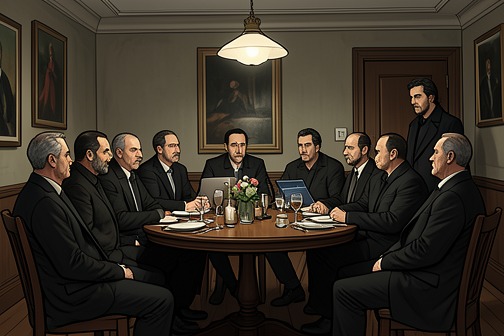
The founding of the Mexican drug-trafficking federation takes shape at a private meeting called by [Tío](entity:character-recall-character-t-o-00e2ebb81c20) after [Operation Condor](entity:event-recall-event-operation-condor-b497472664f4) has burned Sinaloan fields, poisoned the ground, scattered growers, and killed [Don Pedro Áviles](entity:character-recall-character-11e00cd97fc4). Rather than rebuild the old regional order, Tío turns its destruction into a blueprint for expansion: divide the country into operating territories, bind their leaders through protection and payment, and replace an agricultural supply base with cocaine. The federation begins not with a public proclamation but with a carefully staged gathering and a demonstration of the product that will make its markets viable.
## A Gathering After Operation Condor
Tío reads the aftermath of Operation Condor as a strategic opening. The Americans believe that destroying the Sinaloan source has dealt with the problem, he reasons; their confidence will give him time to build an organization that they will later find difficult to reach. The scene makes that ambition concrete through the contrast between apparent defeat and deliberate preparation: the old fields are gone, but the surviving leaders have been selected and assembled.
The meeting is held at a restaurant closed to ordinary customers for a private party. [DFS](entity:organization-recall-organization-dfs-be207b3081ba) men with Uzis surround it, and guests have been searched and disarmed. The gathering includes the major growers Tío chose to survive Operation Condor. [Don Adán Barrera](entity:character-recall-character-f8d17a8b49ec) sits beside [Raúl Barrera](entity:character-recall-character-ra-l-barrera-b24a4deeae21), observing the assembled men while Tío controls the room through the fact that he has convened it. Food, beer, and musicians playing songs about traffickers give the meeting the form of a social gathering, but the security and guest list make its political purpose unmistakable.
Don Adán Barrera’s arrival at this turning point is personal as well as strategic. When Tío has waited to hear what the young man will say, Don Adán announces that he wants to enter the business. Tío does not make the new organization simply a family enterprise, however. He is about to distribute authority and territory among multiple leaders, while positioning himself to supervise the arrangement as a whole.
## From Scattered Survivors to a National Network
Tío presents the violence and losses of the recent past as finished, urging the assembled leaders to put aside old grudges and vengeance. His image of seeds carried to new ground turns forced dispersal into an organizing principle: if the survivors have been driven from [Sinaloa](entity:location-recall-location-sinaloa-6302d6b8fe8e), they can spread across the country rather than remain tied to a single damaged region. The proposal converts a setback into a distributed system of markets and leadership.
He identifies three territories from which the secret trade can operate. [García Abrego](entity:character-recall-character-garc-a-abrego-f750b0a7673d) is assigned the Gulf, with Houston, New Orleans, Tampa, and Miami as markets. El Verde, also named as Don Chalino, is assigned the Sonoran territory, based in [Ciudad Juárez](entity:location-recall-location-b42163f7dc1f) and oriented toward New [Mexico](entity:location-recall-location-f1c6a91e03ea), Arizona, and the rest of Texas. Tío gives the Baja territory to [Güero Méndez](entity:character-recall-character-g-ero-m-ndez-9416e102d10e). Don Adán Barrera is surprised that Güero receives what appears to be the most lucrative territory; he then understands the assignment as the fulfillment of a prior promise connected to Güero’s survival in the ambush that killed Don Pedro Áviles.
The territorial division does not mean that Tío intends to relinquish central control. García Abrego observes that Tío has divided the world into three parts and kept a fourth for himself. Tío identifies [Guadalajara](entity:location-recall-location-guadalajara-1fbbdc6cee32) as that remaining position: not a growing region or border market, but a safe base from which to serve the federation. He offers the other leaders his friendship and protection in exchange for a fifteen-percent fee. The arrangement establishes more than a set of regional allocations. It makes the local operators’ security and access dependent on Tío’s central position, while turning that dependence into a regular source of revenue.
## The Commodity That Makes the Plan Work
The proposed territories initially expose a problem: Operation Condor has burned and poisoned the fields, and the surviving leaders have markets but no opium to sell. Tío’s answer is to shift the enterprise away from the assumptions of the farmer. He points to the [United States](entity:location-recall-location-united-states-2f533bc8d0b9)’ long land border and additional coastline as the essential resource, recasting geography and access to consumers as the foundation of the new business.
Tío then brings the meeting to a guarded room in a hotel he owns next door, where [Ramón Mette Ballasteros](entity:character-recall-character-ram-n-mette-ballast-e971dd2b1883) is waiting. In front of the assembled leaders, the group watches a cocaine solution boil, crackle, and solidify into a small rock as Mette processes it. Tío presents this result as the future. The demonstration supplies the missing link between the proposed markets and a product the organization can distribute: the federation is not merely dividing territory after the destruction of the old fields; it is reorganizing around cocaine.
The scene also clarifies why the founding plan combines regional autonomy with central protection. The leaders are expected to operate in distinct markets, but they meet under Tío’s authority, accept his terms, and witness a shared solution to the supply problem. The network can spread geographically without abandoning the coordinating power located in Guadalajara.
## Political Power and Later Consequences
The federation’s founding model anticipates a form of influence extending beyond trafficking. Four years after the 1988 election, Don Adán Barrera knows that the organization helped the sitting president steal it. The vote-counting computers malfunctioned, and the election outcome protected the [Institutional Revolutionary Party](entity:organization-recall-organization-6aa2664a0c48)’s hold on power. This later disclosure makes the founding meeting’s protection arrangement appear as an early outline of reciprocal political dependence: the organization provides support, while its leaders expect room to operate.
After the new Mexican president takes office on December 1, [1994](entity:time-recall-time-1994-2c6f52c72808), two brokerage houses controlled by the federation begin buying government bonds the next day. The cartels then withdraw capital from the national bank, precipitating a fifty-percent devaluation of the peso. The federation cashes in its bonds and uses the ensuing collapse to acquire property, businesses, land, and pesos at reduced prices. When the government needs the traffickers’ dollars to revive the economy, Don Adán Barrera agrees to return the money in exchange for a favorable trade environment. The stated public campaign against the cartels is thereby separated from the government’s practical willingness to confront them.
This later reach illuminates the scale of the original design. The federation’s territorial system, protection fee, and cocaine supply allow it to coordinate operators; its financial and political dealings later make the state itself part of the environment it can manipulate. The founding event is therefore both an organizational meeting and a change in the kind of power being built: a cartel network designed to survive territorial dispersal becomes capable of influencing elections, economic policy, and the terms on which the government can act.
Event 5
Badiraguato ambush and execution of six prisoners
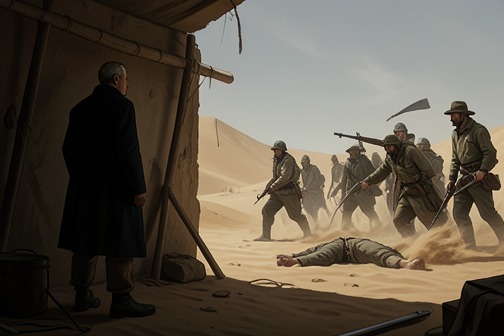
The [Badiraguato ambush and execution of six prisoners](entity:event-recall-event-5f32a09c8a2a) is a defining episode in [Art Keller](entity:character-recall-character-art-keller-31aa2337649c)’s history with [Tío](entity:character-recall-character-t-o-00e2ebb81c20) Barrera: Keller says his silence about the killings, and his work against Tío’s rivals, helped make possible the [Mexican Federation](entity:organization-recall-organization-6697215c79a3) he thought he was fighting. The book gives no detailed account of the ambush itself. Instead, its significance emerges through Keller’s later recollection of what he did, what he concealed, and what Tío built from the opportunity.
## The Ambush and Keller’s Silence
Keller recounts the episode to [Althea Keller](entity:character-recall-character-althea-keller-1ae14debf2cc) while explaining why his assignment has become personal. He tells her about the ambush in [Badiraguato](entity:location-recall-location-badiraguato-c5530b7e426b) and the execution of six prisoners, then admits that he kept his mouth shut about it. The account establishes his silence as part of the event’s aftermath: the killings were not merely something he witnessed or learned about, but something he chose not to expose.
The available account does not specify who the prisoners were, how the ambush unfolded, or the immediate circumstances of the executions. What it does establish is the moral and practical consequence Keller later attaches to his silence. In his recollection, Tío used him during the [Operation Condor](entity:event-recall-event-operation-condor-b497472664f4) period to eliminate rivals, while letting him believe that he was helping destroy the drug network.
## From Counteroperation to Federation
Keller’s later understanding reverses the meaning of his earlier work. He had believed he was weakening the trafficking network; he now sees that Tío was using those efforts to clear the way for a larger and more effective organization. Keller describes himself as having been played for a sucker: his pursuit of the rivals served Tío’s project, not the dismantling of the trade.
The Federation’s emergence is also reflected in Tío’s later explanation of its political and commercial design. He presents [Guadalajara](entity:location-recall-location-guadalajara-1fbbdc6cee32) as a safe base from which to serve the organization and offers other traffickers friendship and protection in exchange for a fee. The arrangement shows how the Federation could extend beyond a collection of rival operations: it offered protection and connections under Tío’s command. Keller’s recollection makes the Badiraguato episode part of the hidden history behind that consolidation, though it does not claim the ambush alone created the organization.
## Consequences and Retrospective Meaning
Keller connects the Federation’s growth to consequences far beyond the original violence. He tells [Althea](entity:character-recall-character-47dab9bd08bd) that the organization is now flooding American streets with crack and believes he must do something about it. The book later depicts the Federation exercising influence at national scale: it helped the incumbent president steal the 1988 election, and after the [1994](entity:time-recall-time-1994-2c6f52c72808) change of government it profited from the peso collapse, then secured a favorable environment for its return of capital to [Mexico](entity:location-recall-location-f1c6a91e03ea). These later developments illustrate the reach of the organization Keller says his earlier actions helped Tío establish; they are consequences of the Federation’s power, not immediate results of the ambush alone.
The episode also explains Keller’s return to Guadalajara despite his prospects after the capture of [Don Pedro Áviles](entity:character-recall-character-11e00cd97fc4). At thirty-three, he was on course to become the agency’s youngest Resident Agent in Charge and could choose his next post. In retrospect, he recognizes that his request to go to Guadalajara was driven by the unresolved history with Tío. The ambush therefore functions as both a political origin point and a private burden: Keller’s silence became inseparable from the organization he had meant to oppose.
Event 6
Guadalajara cartel summit
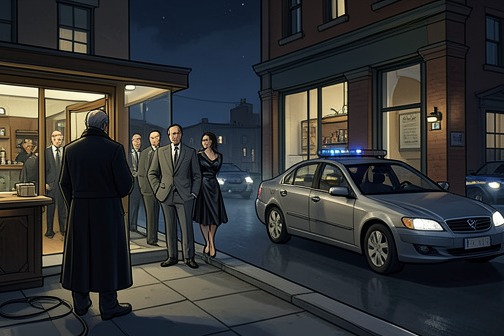
The [Guadalajara cartel summit](entity:event-recall-event-c08ee62c0acf) is a gathering of leading traffickers whose public ease, police protection, and inter-cartel attendance make the [Federación](entity:organization-recall-organization-federaci-n-3cfed113330e) visible as a working power structure. Watched by [Art Keller](entity:character-recall-character-art-keller-31aa2337649c) from a rooftop across from [Talavera’s](entity:location-recall-location-bd62011a6bb4), the meeting sharpens his sense that [Tío](entity:character-recall-character-t-o-00e2ebb81c20) stands at its center; its significance lies not in a disclosed agreement, but in the brazen spectacle of organized criminal authority operating alongside the state.
## Surveillance and the gathering
Art takes up a position on a roof across from Talavera’s, a [Guadalajara](entity:location-recall-location-guadalajara-1fbbdc6cee32) tapas restaurant, and watches the arrivals through a lens. The scene is organized by a division of labor: [Jalisco State Police](entity:organization-recall-organization-jalisco-state-po-f40b323b9f24) guard the gathering while federal officers act as valets, bringing cars around for the visitors. A major figure in the drug trade can enter the restaurant under official protection, while the people charged with law enforcement help the occasion proceed smoothly.
The procession gives Art the impression of a carefully staged opening night. [García Abrego](entity:character-recall-character-garc-a-abrego-f750b0a7673d), head of the [Gulf Cartel](entity:organization-recall-organization-gulf-cartel-801fabf09ae6), arrives in a Mercedes, wearing a gray business suit; [Güero Méndez](entity:character-recall-character-g-ero-m-ndez-9416e102d10e), associated with the [Baja Cartel](entity:organization-recall-organization-baja-cartel-1a7f94968489), appears in a black silk outfit, silver-tipped boots, and a white cowboy hat. [Chalino Guzmán](entity:character-recall-character-chalino-guzm-n-69f9808662f8)’s mismatched clothes and green boots distinguish him from the more polished García Abrego. Their contrasting appearances make the assembly look less like a uniform organization than a meeting of powerful men whose different territories and styles coexist within it.
Art compares the gathering to an Apalachin-style Mafia meeting, but the analogy also marks a difference: the men do not seem worried about police interference. In his view, they behave as if they are safe—and their confidence appears justified by the police presence around them. After the dinner, the men come out onto the sidewalk together, laughing, shaking hands, and lighting one another’s Cuban cigars while they wait for their cars. What Art sees is not a furtive rendezvous but a display of mutual recognition in public.
## The restaurant and Tío’s position
The choice of venue troubles Art. Tío owns several restaurants in Guadalajara, but Talavera’s is not among them. Art wonders why a figure with his own establishments would hold such a consequential meeting elsewhere; the evidence does not supply an answer. That unanswered detail keeps the restaurant from becoming merely a convenient backdrop. It is a point of uncertainty inside a scene otherwise marked by conspicuous confidence.
The summit nevertheless confirms Art’s judgment that Tío is M-1, a designation the scene does not explain further. The gathering’s composition supplies the force of the inference: leading traffickers from separate organizations have assembled, and Tío is presented as the pivotal figure around whom their cooperation is organized. The event makes the prospect of a Federación difficult for Art to dismiss. If the organization is not formally announced in the scene, its members’ presence and collective ease make it look real in practice.
## A protection system beyond the dinner
The novel gives the summit a wider institutional context through an earlier formulation of the Federation’s organizing logic. García Abrego challenges Barrera’s ambition to divide up the world and claim an additional share for himself. Barrera answers by describing Guadalajara as a safe place from which the Federation can be served, and offers to share his resources, friendships, and protection with those who accept the arrangement. When Abrego asks what protection will cost, Barrera describes the fee as modest while acknowledging that protection is expensive. The exchange presents protection as both a commodity and a means of binding powerful partners into a common structure.
That bargain helps explain why the summit matters even without a recorded agenda or outcome. Its police escort gives the participants a form of security; their public gestures display relations among cartel leaders; and the Federation’s broader promise links personal alliances to shared protection. The scene does not establish that any particular agreement is concluded over dinner. Instead, it shows the conditions that make such a network plausible: traffickers can meet, display unity, and rely on public institutions to facilitate their movement.
## Political reach and narrative significance
The novel later describes political and economic leverage that extends beyond the summit itself. In the account of the 1988 election, the Federación is said to have helped the incumbent party retain power after the vote-counting computers malfunctioned when the opposition candidate appeared likely to win. The episode presents influence over political outcomes as another dimension of cartel power, but it is not identified as a decision made at Talavera’s.
A still later episode shows the Federación exploiting the Mexican Peso Crisis. After a new president takes office on December 1, [1994](entity:time-recall-time-1994-2c6f52c72808), brokerage houses controlled by the organization buy government bonds; the cartels then withdraw capital, contributing to a 50 percent devaluation. The organization subsequently profits from the changing value of the peso and returns its money under a demand for a favorable trade environment. Read alongside these later developments, the summit is an early, visible image of power that can operate through protection and personal alliances and, elsewhere in the story, through political and financial pressure. It does not explain every later action; it gives the reader a scene in which the scale and confidence of the network become legible.
Art’s watch ends with the participants back on the sidewalk, their laughter and cigar smoke briefly making the cartel leaders seem entirely at ease. Then the atmosphere changes when a girl comes out of the restaurant. The scene marks that shift without, in the available passage, explaining the girl’s identity or what follows. The unresolved turn prevents the summit from settling into a simple portrait of impunity: even at a gathering whose public confidence appears protected, the mood can change in an instant.
Event 7
Borrego Springs airdrop interception
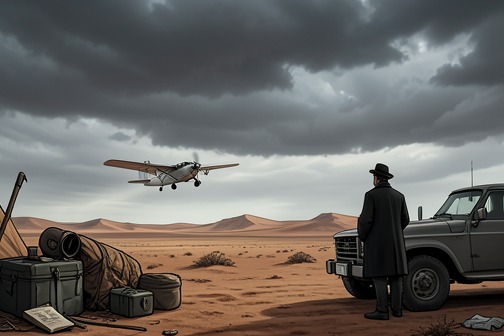
The [Borrego Springs airdrop interception](entity:event-recall-event-borrego-springs-1f7f7c353949) is a January [1985](entity:time-recall-time-1985-86b1f5fc64b5) operation in which [Art Keller](entity:character-recall-character-art-keller-31aa2337649c) tries to seize a drug plane by turning its secret landing procedure against it. The landing appears to deliver the breakthrough he planned, but the pilot’s claim to be working for the Americans transforms a drug bust into a test of competing covert operations. Keller’s choice to let the plane go keeps the investigation open—and leaves the larger network, and its political protections, unresolved.
## Background and stakes
The operation takes place near [Borrego Springs](entity:location-recall-location-9a0fce4edfb5), California, at the edge of the vast Anza-Borrego Desert. Keller has been listening to [Tío](entity:character-recall-character-t-o-00e2ebb81c20)’s conversations and has learned the frequency used to tell a pilot where to land. Ordinarily, the ground crew withholds the landing location until the aircraft is airborne, limiting the chance that outsiders can discover the site in advance. Keller’s access to that frequency gives him the location as soon as the pilot receives it, but intelligence alone does not solve the practical problem of reaching the plane.
The desert makes an ordinary interception conspicuous. Outside Borrego Springs, the landscape is described as a million acres of emptiness: a flashlight would stand out, and a jeep could be heard from far off. If Keller’s crew waited for the pilot to land and then tried to approach, they risked being detected before they could get close. The operation therefore has to defeat not just secrecy in the communications, but the terrain’s visibility and silence.
The stakes extend beyond a single aircraft. Keller already knows that [SETCO](entity:organization-recall-organization-setco-e74417df6792) is flying drugs; seizing this plane would establish what he suspects without explaining where the cocaine goes, where the money goes, or what travels back on the return flight. His target is the movement of the operation, not merely one cargo. The plane is evidence, but it may also be a trail.
## An ambush built around the landing
Instead of chasing the aircraft or sneaking up on its landing site, Keller decides to make the aircraft land where his team is waiting. He needs a private airstrip and finds one through [Shag Wallace](entity:character-recall-character-shag-wallace-8747102d6785), whose old rancher acquaintance owns thousands of acres and has a strip on the property. The rancher, who flies to Ocotillo for groceries, is willing to host the ambush and keep quiet. The isolated ranch supplies what the open desert otherwise denies Keller: a place where the incoming plane can be guided down under his crew’s control.
The plan depends on using the landing procedure rather than interrupting it. The ground crew will signal with vehicle headlights, allowing the pilot to line up with the lights and bring the plane down. Keller’s team can then meet the aircraft as it lands. The plan is deliberately audacious: instead of sneaking toward a landing arranged by the smugglers, Keller supplies the apparent landing cue and makes the aircraft come to him.
A second requirement is authority to make arrests and seize cargo outside Keller’s assigned territory. A stunt by the [Guadalajara](entity:location-recall-location-guadalajara-1fbbdc6cee32) RAC hundreds of miles from its jurisdiction could bring resistance from Washington. Keller therefore works with [Russ Dantzler](entity:character-recall-character-russ-dantzler-e06d16b564d5), who can handle arrests and seizures, publicize the bust, and begin tracking the plane without interference from the [Drug Enforcement Administration](entity:organization-recall-organization-drug-enforcement-85b22b2a9f98) or the State Department. Keller also needs to jam the pilot’s ADF, switch him to a new frequency, and talk him down to the ranch. Even with the airstrip, the communications plan, and Dantzler in place, the operation still depends on luck.
## The landing and the unexpected pilot
When the plane’s engine approaches, Shag runs to the truck and flashes its lights. The aircraft’s running lights blink in response. Within two minutes, Keller watches it descend from the darkness and land smoothly. The pilot expects to meet someone who will guide him through the last stage of the landing; instead, a man approaches and points a gun at him. Dantzler begins the arrest procedure, making the apparent success of the ambush immediate and physical.
Then Dantzler reports that the pilot says he is working for the Americans. Keller goes to the car where the pilot is being held and finds Phil Hansen sitting back with striking calm, as though the encounter were no more than a traffic ticket that would eventually be fixed. Hansen greets Keller as an old acquaintance and identifies the operation as [Cerberus](entity:concept-recall-concept-cerberus-bff84c150df6), referring as well to Ilopongo and Hangar Four. The references connect the desert interception to a covert operation Keller recognizes. The capture has not simply exposed an unwitting smuggler: the pilot’s claim makes the plane part of an American operation, though the scene does not resolve the full scope of that arrangement.
## Keller changes course
Keller considers the immediate option of seizing the plane, then walks out into the desert to think. A bust would prove that SETCO is flying drugs, but that fact is already known to him. It would not reveal the cargo on the return trip or identify its recipient. Hansen’s unexpected appearance makes the choice more consequential: arresting the pilot and taking the plane could close off the very route Keller hopes to follow.
Keller returns to Dantzler and orders a different approach: the plane is to be allowed through. He explains that the team can then track three things—the cocaine’s destination, the money’s movement, and the return cargo. He tells Hansen that the encounter was a test and that he has passed, then watches the plane take off again. Keller radios [Ernie Hidalgo](entity:character-recall-character-ernie-hidalgo-53e66cdb267f) to expect the returning SETCO flight, photograph it, and let it continue. Ernie does not answer. The operation thus ends not with a seizure but with a plan to maintain surveillance, and with Keller’s next step suddenly uncertain.
## Political context and significance
The episode’s concern with hidden arrangements resonates with the book’s larger account of the Mexican drug-trafficking federation. In an earlier meeting, [García Abrego](entity:character-recall-character-garc-a-abrego-f750b0a7673d) challenges Barrera over how he divides territory and takes a share for himself. Barrera answers that Guadalajara is a safe place from which to serve the federation and offers to share his protection and connections in exchange for a fee. That exchange presents protection not as a side benefit but as an organized service—and helps explain why tracing the flight’s route may matter more than catching a single pilot.
Later revelations widen the political dimension of that network. The book says that the federation helped the ruling [Institutional Revolutionary Party](entity:organization-recall-organization-6aa2664a0c48) steal the 1988 election after the vote-counting computers malfunctioned. In [1994](entity:time-recall-time-1994-2c6f52c72808), federation-controlled brokerage houses bought government bonds before cartel capital was withdrawn from the national bank, contributing to a peso devaluation; the federation then profited from the collapse and demanded a favorable trade environment before returning its money. These later events do not establish that the Borrego Springs flight caused or directly enabled those political maneuvers. They do, however, place Keller’s interest in tracing cargo, money, and return flights within a story where drug traffic and political power repeatedly meet. His decision to let the plane go captures the operation’s central tension: a visible arrest can confirm one crime, while following the route may expose a system that reaches beyond the airstrip.
Event 8
Operation Cerberus
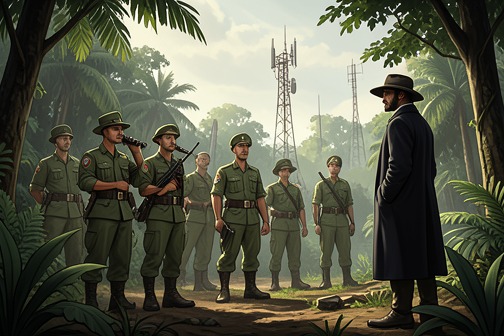
[Operation Cerberus](entity:event-recall-event-operation-cerberus-876574b88d74) is the covert campaign to fund, equip, and train the [Contras](entity:organization-recall-organization-contras-13547523c881) through cocaine trafficking and arms transfers. What begins as an anti-Communist operation expands into a transnational business linking U.S. officials, Mexican and Colombian drug organizations, Mafia dealers, and military personnel. Its significance is not only the network it creates, but the way a declared security objective becomes entangled with criminal commerce and concealed government authority.
## Origin and declared purpose
The operation is introduced through the work of [Sal Scachi](entity:character-recall-character-sal-scachi-82ddfd8bbc74), a former Special Forces soldier assigned to a [CIA](entity:organization-recall-organization-422e0adc2ba6) operation called [Cerberus](entity:concept-recall-concept-cerberus-bff84c150df6). During the preceding months, Scachi and other military personnel had been putting up three radio towers in the Colombian jungle and watching over them to prevent Communist guerrillas from destroying them. The towers appear, at first, to be part of a limited intelligence or communications task. Their significance changes when [Art Keller](entity:character-recall-character-art-keller-31aa2337649c) connects them to the movement of [SETCO](entity:organization-recall-organization-setco-e74417df6792) aircraft.
The political rationale offered for Cerberus rests on the claim that [Nicaragua](entity:location-recall-location-fdd3ef235620) presents a strategic danger. [John Hobbs](entity:character-recall-character-john-hobbs-aa4c4c1db101) depicts the country as a Soviet client state whose position in Central America could expose the surrounding region and the [United States](entity:location-recall-location-united-states-2f533bc8d0b9) to military threats. He points to arms moving across Nicaragua’s borders and raises the possibility of Soviet forces and missiles in the region. In this account, the threat is framed as urgent enough to require action beyond ordinary channels. That framing helps explain the operation’s reach, but also shows how an argument about national security can make exceptional measures appear necessary.
Hobbs tells Art that Cerberus originates at the highest level of government, rather than with the CIA. His account traces an authorization chain from the vice president’s office: [National Security Directive Number Three](entity:rule-recall-rule-national-security-direct-8ebfc925b851) permits the vice president to direct activities against Communist terrorists in Latin America; the [Terrorist Incident Working Group](entity:organization-recall-organization-terrorist-incide-72d810983abd) operates from [El Salvador](entity:location-recall-location-6f541c528920), [Honduras](entity:location-recall-location-honduras-437b7adfd9e2), and [Costa Rica](entity:location-recall-location-3aa464f9cd3c); and a National Humanitarian Assistance Operation is ostensibly set up to provide nonlethal aid to Nicaraguan refugees, identified as the Contras. Hobbs says Scachi reports to him and that he reports to the vice president. The account places the operation within a formal political structure even as the methods associated with it depart sharply from its stated humanitarian purpose.
## The cocaine-and-arms network
Art’s investigation turns the radio towers into a clue. [Chris Conti](entity:character-recall-character-chris-conti-9a31a7e41dbf), the regional chief in [Colombia](entity:location-recall-location-colombia-03c1898e601e), brings up three towers in the jungle north of Bogotá and says he cannot get close enough to examine them. Art considers whether the [Medellín](entity:location-recall-location-493cee6c8fc5) organization could have built the technology and whether the towers might emit VOR signals to guide SETCO planes. This is presented as Art’s explanation for how the aircraft could fly without being detected, not as a technical conclusion independently confirmed in the account.
The suspicion takes more concrete form at [Ilopongo Airport](entity:location-recall-location-5e52c4848bde). Art sees armed men unloading cargo from a SETCO plane in a busy hangar. Among those present is [David Núñez](entity:character-recall-character-david-n-ez-d7ed9b9ec314), who opens a crate and lifts out a grenade launcher. Art reads Núñez’s attachment to the weapon in light of his past at the Bay of Pigs and his desire for retribution. The scene gives the arms shipment a human and political dimension: the weapons are not merely cargo but part of a struggle whose participants bring older conflicts with them.
Art recognizes the arrangement as a renewed Cuba–Miami–Mafia drug connection. Cocaine is moved from Colombia through Central America and [Mexico](entity:location-recall-location-f1c6a91e03ea) to Mafia dealers in the United States, while the Mafia pays in arms that are sent to the Contras. The operation therefore joins two flows: drugs moving north toward U.S. markets and weapons moving south toward the Nicaraguan conflict. The SETCO flights and the towers provide possible infrastructure for that network, while the trafficking organizations supply routes and capacity that an official aid program alone could not provide.
The larger commercial arrangement between the [Federación](entity:organization-recall-organization-federaci-n-3cfed113330e) and the Colombian cartels helps explain Mexico’s role. Rather than grow the cocaine, the Mexican organization undertakes its transportation. The Colombians pay $1,000 for each kilo safely delivered to them inside the United States. Mexican traffickers take delivery, move cocaine to staging areas near the border, carry it across, and transfer it to safe houses; Colombian operators then collect it and take it to laboratories for processing. Art reflects that the two-thousand-mile border itself has become the valuable resource: a product worth little on one side can command vastly more just across it. In this structure, the Federación profits from controlling movement across the border, while the Colombians retain the processing and distribution stages described in the account.
## Authority, secrecy, and parallel operations
Cerberus is distinct from [Operation Red Mist](entity:event-recall-event-operation-red-mist-6641351496e7), although the two belong to the same wider landscape of covert action. [Red Mist](entity:expression-recall-expression-red-mist-5e3e3e2788ee) coordinates operations intended to neutralize left-wing movements across Latin America. Sal Scachi’s role there is to share intelligence, distribute resources, coordinate targets, and prevent participating operations from interfering with one another; some of those operations do not know they are part of a larger campaign. Cerberus, by contrast, is specifically described as a conspiracy to fund, equip, and train the Contras through cocaine sales. The distinction matters: one program coordinates political and intelligence activity across a region, while the other uses the drug-and-arms trade to sustain a particular armed force.
The operation’s authority is also presented through competing institutional accounts. Hobbs insists that Cerberus does not run through the CIA, but through the vice president’s office, and says that Scachi reports through him. Art’s own experience complicates the certainty of that explanation. As he watches federal agents, he understands [Operation Condor](entity:event-recall-event-operation-condor-b497472664f4) as having spread the Sinaloan organization rather than eradicated it. The cartel’s dispersed transportation network can survive the destruction of particular land, crops, or communities because the border remains. Cerberus thus sits within a broader pattern in which official efforts to combat one threat can strengthen or redirect the systems that make illicit trade possible.
## Exposure and consequences
The operation’s consequences extend beyond its immediate arms shipments. Years later, [Adán Barrera](entity:character-recall-character-ad-n-barrera-0383f92d92cf) has copies of the material from [Juan Parada](entity:character-recall-character-juan-parada-55ccee69ce7f)’s briefcase stored in a safe-deposit box in Grand Cayman. The documents include evidence of Cerberus and the Federación’s cooperation with Americans in the Contra drugs-for-arms operation. They also describe Operation Red Mist, alleged sponsorship by [Mexico City](entity:location-recall-location-mexico-city-78f19f654410), Washington, and drug cartels of assassinations of left-wing figures in Latin America, and evidence of assassinations connected to the fixing of Mexican presidential elections. The material presents Cerberus not as an isolated breach, but as one part of a much larger entanglement of state and criminal power.
The evidence is dangerous to more than one government. Adán also retains knowledge that is not in the briefcase, including information about the assassination of [Luis Donaldo Colosio](entity:character-recall-character-luis-donaldo-colosi-d0ae0080c6ea) and Art’s perjury before the congressional committee investigating Cerberus. Art acknowledges that he had already been offered a deal, but says he refused it: he intends to take Adán to the district attorney and tell everything about Operation Condor, Cerberus, and Red Mist. His decision turns the operation from concealed history into a matter of prospective public testimony, while exposing his own role in its aftermath.
Cerberus also bears on the fate of Juan Parada. Art concludes that Parada was killed as part of Red Mist, whose operations Parada threatened to expose to the world. The distinction between Cerberus and Red Mist remains, but the programs’ histories converge through the evidence Parada sought to pass on and the danger created by disclosure. The network’s legacy is therefore both material and political: weapons, cocaine, and transport routes sustain the Contra effort, while the records of those transactions threaten to reveal how official authority and criminal organizations helped sustain it.
Event 9
Rancho Santa Fe major drug raid
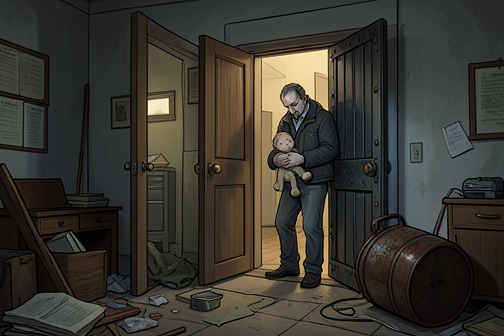
The [Rancho Santa Fe major drug raid](entity:event-recall-event-f320af167b80) was a landmark seizure of [Adán Barrera](entity:character-recall-character-ad-n-barrera-0383f92d92cf)’s narcotics operation, exposing its industrial scale while showing the limits of what a spectacular bust could take from him. The [Drug Enforcement Administration](entity:organization-recall-organization-drug-enforcement-85b22b2a9f98)’s raid came hours after an agent was reported missing. It removed drugs, cash, and processing equipment from a safe house, but the narrative places that material loss beside Adán’s fear for his daughter, whose serious congenital condition could not be replaced or remedied by the recovery of money.
## Background and Trigger
The immediate trigger was the report that an agent had disappeared. In the account of the operation, the Drug Enforcement Administration moved against Adán’s safe house at [Rancho Santa Fe](entity:location-recall-location-374609e9c67b) within hours. A parallel description places the enforcement response in the wider context of a sweep coordinated by [Russ Dantzler](entity:character-recall-character-russ-dantzler-e06d16b564d5) after authorities learned of [Ernie Hidalgo](entity:character-recall-character-ernie-hidalgo-53e66cdb267f)’s disappearance. That account says the sweep just missed Adán at a safe house in [San Diego](entity:location-recall-location-san-diego-8089c46f5361), while describing the bust as an epic one. The passages thus present both the Rancho Santa Fe seizure and a broader effort that failed to catch Adán himself; they do not establish that the two references identify the same premises.
The raid also belongs to a story in which Adán’s power has outgrown a single stash house. Earlier, he describes [Guadalajara](entity:location-recall-location-guadalajara-1fbbdc6cee32) as a safe place from which to serve the [Federación](entity:organization-recall-organization-federaci-n-3cfed113330e) and offers other traffickers a share of his protection in return for a fee. That arrangement casts security as something organized and sold, not simply as the walls of a hideout. Against this background, Rancho Santa Fe is one exposed point in a larger enterprise: the seizure reveals how much could be concentrated at a location without demonstrating that the organization itself had been dismantled.
## The Seizure
The account calls the raid the biggest drug bust in history. Authorities seized 2,000 pounds of cocaine, valued at $37.5 million, and two tons of sinsemilla worth another $5 million. They also found $27 million in cash. The figures make the event more than a dramatic recovery of narcotics: the cash alone indicates the scale of the financial operation alongside the drugs.
The safe house held the practical equipment of the trade as well: money-counting machines, scales, and miscellaneous office equipment. Fifteen Mexican workers were employed there weighing and packaging cocaine. These details give the seizure a working infrastructure. The house was not represented merely as a place where finished goods had been hidden; the workers and tools connect the drugs to the labor and routine needed to prepare and account for them.
The Rancho Santa Fe action was part of a wider enforcement push rather than an isolated discovery. In [Art Keller](entity:character-recall-character-art-keller-31aa2337649c)’s office, he and Ramos study maps of [Sinaloa](entity:location-recall-location-sinaloa-6302d6b8fe8e) and intelligence reports about marijuana fields and [Güero Méndez](entity:character-recall-character-g-ero-m-ndez-9416e102d10e) while the news of the bust circulates. The account of the sweep says the cocaine shipment was hit in two directions. On the East Coast, authorities arrested [Jimmy Piccone](entity:character-recall-character-jimmy-piccone-b2cd504b90a0), a capo in the New York [Cimino Crime Family](entity:organization-recall-organization-cimino-crime-fam-ba32bc9d6865). The parallel arrest broadens the picture from one California safe house to a drug network extending across regions, although it is distinct from the Rancho Santa Fe seizure itself.
## What the Raid Did—and Did Not—Cost
Adán recognizes the material loss but does not regard it as the greatest cost. Drugs and money, he thinks, can be replaced; his daughter’s condition cannot. The contrast shifts the meaning of the raid away from its headline value and toward the vulnerability of the family caught up in the flight surrounding his criminal enterprise. The seizure is measurable in pounds and dollars. The fear he associates with his daughter is not.
The account identifies the child’s condition as cystic lymphangioma, a congenital disorder affecting the development of the lymph channels and causing deformity of her face and neck. Doctors say it developed in the early months of pregnancy, that its cause is not well understood, and that there is no treatment or cure. They also say it has nothing to do with the family’s sudden flight from San Diego ahead of the Drug Enforcement Administration, the high-speed crossing into [Tijuana](entity:location-recall-location-tijuana-47bb9d0aad74), or the flight to Guadalajara. The narrative therefore places her illness beside the raid and the family’s escape without claiming that either caused it.
This distinction matters to the event’s aftermath. The authorities’ seizure is a concrete institutional achievement; it disrupts a major stock of drugs, cash, and working equipment. Yet it does not amount to a capture of Adán, and it cannot reverse the family’s exposure to danger and displacement. The surrounding account describes the family moving ahead of enforcement, while Adán’s thoughts turn from replaceable contraband to a child whose health lies beyond his power to repair.
## Significance
The raid’s scale makes visible the material organization behind Adán’s authority: a large supply of drugs, substantial cash reserves, workers, and specialized equipment. Its timing, following an agent’s disappearance, also shows how quickly an enforcement response could be mobilized against a major trafficking operation. But the account’s paired perspectives resist treating seizure totals as a complete measure of success. Art sees an epic bust; Adán weighs it against a loss that cannot be entered in the same ledger.
The event consequently marks both reach and limitation. The Drug Enforcement Administration can penetrate a safe house and remove millions of dollars’ worth of assets, while the wider account shows Adán remaining beyond its grasp and the family’s circumstances extending across San Diego, Tijuana, and Guadalajara. The raid is decisive as an exposure of the trade’s scale, but not as proof that the organization or its leadership has been brought to an end.
Event 10
Ernie Hidalgo kidnapping, torture, and death
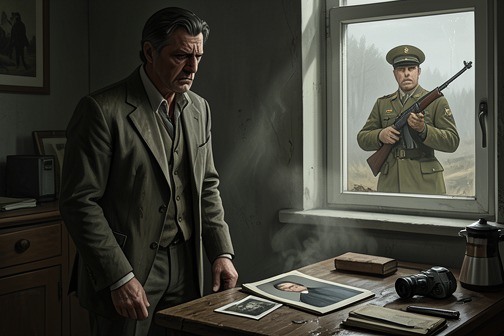
[Ernie Hidalgo](entity:character-recall-character-ernie-hidalgo-53e66cdb267f)’s kidnapping, torture, and death turn [Art Keller](entity:character-recall-character-art-keller-31aa2337649c)’s pursuit of the [Barrera organization](entity:organization-recall-organization-barrera-organiza-0c3495b505f4) into a personal loss and expose how readily police power can serve the criminals it is supposed to pursue. In January [1985](entity:time-recall-time-1985-86b1f5fc64b5), Art responds to Hidalgo’s disappearance by demanding action from [Colonel Vega](entity:character-recall-character-colonel-vega-49be92639761). The raids that follow uncover a photograph of Hidalgo in a criminal leader’s condominium but fail to find the principal targets. Meanwhile, Hidalgo is interrogated about [Source Chupar](entity:expression-recall-expression-source-chupar-7ae28084eea6) and [Cerberus](entity:concept-recall-concept-cerberus-bff84c150df6), and [Don Adán Barrera](entity:character-recall-character-f8d17a8b49ec)’s attempt to have him returned comes too late. Hidalgo’s body is found in [Badiraguato](entity:location-recall-location-badiraguato-c5530b7e426b), leaving Art to confront the cost of his own fixation and promise vengeance.
## Disappearance and the Failed Search
Six hours after Hidalgo disappears from the screen, Art storms into Colonel Vega’s office and demands that the city be searched and [Miguel Ángel Barrera](entity:character-recall-character-miguel-ngel-barrera-6b908727e16a) arrested. The urgency of his demand reflects more than a missing colleague: Hidalgo’s disappearance has become a direct challenge to an investigation whose reach depends on local officials willing to act. Art’s insistence that he does not want excuses sets the terms of the confrontation, but it does not give him control over the operation that follows.
Vega suddenly appears to know where low- and middle-ranking traffickers live, gather, and conduct business. His forces raid across the city, yet do not find Miguel Ángel Barrera, Don Adán Barrera, [Raúl Barrera](entity:character-recall-character-ra-l-barrera-b24a4deeae21), [Güero Méndez](entity:character-recall-character-g-ero-m-ndez-9416e102d10e), or [García Abrego](entity:character-recall-character-garc-a-abrego-f750b0a7673d). The sweep reaches the criminal organization’s lower levels while its senior figures remain beyond its grasp. Art recognizes the pattern as a search that appears active but avoids those it should capture: the authorities know where the men have been, but not where they are now.
A raid on a Barrera condominium produces a more pointed clue. Art finds a photograph of Hidalgo, specifically an identification photograph taken in the [Guadalajara](entity:location-recall-location-guadalajara-1fbbdc6cee32) office of the [Municipal Judicial Federal Police](entity:organization-recall-organization-municipal-judici-7af8e151cea2). He seizes it and confronts Vega with it. The image does not itself explain how Hidalgo came to be in the traffickers’ hands, but it makes the relationship between official policing and the kidnapping harder to ignore. Art tells [Tim Taylor](entity:character-recall-character-tim-taylor-843a5c724646) about the photograph and asks for an honest officer with enough authority to matter. Antonio Ramos arrives in Guadalajara that afternoon, marking a change in the personnel Art is willing to trust, though the intervention comes after Hidalgo has already been taken.
## Captivity and the Interrogation
Hidalgo’s capture is not described as the result of a covert operation by the traffickers. Three police officers pick him up in La Plaza de Armas and deliver him to Raúl Barrera and Güero Méndez. They drug and blindfold him before bringing him to a house, where a doctor revives him and the interrogation begins. The police are therefore not simply absent from the crime: their direct assistance makes the abduction possible.
Don Adán listens as the interrogators repeatedly demand to know who Source Chupar is. Hidalgo continues to say that he does not know. His refusal or inability to provide the answer does not stop the questioning, and the interrogators intensify their abuse. Later they introduce a second subject, Cerberus, asking whether Chupar spoke to him about it. Hidalgo again denies knowing anything. The repeated questions establish what the captors want from him, but the evidence does not show that he possesses the information they seek.
The episode’s movement between the questioning and Don Adán’s awareness of it gives the captivity a wider significance than the extraction of a name. Don Adán thinks the kidnapping may destroy them all, whether or not the damage has already begun. His alarm sits uneasily beside his place within the organization: he is close enough to hear what is happening, and powerful enough to intervene, yet he did not prevent the abduction. The interrogation makes visible the danger created when criminal factions treat a captive as a source of intelligence while their political and personal arrangements are already under strain.
## Attempted Release and Death
Don Adán eventually orders that Hidalgo be cleaned and says he will take him home. Güero Méndez’s reaction makes clear that the order is contested. He resents Don Adán’s ability to command and objects that the proposed release rests on an agreement made without his knowledge or permission. He doubts that an American officer’s promises can secure peace and believes Hidalgo is unlikely to survive the journey in his condition. For Güero, returning the captive is not a resolution; it risks bringing the consequences of the interrogation directly back to them.
Hidalgo does not make it home. Art sees his naked corpse lying curled inside black plastic in a ditch beside a dirt road in Badiraguato. The blindfold remains in place, and the body bears signs of the prolonged abuse and drug injections he endured. The discovery replaces the possibility of rescue with confirmation of death. It also fixes the distance between Don Adán’s stated intention to return Hidalgo and the actual outcome: an order and a promise could not undo the violence already inflicted or guarantee that he would survive.
## Consequences for Art and the Investigation
At the sight of Hidalgo’s body, Art asks himself what he has done and why someone else had to pay for his obsession. His remorse is inseparable from his vow to pay the perpetrators back. The scene does not present the death as a distant operational setback; it makes the cost of Art’s pursuit immediate and personal, while leaving the promise of retaliation to carry the loss forward into the conflict.
A later arrest attempt underscores how the case crosses the border as well as the limits of ordinary legal process. Art and other Americans seize Quito and tell him he is under arrest for Hidalgo’s murder. Quito protests that he is in [Mexico](entity:location-recall-location-f1c6a91e03ea). Art answers that the arrest will proceed anyway, and the agents drag him through a cut in the border fence into the [United States](entity:location-recall-location-united-states-2f533bc8d0b9). The jagged wire catches Quito’s clothing and injures him as Art continues pulling; a Border Patrol agent turns away rather than intervene. This seizure is an accusation and an act of enforcement, not a narrated judicial finding of guilt. It shows the investigation moving from raids shaped by Mexican authorities to a forced cross-border arrest, with the agents’ physical control outrunning the legal objection Quito voices.
Together, the failed citywide search, the photograph in the condominium, the police officers’ role in Hidalgo’s capture, and the later arrest of Quito make the episode a study in compromised authority. Art can demand raids, seek a cleaner ally, and pursue a suspect across a border, but none of those actions saves Hidalgo. The death thus changes the personal stakes of the investigation while exposing the gulf between the power to act and the power to protect.
Event 11
El Salvador raid and Barrera's escape
The [El Salvador raid and Barrera's escape](entity:event-recall-event-barrera-313794bf9346) expose the limits of a cross-border arrest when the political alliances surrounding the target outweigh the agreements made by the investigators. [Art Keller](entity:character-recall-character-art-keller-31aa2337649c) and Antonio Ramos plan to seize [Miguel Ángel Barrera](entity:character-recall-character-miguel-ngel-barrera-6b908727e16a) and bring him to the [United States](entity:location-recall-location-united-states-2f533bc8d0b9), but [Sal Scachi](entity:character-recall-character-sal-scachi-82ddfd8bbc74) intervenes before they can leave the compound. The operation ends with Barrera free, Keller and Ramos facing deportation, and Keller glimpsing a weapons-and-drugs network that links Central America, [Mexico](entity:location-recall-location-f1c6a91e03ea), and American organized crime.
## The operation and its conditions
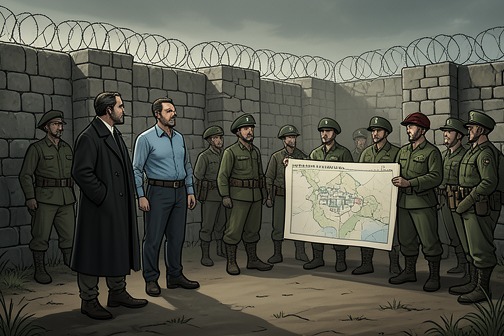
Barrera is staying at a compound in [El Salvador](entity:location-recall-location-6f541c528920), set among palm trees near the beach and enclosed by a stone wall topped with barbed wire. Keller and Ramos wait outside with Salvadoran commandos. Their access depends on hours of negotiation: Salvadoran cooperation has been secured, and the plan is to take Barrera to the U.S. Embassy, fly him to New Orleans on a State Department plane, and charge him with first-degree murder and conspiracy to distribute narcotics.
The team has a diagram of the compound, supplied by a real-estate agent who has been brought in to assist. Keller and Ramos use it to prepare an operational plan, but time is critical. They must act before Barrera’s protectors in the Mexican government learn of the raid and interfere. They also need to avoid Salvadoran casualties, because a death could jeopardize the delicate agreement that makes the operation possible. The plan therefore depends not just on surprise and force, but on cooperation among governments and restraint in carrying out the arrest.
At five in the morning, a commando charge blows the gate. Ramos quietly incapacitates a guard and says the man will be all right. Keller is relieved: a dead civilian, he recognizes, could ruin the arrangement. The effort to keep the operation controlled persists even as the team enters the house and finds Barrera hiding beneath the covers in a bedroom. Keller pulls him out, restrains him, and holds him at gunpoint. Barrera is with [Pilar Talavera](entity:character-recall-character-pilar-talavera-3e4894cd859e), who protests that she does not want him hurt.
## Custody and the reversal
Once Barrera is handcuffed, Keller understands that shooting him while he is trying to escape would not be a legitimate response to an escape attempt. Ramos’s question about whether to deal with Barrera inside or outside makes Keller confront the expectation that he will kill him instead of returning him to custody. Keller realizes that colleagues may expect him to follow the old code that a cop killer should die while supposedly trying to escape. The moment tests the difference between making an arrest and using an arrest as cover for execution; Keller does not shoot Barrera.
Keller frog-marches Barrera through the compound garden toward the van that is supposed to take them away. Instead, roughly twenty rifle barrels are aimed at Keller. Salvadoran regular army troops have arrived with Scachi, who tells Keller that a disagreement within the Salvadoran government has been settled and Barrera cannot be taken. The shift is decisive: the force meant to help deliver Barrera to American custody now faces Keller, while Barrera is no longer the immediate target. Scachi’s intervention makes the raid’s political vulnerability visible in the middle of the operation.
The soldiers remove the hood from Barrera, whose apparent calm suggests that he expected help to arrive. They also bring out Pilar Talavera, who apologizes to him as she is taken away. Scachi tells Keller and Ramos that local police would prefer to imprison them, but that he has negotiated deportation instead; military flights are waiting. Barrera tells Keller he will remember him, and Scachi arranges to get Barrera into proper clothes and out of the compound. The intended transfer to the United States has become the removal of the arresting officers.
## The operation behind the operation
Keller infers that Scachi’s next destination is [Ilopongo Airport](entity:location-recall-location-5e52c4848bde) and Hangar Four, part of the covert operation known as [Cerberus](entity:concept-recall-concept-cerberus-bff84c150df6). Scachi’s reaction confirms that Keller has guessed correctly. Keller is taken there in a jeep rather than being immediately deported, and the hangar reveals the larger network operating beyond the failed arrest. Armed men are unloading cargo from a [SETCO](entity:organization-recall-organization-setco-e74417df6792) plane; [David Núñez](entity:character-recall-character-david-n-ez-d7ed9b9ec314), [Ramón Mette](entity:character-recall-character-ram-n-mette-08fb91f18d3b)’s partner in SETCO and a veteran of Operation 40, is among the men overseeing the activity.
When Núñez opens a crate and lifts out a grenade launcher, Keller recognizes the cargo as more than an isolated weapons shipment. He understands the arrangement as a renewed Cuba–Miami–Mafia connection: cocaine travels from [Colombia](entity:location-recall-location-colombia-03c1898e601e) through Central America and Mexico to Mafia dealers in the United States, while the Mafia pays in armaments destined for the [Contras](entity:organization-recall-organization-contras-13547523c881). Keller identifies this route as the Mexican Trampoline. The discovery gives the failed raid a second consequence. Although Barrera has escaped, Keller has seen a supply chain in which drug money, organized crime, weapons, and American-backed anti-Communist forces intersect.
## Political protection and significance
The raid’s failure belongs to a wider system in which the [Federación](entity:organization-recall-organization-federaci-n-3cfed113330e) converts criminal wealth into political protection. In an earlier discussion, Barrera describes [Guadalajara](entity:location-recall-location-guadalajara-1fbbdc6cee32) as a safe place from which to serve the organization and offers partners access to his friends and protection in return for a fee. [García Abrego](entity:character-recall-character-garc-a-abrego-f750b0a7673d) questions the scale of Barrera’s ambition; Adán recognizes that Barrera is giving a name to a federation positioned around his own power. The compound operation gives that arrangement a practical form: international cooperation can be negotiated, yet political divisions and competing loyalties can still redirect the outcome.
The larger record reinforces how the organization’s influence extends beyond individual bribes. The Federación is described as having helped a president steal an election when vote-counting computers malfunctioned. Later, it profits from the peso crisis by buying government bonds, withdrawing capital, and acquiring devalued assets; when the president invites the traffickers back to help restore the economy, Adán demands a favorable environment for their business. These episodes do not cause the raid, but they clarify the political economy that makes a negotiated arrest precarious: the organization can offer money and protection while becoming entangled with the institutions supposed to restrain it.
The raid therefore produces neither the clean transfer planned by Keller nor a simple defeat. Barrera escapes custody, and Keller and Ramos are forced toward deportation, but Keller identifies a broader arms-and-drugs route at the airport. The event sets personal restraint against institutional expectation, and formal jurisdiction against the informal power capable of overriding it. Its reversal is the point: the investigators arrive with a plan to take one man away, only to discover that the machinery protecting him is connected to a much larger political and commercial system.
Event 12
1985 Mexico City earthquake
The [1985 Mexico City earthquake](entity:event-recall-event-1985-1cb8f2ed28e3) turns a sudden geological rupture into a citywide catastrophe, and the novel presents its scale through two sharply different vantage points: [Nora](entity:character-recall-character-nora-09eb671b4c0a)’s attempt to escape a collapsing hotel and [Archbishop Parada](entity:character-recall-character-archbishop-parada-cc85b3254e19)’s Mass in [Ciudad Guzmán](entity:location-recall-location-ciudad-guzm-n-057ad3581448). The disaster is at once an intimate ordeal, a consequence of the city’s underlying geology, and a force that overwhelms both civic institutions and ordinary routines.
## Setting and Geological Causes
The earthquake begins on [September 19, 1985](entity:time-recall-time-1985-9-19-2bc65bc3e1ed). At 8:18 in the morning, Nora wakes in her bed at the [Regis Hotel](entity:location-recall-location-regis-hotel-c11e782869ad) to shaking that first seems to blur the clock’s digital numbers. She realizes the movement is not confined to the clock: the side table, lamps, chair, and bed are all shaking. That moment establishes the quake through an ordinary room becoming impossible to trust, before the narration opens out to explain the forces beneath the city.
[Mexico City, Mexico](entity:location-recall-location-125cbd03b250), is built on the soft soil of an old lake bed, above the Cocos Plate, which is continually shifting beneath the Mexican landmass. The city lies about two hundred miles from the plate’s edge and the Middle American Trench, which runs beneath the Pacific from [Puerto Vallarta](entity:location-recall-location-puerto-vallarta-97c49c5b3780) to Panama. The narration describes years of smaller quakes along the plate’s northern and southern edges, but not at its center. Geologists call this unruptured central stretch a seismic gap: the ends of a string of firecrackers have gone off, while the middle remains unspent.
The rupture begins about thirty kilometers below the surface, where the Cocos Plate’s movement beneath the plate to its east succeeds. The earthquake’s origin is given as forty miles off the coast and 240 miles west of [Mexico City](entity:location-recall-location-mexico-city-78f19f654410). The distance from the epicenter shapes the danger. The narration notes that buildings nearer the center might have endured the rapid, high-frequency jolts; farther away, the quake’s energy diminishes into slower, rolling movement. On the city’s soft lake-bed foundation, that motion travels horizontally through buildings rather than simply shaking them vertically.
## Collapse Across the City
For two minutes, the upper floors of high-rises sway farther sideways than the floors beneath them. Buildings become top-heavy; their upper sections slide outward, strike against one another, and recoil. The narrated mechanics make the pattern of destruction legible: the same rolling motion that might seem less violent at a distance becomes especially dangerous when transmitted through soft ground. After the prolonged sideways movement, structures break apart.
The damage spreads through the city’s built environment and its public institutions. Concrete blocks fall, windows burst, interior walls and support beams give way, and cracked rooftop pools send water down through the floors below. Some buildings snap at the fourth or fifth floor, bringing the stories above down into the streets. In four minutes, 250 buildings collapse. Among them are the Secretariat of the Navy, the Secretariat of Commerce, and the Secretariat of Communications; the disaster therefore reaches government offices as well as hotels, homes, and hospitals.
The tourist district’s hotels are named one after another as casualties, including the Monte Carlo, Romano, Versailles, Roma, Bristol, Ejecutivo, Palacio, Reforma, Inter-Continental, and Regis. Neighborhoods including Colonia Roma, Colonia Doctores, Unidad Aragón, and the Tlatelolco Housing Project are devastated. At Tlatelolco, a twenty-story apartment tower collapses on its occupants. The General Hospital of [Mexico](entity:location-recall-location-f1c6a91e03ea) and Juárez Hospital are also destroyed, trapping and killing patients and doctors and nurses when they are urgently needed. The account gives no single total for the disaster; instead, its accumulating list of structures and communities conveys the breadth of the losses.
## Nora at the Regis Hotel
Nora experiences only a small part of that citywide destruction. In her room, a large wall mirror shatters as the building moves; falling debris and a floor that seems to slide send her out into the hallway. She does not see the hotel’s upper section strike the neighboring building, but hears the impact. When the wall behind her bed falls in, she escapes into the corridor, where fallen-in room doors make the passage look like a house of cards beginning to collapse.
The attempted escape proceeds through a crowded hotel interior. Another woman presses for the elevator. Nora moves with the people toward the lobby, past chandeliers that fall and break on the tiled floor, and waits amid the crowd at the revolving doors. She reaches them and is nearly out when the building collapses on her. The abrupt reversal closes her path at the threshold: an apparent exit becomes the final moment before the hotel comes down. The scene keeps the event’s enormous scale attached to one specific, unfinished escape, without suggesting that Nora can see or comprehend the wider destruction around her.
## The Quake Beyond Mexico City
The narration then shifts to Archbishop Parada, who is saying Mass in the Cathedral of Ciudad Guzmán, ten miles from the epicenter, when the earthquake hits. His setting contrasts with Nora’s hotel room: he stands before the altar, holding up the host and praying. The cathedral is described through its architectural mixture of European Gothic forms and pre-Columbian influence: rounded towers, a dome decorated with multicolored tiles, and gilded carvings that combine European cherubs and human heads with native patterns of fruit, flowers, and birds. The quake thus reaches beyond the capital and interrupts a religious service in a town much closer to its source.
These shifts in scale organize the event’s narrative force. The geological explanation accounts for why a distant city on soft soil suffers such destructive motion; the catalogue of collapsed buildings shows the disaster’s reach; and Nora’s and Archbishop Parada’s scenes register what that reach means for people caught in particular places. The Regis sequence ends at the moment of collapse, while the account of the city extends outward to public buildings, neighborhoods, and hospitals. The earthquake is therefore not only a setting for individual danger but a sudden rupture of the ordinary structures—private, civic, and religious—on which the characters’ lives depend.
Event 13
1985 Mexico earthquake
The [1985 Mexico earthquake](entity:event-recall-event-1985-mexico-earthquake-b7c277942e95) transforms a sudden disaster into a test of public solidarity and a political opening for the [Federación](entity:organization-recall-organization-federaci-n-3cfed113330e). In [Ciudad Guzmán](entity:location-recall-location-ciudad-guzm-n-057ad3581448), an earthquake brings down a church tower onto worshippers; in [Mexico City](entity:location-recall-location-mexico-city-78f19f654410), [Nora Hayden](entity:character-recall-character-nora-hayden-50dc9c4b1f0c) escapes the collapsing [Regis Hotel](entity:location-recall-location-regis-hotel-c11e782869ad) and joins the search for survivors. The destruction demands resources on a vast scale, and the need for them becomes part of a bargain through which drug money purchases influence over government and elections.
## The Earthquake and Its Immediate Toll
In Ciudad Guzmán, Jalisco, the church towers are beautifully constructed from stone, but the sandy soil used in their mortar cannot withstand the earthquake. The tremor measures 7.8, strikes thirty kilometers below the surface, and is only ten miles away. As worshippers leave the crowded church, the towers begin to shake loose from their foundations, break through the tiled dome, and collapse onto twenty-five people. The scene ties the loss to a particular place and community: the stones had been laid by local artisans, and the people beneath them are descendants of those builders. The church is crowded that morning because of [Bishop Juan Parada](entity:character-recall-character-125cfb5cfeea).
In Mexico City, [Nora](entity:character-recall-character-nora-09eb671b4c0a) survives the destruction of the Regis Hotel with the help of men who push her out into the open as the building collapses and burns. Two of her rescuers do not make it out; they join 128 others who die trying to reach people trapped by the earthquake. A policewoman covers Nora and puts out the fire on her hair. Around her, the damage extends beyond the hotel: the neighboring Salinas y Rocha department store is split open, buildings are toppled or cut in half, and stone, concrete, and twisted steel block the streets. Independence Day streamers hang above the ruined store, a remnant of celebration suspended over the destruction.
## Rescue and Mutual Aid
Nora finds rubber flip-flops among the department store’s scattered goods, covers her face with a kerchief, and joins volunteers searching the hotel rubble. She sees no looting, despite the city’s poverty. Instead, residents and strangers form teams across the damaged city, using shovels, picks, tire irons, broken rebar, and their hands to reach those buried beneath collapsed buildings. Other crews carry the dead and wounded on blankets, sheets, or shower curtains, while volunteers clear streets so ambulances and fire engines can pass. Fire department helicopters lower rescuers to places ground crews cannot reach.
The work continues through the day and night. Radios announce names of the dead and survivors; beneath the ruins, trapped people call out, and rescuers listen for signs of life. A troop of Girl Scouts works beside Nora, their seriousness making them part of the same collective labor as adults, clubs, medical staff, and unaffiliated volunteers. Doctors and nurses, including those left after hospitals collapse, use stethoscopes to search the rubble. When they detect a possible survivor, crews quiet sirens and engines so they can listen; workers then move the debris carefully. Sometimes someone is brought out alive; sometimes the rescuers arrive too late. They continue either way.
During a break, Nora takes tea and bread at a relief station in [La Alameda Park](entity:location-recall-location-la-alameda-park-0c472cada36a), which has become a refuge for people whose homes are damaged or unsafe. People wait patiently for food and water, give spare meals to children and older people, share blankets and household supplies, and make shelters and latrines. A woman gives Nora jeans and a flannel shirt. The park’s improvised refuge, and the thousands of people working across the city, show how the immediate response depends on cooperation as much as on strained emergency services.
## Reconstruction Becomes Political Leverage
The earthquake’s political effects emerge from the cost of rebuilding. The Mexican federal government needs money, and the account identifies the [Vatican](entity:organization-recall-organization-136cc7cc097a) and the narcos as the two available sources. The Church has already contributed; [Adán Barrera](entity:character-recall-character-ad-n-barrera-0383f92d92cf) expects the Federación to contribute as well, but not without a return. In his calculation, the government will honor the resulting exchange. The disaster thus connects urgent public need to private power: reconstruction funding becomes leverage over the state.
The Federación’s political arrangement is visible in the proposed division of leadership and territory. [García Abrego](entity:character-recall-character-garc-a-abrego-f750b0a7673d) is to lead the organization from the Gulf states, while El Verde remains in Sonora and [Güero Méndez](entity:character-recall-character-g-ero-m-ndez-9416e102d10e) keeps the Baja plaza. The federal government is expected to look the other way. The organization also agrees to help the ruling [Institutional Revolutionary Party](entity:organization-recall-organization-6aa2664a0c48) win the coming election, arranging a fundraising dinner priced at $25 million per plate for major drug figures and businesspeople. The disaster does not erase the Federation’s existing commercial system; it gives its leaders a new means to secure political protection and deepen it.
The earthquake’s role in that system becomes clearer against the earlier relationship between the Federación and political power. García Abrego had questioned why Barrera divided the world into territories and kept a fourth share for himself. Barrera described [Guadalajara](entity:location-recall-location-guadalajara-1fbbdc6cee32) as a safe place from which to serve the Federación, then offered to share his friends and protection in return for a fee. Adán recognizes this as the first time the organization’s name has been spoken openly, with Barrera positioned as its leader in practice rather than by title. The earthquake-era rebuilding bargain extends this logic: protection and money circulate through personal agreements, while formal government remains in place.
## Long-Term Consequences and the Federation’s Reach
The earthquake also stands within a longer shift in the Federación’s power. [Operation Condor](entity:event-recall-event-operation-condor-b497472664f4), intended to suppress Sinaloan drug production, instead disperses its networks. The organization adapts by concentrating on transportation across the two-thousand-mile U.S. border, where the value of cocaine rises sharply once it crosses into the [United States](entity:location-recall-location-united-states-2f533bc8d0b9). In its arrangement with the [Medellín Cartel](entity:organization-recall-organization-medell-n-cartel-aa091d54d244) and [Cali Group](entity:organization-recall-organization-33762db67409), Colombian suppliers pay $1,000 for every kilo the Mexicans safely deliver inside the United States. The Federación moves from growing drugs to moving them, using border staging areas and safe houses rather than relying on the Florida routes targeted by U.S. enforcement.
Adán later replaces the traditional hierarchy with a mostly horizontal organization: the Barrera brothers at the top, with other operators on the same level beneath them. Entrepreneurs report what they plan to transport, the amount, the agreed price, and the delivery date; they owe the Barreras 12 percent of the agreed sale price within forty-eight hours of delivery. That model and the rebuilding bargain are distinct forms of influence, but both reveal an organization that turns coordination and protection into revenue and political weight.
The consequences extend into national finance. When the new president takes office in [1994](entity:time-recall-time-1994-2c6f52c72808), Federación-controlled brokerage houses buy tesobonos; the cartels then withdraw capital from the national bank, and the peso is devalued by 50 percent. After cashing in the bonds, the Federación buys devalued pesos and assets, profiting as the currency recovers after an American loan. Adán agrees to return narco-dollars to [Mexico](entity:location-recall-location-f1c6a91e03ea) in exchange for a favorable trading environment. The earthquake is not presented as the cause of that later crisis, but the earlier reconstruction bargain foreshadows the same underlying exchange: the state’s need for money gives the drug organization room to secure protection and operate at national scale. In the event’s immediate aftermath, rescue workers try to recover lives from beneath the rubble; in its political aftermath, the Federación helps turn the need to rebuild into a new instrument of power.
Event 14
1985 PRI–Federación deal
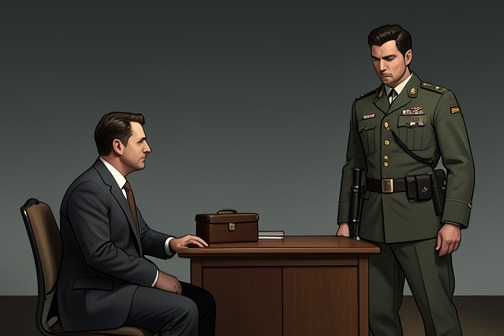
The [1985 PRI–Federación deal](entity:event-recall-event-1985-pri-federaci-n-382ed6d7e432) was a tacit bargain between [Don Adán Barrera](entity:character-recall-character-f8d17a8b49ec) and [Mexico](entity:location-recall-location-f1c6a91e03ea)’s ruling [Institutional Revolutionary Party](entity:organization-recall-organization-6aa2664a0c48): the government would let [Tío](entity:character-recall-character-t-o-00e2ebb81c20) return from exile and look the other way, while the [Federación](entity:organization-recall-organization-federaci-n-3cfed113330e) supplied funds for reconstruction and political campaigns. The deal made protection more than a private favor. It connected cartel financing to party power and state policy, turning the organization’s money and political access into instruments of governance.
## Background and the Terms of Protection
The agreement appears in Don Adán Barrera’s thoughts as he considers the arrangement he has just made with the Institutional Revolutionary Party. Its mechanics are deliberately unspoken: he enters breakfast carrying a briefcase full of cash and leaves without it. The money remains beneath the table, never acknowledged aloud, yet understood by both sides. The scene’s quietness is part of the bargain’s design: a payment can buy political action while leaving no declared agreement to answer for it.
The immediate personal stake is Tío’s return. Despite American pressure to the contrary, he will be allowed to come home from exile in [Honduras](entity:location-recall-location-honduras-437b7adfd9e2). In exchange, he is expected to retire, live quietly in [Guadalajara](entity:location-recall-location-guadalajara-1fbbdc6cee32), and manage his legitimate businesses. The deal therefore offers both a return and a limit: Tío can come back, but the arrangement contemplates his withdrawal from leadership.
Its larger terms address the government’s need for money after the earthquake. Don Adán understands that reconstruction funds can come from two sources, the [Vatican](entity:organization-recall-organization-136cc7cc097a) and the narcos. The Church has already contributed; the Federación will contribute too. But the money is not presented as an unconditional gift. Don Adán expects a quid pro quo and believes the government will honor it. Disaster relief becomes leverage in a political transaction, with public recovery bound to the organization’s expectation of protection.
## Leadership and the Organization’s Reach
The bargain also rearranges power within the Federación. [García Abrego](entity:character-recall-character-garc-a-abrego-f750b0a7673d) will realize his long-held ambition to replace Tío as El Patrón, leading from his base in the Gulf states. El Verde will continue to run Sonora, while [Güero Méndez](entity:character-recall-character-g-ero-m-ndez-9416e102d10e) retains the Baja plaza. The government’s decision to look the other way makes this internal distribution more than a cartel matter: it allows the organization’s leadership and regional authority to persist under political shelter.
The transition is not portrayed as simple triumph for Don Adán. He considers Tío’s precarious health and recognizes that his uncle has changed after [Pilar Talavera](entity:character-recall-character-pilar-talavera-3e4894cd859e) betrayed him. Tío had loved her and wanted to marry her; Don Adán believes that loss has altered the man who once held power. Retirement thus answers both political calculation and a perceived personal decline. The bargain preserves Tío’s return while opening the leadership position to García Abrego.
For Don Adán, the arrangement also restores room for business. The [Ernie Hidalgo](entity:character-recall-character-ernie-hidalgo-53e66cdb267f) fiasco has caused a major disruption; with Arturo out of the country and matters settling down, the organization needs to make up lost money. A renewed footing with [Mexico City](entity:location-recall-location-mexico-city-78f19f654410) promises a return to business as usual. Yet the deal’s apparent consolidation is already shadowed by another objective: Don Adán thinks the Baja plaza must be taken from Güero Méndez. Political accommodation at the top does not end competition over territory below.
## Financing the Party and Securing Silence
The Federación’s political contribution extends beyond the unacknowledged breakfast payment. The organization will also pay to ensure that the Institutional Revolutionary Party wins the upcoming elections, as it has done since the revolution. Don Adán is helping García Abrego organize a fundraising dinner priced at twenty-five million dollars per plate. Every major narco and businessman in Mexico will be expected to contribute if they want to do business.
That expectation shows how the arrangement works as a network of obligations, not simply as a transfer of cash from one individual to another. The party receives money; the contributors demonstrate their willingness to comply; the Federation’s political standing is reinforced. The money raised is simultaneously campaign support and a condition of access to commerce. Don Adán’s formulation makes the bargain’s coercive edge plain without requiring an explicit threat: participation signals who remains within the protected business order.
The government’s promise to look the other way is the other side of that financing. Political benefit and non-enforcement are joined: the organization funds the party and reconstruction, while the government refrains from disrupting the Federación’s operations. The deal therefore exceeds the familiar image of isolated bribery. It presents money as a means by which a criminal organization can help sustain a ruling party and, in return, shape what the state will permit.
## Electoral and Economic Consequences
The bargain’s electoral dimension becomes more explicit four years later. Don Adán knows that the Federación helped the president steal the election. In the account of the 1988 contest, the opposition candidate Cuauhtémoc Cárdenas appeared likely to defeat the Institutional Revolutionary Party, which had held power since the 1917 Revolution; then the computers counting the votes mysteriously malfunctioned. The later disclosure gives the [1985](entity:time-recall-time-1985-86b1f5fc64b5) arrangement a sharper significance: campaign financing and tacit protection belong to a larger relationship in which the organization can support the party’s continued rule, not merely secure favors for one of its leaders.
The same pattern of bargaining reappears amid the [1994](entity:time-recall-time-1994-2c6f52c72808) peso crisis. The Federación buys government bonds, withdraws capital, and profits as the peso is devalued and the economy collapses; after the government invites the narco lords to bring their money back into the country, Don Adán accepts only in return for a favorable trade environment. This later episode is not the same transaction as the 1985 breakfast, but it echoes its governing logic: public dependence on cartel money creates an opening for private demands, and official rhetoric about fighting the cartels coexists with accommodation.
The deal’s lasting significance lies in this progression from a briefcase left beneath a breakfast table to influence over elections and economic policy. Its secrecy does not make the exchange marginal; it is how the exchange can operate. In the novel’s account, the state’s need for money, the party’s need to retain power, and the Federación’s need for room to conduct business meet in an arrangement that lets each side claim something while leaving the public consequences largely unspoken.
Event 15
1988 Mexican election fraud
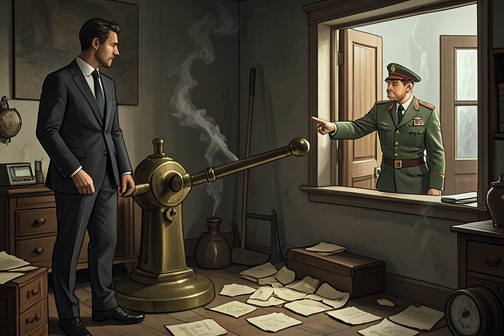
The [1988 Mexican election fraud](entity:event-recall-event-1988-435b9b346941) is presented as a turning point in the relationship between the [Federación](entity:organization-recall-organization-federaci-n-3cfed113330e) and [Mexico](entity:location-recall-location-f1c6a91e03ea)’s ruling party: the criminal organization helped the president steal an election that the opposition appeared poised to win. The account gives no operational details of the intervention. Instead, it links the political outcome to the sudden failure of the computers counting the votes, making institutional power—and the machinery meant to record it—part of the story of cartel influence.
## The election and its stakes
Four years before the conversation in which the episode is recalled, the leftist opposition candidate Cárdenas seemed certain to win. His victory threatened the [Institutional Revolutionary Party](entity:organization-recall-organization-6aa2664a0c48) (PRI), which had held power since the 1917 Revolution. The election therefore mattered not only as a contest between candidates: a change in government could have ended the party’s long dominance. The account establishes the stakes through that contrast between an apparently likely opposition victory and the continuation of PRI rule.
The description of the count is pointedly brief. The computers that tabulated the votes are said to have malfunctioned, with the narration characterizing the failure as if it had happened by magic. That wording conveys suspicion without specifying who caused the breakdown or how it was carried out. The text does not identify a particular machine, official, or procedure, and it does not provide a numerical result. Its emphasis is instead on the gap between the expected outcome and the one that followed.
## The Federación’s part
The fraud is not described as an isolated act by party officials. [Don Adán Barrera](entity:character-recall-character-f8d17a8b49ec) knows that the Federación helped the president steal the election, and the disclosure surfaces when [Tío](entity:character-recall-character-t-o-00e2ebb81c20) refers to a large sum of his money and to an additional, unspoken matter. Don Adán understands that this other matter is the Federación’s electoral assistance. The scene connects an immediate conversation about money to a political act from four years earlier, but it leaves the precise bargain and the Federation’s role in the mechanics of the count unstated.
Elsewhere, the Federación’s political method is expressed as an offer of shared protection and access: Barrera tells [García Abrego](entity:character-recall-character-garc-a-abrego-f750b0a7673d) that his friends will become García Abrego’s friends and that his protection will be shared, in return for a fee. He also describes [Guadalajara](entity:location-recall-location-guadalajara-1fbbdc6cee32) as a safe place from which to serve the Federación. These details do not explain how the 1988 fraud was executed, but they give the disclosure a broader context: the organization presents itself not merely as a trafficking network but as a power able to offer security, coordinate interests, and make political arrangements.
## A wider pattern of political leverage
The election episode belongs to a broader account of cartel influence over government, though the later events described in the book are distinct from the 1988 fraud. In [1994](entity:time-recall-time-1994-2c6f52c72808), after a new president took office, the Federación used brokerage houses to buy government bonds, withdrew cartel capital from the national bank, and profited after the resulting peso devaluation. When the president invited narco money back into the country, Don Adán accepted on the condition of a favorable trade environment. This later episode shows another form of leverage: financial pressure followed by negotiation over the conditions under which the organization could operate. It should not be mistaken for a direct consequence of the election fraud, but it echoes the earlier reach of the Federación into national political life.
That reach also unsettles the distinction between public authority and private criminal power. The vote-counting failure remains unexplained at the level of procedure, while the Federación’s assistance is stated as something Don Adán knows. The narrative thus makes the political result legible without turning the fraud into a forensic account: the reader learns who benefited from the intervention and that the organization helped secure it, but not exactly how the votes were manipulated.
## Narrative significance
The event is disclosed retrospectively rather than staged as an election-day scene. Its compressed form makes the reader encounter the fraud through its residue: a remark about money, Don Adán’s recognition of what remains unsaid, and a short account of the opposition’s expected victory and the computers’ failure. The missing mechanics are significant. They leave the apparent technical malfunction as an emblem of how political outcomes can be made to appear administrative even when the account attributes the theft to a criminal organization’s assistance.
The episode expands the meaning of the Federación’s power. It is not only able to divide territory, promise protection, or collect fees; it can also help preserve the governing order from which it benefits. The book does not claim that this single intervention explains the party’s continued rule, nor does it specify the precise exchange behind the assistance. It does establish that electoral power and cartel power have entered the same political story, with the failed vote-counting computers marking the point where an ostensibly technical process gives way to a larger, acknowledged act of fraud.
Event 16
Iran–Contra affair
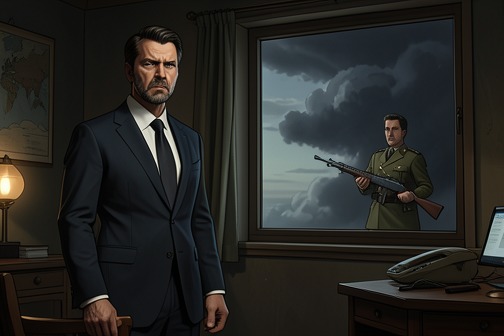
The [Iran–Contra affair](entity:event-recall-event-bfddb93cdbbf) in the novel is both a public controversy over arms for hostages and a screen that keeps a more damaging allegation out of view: that the administration’s covert support for the [Contras](entity:organization-recall-organization-contras-13547523c881) was entangled with drug trafficking. Its decisive personal consequence is [Art Keller](entity:character-recall-character-art-keller-31aa2337649c)’s choice to lie to a Senate committee about what he knows. His testimony helps divert attention from the alleged arms-for-drugs dealings, while the questions he refuses to answer expose the larger secret network surrounding the operation.
## Anti-Communist Rationale and Covert Authority
[John Hobbs](entity:character-recall-character-john-hobbs-aa4c4c1db101) presents intervention in [Nicaragua](entity:location-recall-location-fdd3ef235620) as an urgent response to a Soviet foothold in Central America. He describes the country as a strategic danger rather than an isolated conflict: it lies near the Panama Canal, borders [Honduras](entity:location-recall-location-honduras-437b7adfd9e2) and [El Salvador](entity:location-recall-location-6f541c528920), and, in his account, could become the first stage of a regional spread toward Guatemala and southern [Mexico](entity:location-recall-location-f1c6a91e03ea). The prospect of Soviet military reach from the region lets him frame intervention as a matter of national survival. Against this scenario, he offers the Contras as an alternative to sending American soldiers into the jungle.
Art challenges the moral terms of that choice, pointing to the Contras’ involvement in the drug trade and to violence by allied forces against civilians. Hobbs answers not by denying the wider stakes of those objections, but by arguing that the danger of a Soviet client state leaves no acceptable option of inaction. His language converts a covert policy into an emergency necessity: the operation appears less like a political choice than a response forced by geography and the threat of Communist expansion.
Hobbs also rejects Art’s suggestion that the [Central Intelligence Agency](entity:organization-recall-organization-central-intellig-55def823fc61) had simply taken action on its own. He claims that [Cerberus](entity:concept-recall-concept-cerberus-bff84c150df6) came from the highest authority in the country and portrays President Ronald Reagan as having recognized the historical danger and acted with resolve. This is Hobbs’s justification, not an independent confirmation of the chain of command. The novel places the assertion beside the secrecy that later surrounds Cerberus, making the question of who authorized the operation part of the scandal rather than a settled public fact.
## A Wider Network of Operations
The covert campaign sits within a broader apparatus of anti-left operations in Latin America. [Sal Scachi](entity:character-recall-character-sal-scachi-82ddfd8bbc74)’s account identifies [Red Mist](entity:expression-recall-expression-red-mist-5e3e3e2788ee) as a coordinating code name for operations intended to neutralize left-wing movements. Its reach spans right-wing militias and their drug-lord sponsors, military officers, troops, intelligence agencies, and police forces. Scachi’s role is to move intelligence and resources among participants who may not know that their separate operations are being coordinated. The scale and dispersion of this system make it difficult to locate responsibility in a single agency or unit.
The novel also shows how [Cold War](entity:time-recall-time-700d9e46b459) security arguments can be routed through the [War on Drugs](entity:expression-recall-expression-war-on-drugs-a87c72b6c1eb). In a later Mexican context, American assistance against left-wing insurgencies is presented publicly as anti-drug support: military aircraft funded for the drug campaign are to be transferred quietly to the Mexican army for use against insurgents. That episode is not the same operation as Cerberus, but it echoes the affair’s political logic. An acknowledged public purpose can provide cover for a different strategic use, while the language of national security discourages scrutiny of the means and beneficiaries.
## Senate Testimony and the Public Scandal
Art’s testimony takes place before a Senate committee investigating rumors that the Central Intelligence Agency was somehow complicit in Contra arms-for-drugs dealings. He knows he is lying, and the transcript continues to play in his mind afterward. Asked about [SETCO](entity:organization-recall-organization-setco-e74417df6792), an air-freight company, he claims only remote familiarity and denies knowing whether its airplanes carried cocaine. Asked about the Mexican Trampoline, he says he has never heard of it. These denials shut down lines of inquiry that could connect the covert supply system to drug transport.
The committee’s questions also probe the machinery surrounding the operation. Art denies prior knowledge of the [Terrorist Incident Working Group](entity:organization-recall-organization-terrorist-incide-72d810983abd), [National Security Directive Number Three](entity:rule-recall-rule-national-security-direct-8ebfc925b851), and NHAO. When the questioning turns to whether NHAO pressured him, his lawyer objects to the inquiry. A question about Colonel Scott Craig has a different effect: it wakes the press, because Craig has become a prominent figure in the Iran–Contra arms-for-hostages controversy. Art has seen him at [Ilopongo Airport](entity:location-recall-location-5e52c4848bde) unloading cocaine, but tells the committee he has never met or spoken with him. The press loses interest again.
The shift in attention is central to the novel’s depiction of the affair. The public and the media focus on the arms-for-hostages deal, described as a disgraceful side story, while the alleged arrangement through which the Contras dealt drugs for arms remains unseen. A committee question about whether Cerberus had anything to do with Agent [Ernie Hidalgo](entity:character-recall-character-ernie-hidalgo-53e66cdb267f)’s murder brings the hidden connection directly into the hearing. Art denies knowing Cerberus and denies its involvement in Hidalgo’s death. His answers protect his silence, but they also make the hearing’s narrow public narrative possible.
## Private Cost and Political Afterlife
Art’s concealment damages the trust closest to him. [Althea Keller](entity:character-recall-character-althea-keller-1ae14debf2cc) leaves the gallery after he denies Cerberus’s connection to Hidalgo’s murder. Later, at the Watergate, she tells him that senators may not be able to tell when he is lying, but she can. Her response makes the cost of the testimony intimate: the public performance may persuade the committee or lose the press, but it cannot persuade his wife.
The affair’s political logic continues beyond the hearing. In another episode, Hobbs describes the War on Drugs as a route through which Congress can fund assistance that it would not openly authorize as a covert war against Communists. This does not establish that every later policy is part of Iran–Contra; it shows how the novel connects the scandal to a durable method of political concealment. The affair’s significance lies in that double vision: the official controversy occupies the public stage, while drug trafficking, covert coordination, and the human consequences of the operation remain harder to see.
Event 17
Ramón Mette's arrest
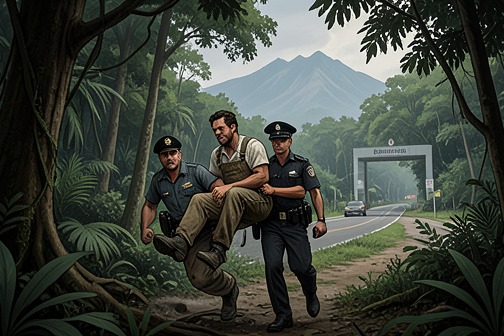
[Ramón Mette's arrest](entity:event-recall-event-ram-n-mette-1f475b3c4384) turns a carefully repeated morning routine into a cross-border seizure. [Art Keller](entity:character-recall-character-art-keller-31aa2337649c) captures Mette in [Tegucigalpa](entity:location-recall-location-tegucigalpa-5bc6c1e368ed) and carries him through [Honduras](entity:location-recall-location-honduras-437b7adfd9e2), the Dominican Republic, and the [United States](entity:location-recall-location-united-states-2f533bc8d0b9) to face a charge in the murder of [Ernie Hidalgo](entity:character-recall-character-ernie-hidalgo-53e66cdb267f). The operation exposes how fragile Mette’s apparent command of local protection is, while its political consequences make Keller’s action more than a police arrest: it becomes a public challenge to the boundaries of state authority.
## Mette’s Network and Political Setting
Mette is identified as a partner of [David Núñez](entity:character-recall-character-david-n-ez-d7ed9b9ec314) in [SETCO](entity:organization-recall-organization-setco-e74417df6792). In the wider account of the network, SETCO aircraft move cocaine from [Colombia](entity:location-recall-location-colombia-03c1898e601e) through Central America and [Mexico](entity:location-recall-location-f1c6a91e03ea) toward Mafia dealers in the United States, while the Mafia pays in armaments that go to the [Contras](entity:organization-recall-organization-contras-13547523c881). That arrangement links drug transport to covert military supply, placing Mette’s business within a system that crosses borders and joins criminal and political interests.
The arrest also unfolds against the book’s broader account of the [Federación](entity:organization-recall-organization-federaci-n-3cfed113330e)’s accumulation of power. [Adán Barrera](entity:character-recall-character-ad-n-barrera-0383f92d92cf) describes [Guadalajara](entity:location-recall-location-guadalajara-1fbbdc6cee32) as a safe place from which to serve the organization and offers protection to associates in return for a fee. Elsewhere, the narrative says the Federación helped a president steal the 1988 election when vote-counting computers malfunctioned. In [1994](entity:time-recall-time-1994-2c6f52c72808), after the new president took office, the organization bought government bonds, withdrew capital, and profited from the peso’s collapse and recovery; Adán Barrera then demanded a favorable trade environment before bringing funds back into Mexico. These episodes do not explain the immediate capture of Mette, but they establish the larger political landscape: the criminal network has money, protection, and influence that reach well beyond any single operator.
## The Routine Keller Watches
Before the seizure, Keller watches Mette leave his home in Tegucigalpa. Mette owns seven maroon Adidas tracksuits, one for each day of the week, and follows a strict schedule: a three-mile jog accompanied by two bodyguards, a shower, a fruit smoothie, the newspaper, phone calls, business, and a workout in his private gym. The guards’ matching clothes conceal the MAC-10s they carry. The details make security part of the routine rather than an interruption to it; Mette’s daily life appears organized around the confidence that he can move safely through it.
The schedule has continued for months, by the clock. On the morning Keller acts, Mette returns sweaty from his run and enters his home. The bodyguard opens the door, and Keller’s team takes Mette before he can resume the familiar sequence. A large contingent of Honduran secret-service troopers is present, while Mette’s bodyguard raises his hands. The scene reverses Mette’s assumption of protection: the state personnel around him do not prevent the capture, and he is left to recognize that he does not command the force he had counted on.
## Seizure and Transfer
Keller confronts Mette as he is brought under control and makes clear that the jog is over. His team covers Mette’s head and escorts him to a van with tinted windows. They then take him onto an Air Force plane bound for the Dominican Republic. At the American embassy there, he is arrested for the murder of Ernie Hidalgo, transferred to another aircraft, and flown to [San Diego](entity:location-recall-location-san-diego-8089c46f5361). He is arraigned, denied bail, and placed in solitary confinement at the federal holding facility.
The route is central to the event’s meaning. Mette is seized in Honduras, taken first to the Dominican Republic, and then brought to San Diego; the sequence makes the arrest an international operation rather than an ordinary local detention. It also raises a question of authority without resolving it into a legal argument. Keller is a disgraced former RAC from the closed Guadalajara office, yet he is able to carry out an operation that has consequences in several countries. The narrative emphasizes what he does and the reactions it provokes, not a formal account of the operation’s legal basis.
## Public and Political Consequences
The capture sparks riots in Tegucigalpa. Thousands of angry citizens, incited and paid by Mette’s lawyers, burn the American embassy in protest against what they regard as Yankee imperialism. Their anger focuses on an American officer entering their country to seize one of its prominent citizens. The arrest therefore becomes visible not only through the victim and his captors but through a crowd mobilized around national dignity and foreign intervention.
In Washington, officials also question Keller’s action. They want to know how the disgraced former head of the Guadalajara office dared to create an international incident, and how he had the resources to carry it out. The reaction marks the gap between Keller’s successful seizure and its institutional acceptance: his operation has worked, but its success does not make it uncontroversial. The arrest leaves Mette in federal custody while placing Keller himself under scrutiny.
## Significance
The episode is built around a sharp reversal. Mette’s week-long wardrobe, timed run, armed escorts, and elaborate home routine suggest an ordered world in which danger can be managed through money and protection. At the door, that order fails. The Honduran troopers do not shield him, Keller’s team takes charge, and Mette’s transfer becomes a test of power that continues well beyond the house.
The aftermath broadens the significance of the arrest without erasing its specific charge. Mette faces prosecution for Ernie Hidalgo’s murder, but the public response turns the seizure into a dispute over sovereignty, while Washington’s questions expose the risks of Keller acting across borders. The event thus joins the novel’s criminal investigation to its larger depiction of networks that operate through political connections and international routes—and of law enforcement that answers those networks with actions whose authority is itself contested.
Event 18
Humberto Álvarez Machain's kidnapping and transfer to the United States
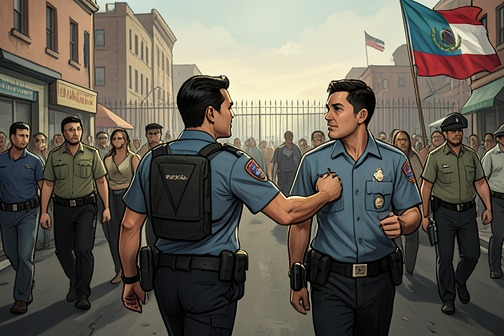
[Art Keller](entity:character-recall-character-art-keller-31aa2337649c)’s abduction of Dr. [Humberto Álvarez Machain](entity:character-recall-character-humberto-lvarez-mac-5dee677ac0fb) turns a stalled murder investigation into a cross-border seizure carried out beyond the reach of ordinary cooperation. When Mexican authorities will neither arrest nor extradite the doctor, Keller hires Antonio Ramos to take him from [Guadalajara](entity:location-recall-location-guadalajara-1fbbdc6cee32) and bring him to the [United States](entity:location-recall-location-united-states-2f533bc8d0b9). The resulting prosecution advances Keller’s campaign over [Ernie Hidalgo](entity:character-recall-character-ernie-hidalgo-53e66cdb267f)’s murder, but the method makes the boundary between law enforcement and unlawful force impossible to ignore.
## The impasse over Álvarez
[Dr. Álvarez](entity:character-recall-character-dr-lvarez-b2f471ae2a0b) has a thriving gynecology practice in Guadalajara and has no intention of leaving [Mexico](entity:location-recall-location-f1c6a91e03ea). He knows the [Drug Enforcement Administration](entity:organization-recall-organization-drug-enforcement-85b22b2a9f98) is aware of his role in Hidalgo’s murder and that Keller wants him, so he stays far from the border. Keller’s superiors see no practical route to compel his appearance: Mexican authorities will not seize him, and they will not extradite him. [Tim Taylor](entity:character-recall-character-tim-taylor-843a5c724646) tells Keller that the case is closed. Keller refuses to accept that conclusion. In his view, the investigation cannot end while people involved in Hidalgo’s murder remain alive and free.
The refusal is not simply a disagreement over prosecutorial priorities. Keller’s pursuit of Álvarez is tied to his determination to answer for the torture and killing of his friend. Yet the available legal channels have failed to produce custody, and the Mexican government’s refusal leaves Keller choosing between abandoning the case and acting without its cooperation. The narrative makes the dead end concrete: Álvarez continues his work in Guadalajara while Keller must seek help outside the official process.
## Ramos and the plan
Keller goes to [Tijuana](entity:location-recall-location-tijuana-47bb9d0aad74) to find Ramos, a former police officer who now owns a small restaurant. He approaches him with a specific target and an offer of $100,000. Ramos initially understands the proposal as a request to kill Álvarez. Keller corrects him: he wants the doctor kidnapped, transported to the United States, and brought to trial. The distinction matters to Keller. He does not want Álvarez dead; he wants him alive in prison, where he can be made to answer through a prosecution.
Ramos challenges the moral presentation of the plan. He sees Keller’s insistence on a fair trial as a way of disguising revenge, and argues that killing Álvarez would be simpler. Keller rejects that easier outcome, insisting on imprisonment rather than death. His objective is therefore both legal and punitive: he wants a trial, but he also wants the doctor to spend the rest of his life behind bars. The promise to pay Ramos for a kidnapping, rather than a killing, gives the operation its stated limit even as Keller commissions a seizure on foreign soil.
## The abduction in Guadalajara
Álvarez finishes seeing his last patient, escorts her out, says good night to his receptionist, and returns to his private office to collect papers before going home. Seven men enter the clinic without his hearing them. Ramos reaches the office with a stun gun and uses it on Álvarez, who falls to the floor. The scene shifts abruptly from the doctor’s ordinary end-of-day routine to the forceful operation Keller has arranged; Álvarez has no warning that the men are there to take him.
After the seizure, Keller faces the doctor with the murder investigation and requires him to write a statement describing his involvement and that of the Barreras and [Güero Méndez](entity:character-recall-character-g-ero-m-ndez-9416e102d10e). Keller also has Álvarez write a separate statement affirming that he was not tortured or compelled to make the first one. Álvarez asks whether cooperation will earn him consideration. Keller says he will put in a good word, but makes no promise of a favorable legal outcome. The two written accounts give Keller evidence while also recording, in the terms he demands, that the statement was not coerced.
The documents are completed at a kitchen table. Keller reads them, puts them in his briefcase, and tells Álvarez he is going on a trip. The doctor fears that such a trip could mean a shallow grave, but Keller specifies that the destination is the United States and says a plane is waiting at the airport. Álvarez agrees to go willingly. Keller recognizes that, after implicating powerful figures, the doctor’s prospects in Mexico are bleak; he hopes the United States will hold him in federal prison instead.
## Transfer, prosecution, and protest
Two hours later, the group has cleaned Álvarez up and provided him with fresh trousers before putting him on a plane to [El Paso](entity:location-recall-location-ccc0e0d194cb). There he is arrested and arraigned in connection with the torture murder of Ernie Hidalgo. At the jail, officials photograph him from head to knees to document that he has not been tortured. This measure follows the forced seizure and the written statement intended to deny coercion: the operation generates its own record of the conditions under which the new prisoner has arrived.
Keller follows through on his limited promise to speak in Álvarez’s favor, but he does not ask federal prosecutors to seek the death penalty. Instead, he wants life imprisonment without the possibility of parole. His stated preference for a trial over an execution thus does not amount to leniency. He seeks a permanent sentence that will keep Álvarez alive, imprisoned, and without hope of release.
The Mexican government protests the seizure, and American civil-liberties lawyers join the objections. The protest does not immediately undo the transfer: Álvarez is held in Marion federal maximum-security prison while his appeals proceed. [Ramón Mette](entity:character-recall-character-ram-n-mette-08fb91f18d3b) is also there awaiting appeal, while [Quito Fuentes](entity:character-recall-character-quito-fuentes-7f5e1be5d755), seized in a separate operation, is in a [San Diego](entity:location-recall-location-san-diego-8089c46f5361) jail. The narrative sets these outcomes beside the absence of any effective restraint on Keller. The objections are real, but they do not stop the men who carried out the operation or reverse its immediate result.
## Jurisdiction and narrative significance
The event makes the border more than a line on a map. Mexican officials retain the ability to refuse an arrest or extradition, but Keller uses a private operation to move the accused doctor into United States custody, where American authorities can prosecute him. The transfer bypasses the cooperation Keller could not secure through official channels. In the adjacent pursuit of Quito Fuentes, Keller likewise drags a suspect across the border into American custody; the two episodes show how the narrative links the pursuit of suspects to direct contests over who can physically control them.
The abduction’s central contradiction is that Keller insists on a courtroom outcome while arranging the means to obtain custody through force. His aim is not to execute Álvarez outside the law, and the doctor is formally arrested, arraigned, and held during appeals. Yet Keller has already decided that the ordinary legal route will not deliver him to that process. The novel therefore makes both parts of his choice visible: he preserves the possibility of a trial, but does so by overriding the boundary and procedure that should have governed how the accused reached it.
Event 19
Miguel Ángel Barrera's arrest
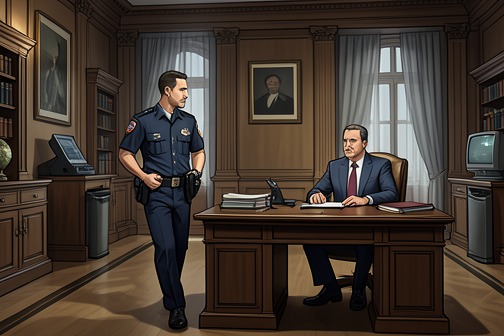
[Miguel Ángel Barrera](entity:character-recall-character-miguel-ngel-barrera-6b908727e16a)’s arrest is both a law-enforcement operation and a political bargain: [Art Keller](entity:character-recall-character-art-keller-31aa2337649c) finally gains authority to seize a powerful cartel figure, but only after Barrera’s arrest is made part of a deal over the [North American Free Trade Agreement](entity:rule-recall-rule-0d55419a67d5). The operation’s success depends on secrecy, coordination, and restraint. Its limits are as consequential as its target: Barrera is taken, while the agreement closes the books on [Ernie Hidalgo](entity:character-recall-character-ernie-hidalgo-53e66cdb267f)’s murder and rules out pursuing other major figures.
## Political Bargain and Background
The immediate authorization comes only after a negotiation at the highest level. [John Hobbs](entity:character-recall-character-john-hobbs-aa4c4c1db101) travels to [Los Pinos](entity:location-recall-location-los-pinos-e5e2e69e801d), the presidential residence, to negotiate with the Mexican government. The proposed exchange is explicit: arresting Miguel Ángel Barrera will remove an obstacle to the North American Free Trade Agreement. The agreement is presented as essential to [Mexico](entity:location-recall-location-f1c6a91e03ea)’s economic modernization; without it, the country is expected to stagnate. Barrera’s arrest is therefore treated not simply as the result of an investigation, but as an item in a larger negotiation over the country’s economic future.
Art has to force his way into the arrangement. He reminds Hobbs that the president had previously funded the [Contras](entity:organization-recall-organization-contras-13547523c881) with cocaine, using that history to challenge the administration’s distinction between its public positions and its earlier conduct. The pressure works: Art receives permission to go after Barrera. But the bargain attaches a serious condition. This is to be the last arrest; the Hidalgo case is to be considered closed afterward, and Art will not be permitted back into Mexico. He can target Barrera, but not [Adán Barrera](entity:character-recall-character-ad-n-barrera-0383f92d92cf), [Raúl Barrera](entity:character-recall-character-ra-l-barrera-b24a4deeae21), or [Güero Méndez](entity:character-recall-character-g-ero-m-ndez-9416e102d10e). The operation thus grants Art a narrow victory while defining in advance what he must leave untouched.
The political stakes reach further back. When Art hears [Tío](entity:character-recall-character-t-o-00e2ebb81c20) refer to money and another matter, Adán understands the unstated allusion: the [Federación](entity:organization-recall-organization-federaci-n-3cfed113330e) had helped the president steal the 1988 election. At the time, the opposition candidate, Cárdenas, appeared likely to win and dislodge the [Institutional Revolutionary Party](entity:organization-recall-organization-6aa2664a0c48), which had held power since the Revolution. The vote-counting computers then malfunctioned. The arrest is set against this history of political dependence: the organization’s influence is not confined to the drug trade but reaches into the machinery of government and electoral power.
## Planning the Operation
Art watches Barrera’s residence at 2718 Cosmos Street and waits for the right moment. Barrera has been moving among a dozen apartments and condominiums in [Guadalajara](entity:location-recall-location-guadalajara-1fbbdc6cee32), changing residences every few days. The narrative associates his increasingly erratic vigilance with either fear of arrest or his own cocaine use. Art recognizes that the capture must be staged carefully. His government has promised the Mexican government an operation without public disorder or collateral casualties, and the arrest must look like a Mexican operation, presenting the federal authorities as its authors.
The armed presence makes that promise difficult to keep. Barrera has three bodyguards, armed with machine pistols, AK-47s, and grenades, and Art knows they may use their weapons. Opposing them are twenty-five special federal officers from [Mexico City, Mexico](entity:location-recall-location-125cbd03b250), carrying rifles and other tactical equipment, as well as Antonio Ramos and his men. Yet overwhelming force is not the plan’s measure of success. The Mexican mandate forbids a street gun battle in Guadalajara; a violent public confrontation could unravel the political agreement that has made the arrest possible.
The timing is also bound to a larger state operation. The federal officers are positioned to seize Barrera, while a separate army unit waits outside town to detain the [Jalisco State Police](entity:organization-recall-organization-jalisco-state-po-f40b323b9f24) force, its chief, and the state governor. The intention is to keep them from interfering until Barrera has been flown to Mexico City, Mexico, arraigned, and jailed. Art understands the arrangement as a state coup, planned to the second. The Interior Secretary and the governor have placed themselves at a distance from the operation, literally away at sea, so they can deny involvement to both the public and the surviving Barrera brothers. Their absence does not mean the state is uninvolved; it is part of how the operation manages responsibility and concealment.
That coordination creates a narrow window. If the moment passes, secrecy may not hold for another day. The Jalisco police could get Barrera out, the governor could claim ignorance, and the opportunity would be lost. Art therefore watches the front door, aware that the restraint demanded by the deal and the urgency demanded by the plan pull in opposite directions: the officers must act quickly, but without allowing the operation to become a public firefight.
## The Seizure
When the door gives way, federal officers enter and find Barrera with a woman. He tries to reach weapons stored in the room, but his movement is interrupted when the intravenous stand beside him topples. An officer takes the grenade from his hand, and the federal team secures him before he can use the weapons. The arrest is sudden and chaotic, but the feared exchange of gunfire does not define the scene. Barrera is captured alive, and the operation avoids the street battle that could have jeopardized the agreement.
Barrera attempts to buy his way out by offering a federal officer five million dollars. When he sees Art, however, he understands that money will not prevent this arrest. He breaks down and asks to be killed. Art reads the moment as an image of evil reduced to helplessness, a reversal from the powerful figure whose protection and influence had once seemed to place him beyond ordinary law. The contrast does not erase the political machinery that protected him; rather, it makes plain how much the operation had to arrange before officers could lay hands on him.
## Detention and Consequences
Barrera’s arraignment does not restore the public identity he tries to claim. He presents himself as a car dealer with no knowledge of the cocaine business, but the courtroom laughs. The judge orders him held without bail, describing him as dangerous and a flight risk, particularly because of his alleged influence over law enforcement in Guadalajara. The decision prevents his release into a city where his connections might otherwise matter.
The authorities then move him under heavy control. Shackled aboard a military aircraft, he is flown to Mexico City, Mexico, taken under a covered route from the plane to a van with blacked-out windows, and transferred to [Almoloya prison](entity:location-recall-location-c0888dbd2dc3). There he is placed in solitary confinement. His detention is thus not only a judicial outcome but a response to the risk that local influence could undo the arrest. His cold, isolated confinement and the craving for crack that troubles him mark the collapse of his former command into physical and institutional custody.
The agreement’s political consequences remain unresolved by the capture itself. Art has achieved permission to arrest Barrera, but the promised closure of the Hidalgo case prevents him from continuing the investigation in Mexico or pursuing the other named targets. The scene therefore closes one immediate objective while preserving the larger conflict. Barrera’s arrest demonstrates the reach of federal force, but the carefully negotiated boundaries around it show that enforcement is constrained by the same political relationships that had enabled cartel power.
Event 20
Assassinations of Calabrese and Bellavia
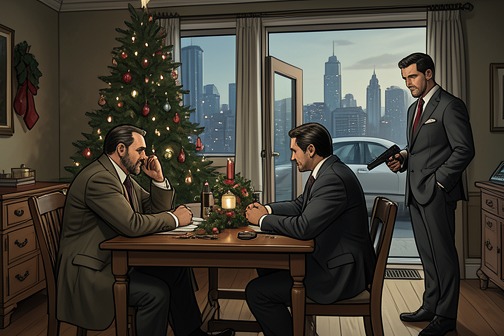
The [Assassinations of Calabrese and Bellavia](entity:event-recall-event-calabrese-bellavia-fc840eb1b7be) are a planned double killing in [New York City](entity:location-recall-location-new-york-city-65df0a129d4c)’s underworld, carried out by [Sean Callan](entity:character-recall-character-sean-callan-57035fec3717) on [Sal Scachi](entity:character-recall-character-sal-scachi-82ddfd8bbc74)’s behalf. Their deaths remove [Paul Calabrese](entity:character-recall-character-10121f634363) from power and clear the path for [Johnny Cozzo](entity:character-recall-character-johnny-cozzo-de64fcd5c762) to take over. The event’s decisive significance lies in the gap between its public appearance—a killing that can be blamed on outsiders—and its private purpose: an internal transfer of power designed to keep the drug business moving.
## Setting and Stakes
The killings take place during a holiday gathering attended by [Nora Hayden](entity:character-recall-character-nora-hayden-50dc9c4b1f0c) and [Little Peaches](entity:character-recall-character-little-peaches-6bb14102cdca). A toast has just turned attention toward the good things in life when the event abruptly shifts from celebration to violence. Outside, Bellavia has opened the car door for Paul Calabrese. [Callan](entity:character-recall-character-7b41c2a4b719) approaches with a concealed gun, and Bellavia recognizes him before Callan shoots. Callan then kills Calabrese.
The victims’ deaths are not presented as the spontaneous result of a personal quarrel. Callan’s thoughts establish that he believes the operation is unfolding according to plan. Bellavia and Calabrese had arrived expecting a staged crime scene, one that would let them and their associates perform grief and make a show of seeking peace within the family. Instead, the plan ends with both men dead. That reversal is central to the event: those expecting to manage the aftermath become its victims.
The stakes extend beyond the two men. The question is who will command the family and control its share of the drug trade. Sal Scachi has explained to Callan that the family cannot afford to let rival families capture the money and power. In his reasoning, refusing to deal does not offer safety; it leaves the family on a path toward losing both influence and business. Calabrese’s removal is therefore tied to a larger calculation about survival and succession.
## The Attack and Its Immediate Aftermath
After killing both men, Callan leaves the scene on foot. A car is waiting for him at a nearby corner. He gets in, changes into fresh clothes kept in the back, and travels uptown while the driver handles the traffic without speaking. The swift change of clothing and the quiet getaway underscore the attack’s preparation: Callan is not improvising an escape after an unexpected encounter but carrying out a job with an arranged exit.
Inside, the people at the gathering do not initially know what has happened. A headwaiter reports that someone has been shot outside, and the guests rise without knowing whether to go out or remain where they are. [Sal](entity:character-recall-character-efb5cde11000) enters and orders everyone to stay put, telling them that the boss has been killed. [Nora](entity:character-recall-character-nora-09eb671b4c0a)’s uncertainty about which boss he means registers how abruptly the news reaches those inside; the political meaning of the deaths is not immediately clear to the room.
Callan’s private assessment supplies what the gathering cannot yet know. The arrivals’ expected performance of mourning and reconciliation has been displaced by the outcome Sal’s side wanted. The shift from apparent family peace-making to murder is not merely a change in scene. It is the mechanism by which the old leadership is removed while the people positioned to benefit can deny having arranged it.
## Succession and Cover Story
Sal’s plan is built around Johnny Cozzo becoming the new boss. The transition is described as generational: the old leadership is to give way to the new. Yet Cozzo cannot openly claim responsibility for Calabrese’s death. The other surviving heads of the Four Families would not accept his ordering the assassination of another boss without their permission, and they would never have granted that permission. The killing therefore has to be publicly attributed to drug dealers, while Cozzo is allowed to appear as a reluctant successor.
The projected aftermath has several distinct stages. Cozzo will deny involvement and promise to pursue the people blamed for the murders. Some Calabrese loyalists will resist and are expected to die rather than accept the change. Once the situation has settled, Cozzo will allow himself to be chosen as the new boss, and the other bosses will accept him. The succession is presented as a choice made by the family, not as the result of a decision imposed by the incoming leader.
This performance of reluctance is part of the political design, not an incidental detail. A king, in Sal’s account, will not sanction the assassination of another king; the taboo makes direct responsibility unacceptable even when the same leadership believes Calabrese must go. The cover story protects the new order from an open challenge by the other families while giving them a face-saving route to recognize it.
## The Drug Trade and the Event’s Significance
The planned succession is ultimately measured by whether the trade resumes. Callan anticipates that, after the upheaval, drugs will again move without interruption from [Colombia](entity:location-recall-location-colombia-03c1898e601e) through [Honduras](entity:location-recall-location-honduras-437b7adfd9e2) and [Mexico](entity:location-recall-location-f1c6a91e03ea) to New York. The route makes plain that the New York family’s internal conflict is connected to a transnational business. The killings are not an end in themselves: they are meant to remove an obstacle to the flow of money and product.
The event’s logic echoes the broader criminal system portrayed in the book, where power is maintained through arrangements that combine protection, profit, and political accommodation. In Mexico, [Adán Barrera](entity:character-recall-character-ad-n-barrera-0383f92d92cf) presents [Guadalajara](entity:location-recall-location-guadalajara-1fbbdc6cee32) as a safe base from which to serve the [Federación](entity:organization-recall-organization-federaci-n-3cfed113330e) and offers his associates a share of his protection for a fee. Elsewhere, the Federación helps secure an election and later exploits the peso crisis to acquire wealth and property. These episodes do not establish a direct link to the New York murders, but they illuminate a shared pattern: criminal organizations treat political arrangements as instruments for keeping business secure.
In New York, the instrument is succession and plausible deniability. Calabrese and Bellavia are killed; Cozzo’s authority is expected to be accepted; and the drug route is expected to reopen. The contrast between the holiday toast inside and the carefully planned change of leadership outside gives the event its sharpest irony. The celebration speaks of life’s goodness, while the family’s calculations reduce the future to who will command the money, who must be removed, and how soon the business can continue.
Event 21
Pilar Méndez's escape
[Pilar Méndez's escape](entity:event-recall-event-pilar-m-ndez-b833967d6a05) turns a secret plan into an open rupture with [Güero Méndez](entity:character-recall-character-g-ero-m-ndez-9416e102d10e). With [Fabián Martínez](entity:character-recall-character-fabi-n-mart-nez-955daedc2732) and her children, she takes seven million dollars from banks in [Culiacán](entity:location-recall-location-culiac-n-5de4db1066ec), transfers part of it abroad, and boards a private plane for [Mexico City](entity:location-recall-location-mexico-city-78f19f654410). Güero arrives at the airport in time to see them leave, but not in time to stop them; as the plane rises, his pursuit and the world they are leaving behind recede together.
## Background and Decision
The escape unfolds as the Barrera–Méndez conflict is about to intensify. After months of arrangements, Fabián returns to [Tijuana](entity:location-recall-location-tijuana-47bb9d0aad74) and tells [Raúl Barrera](entity:character-recall-character-ra-l-barrera-b24a4deeae21) that the deal is done. The narration marks the moment as the prelude to war with Güero Méndez. In a parallel strand, Pilar prepares to leave: she carefully folds and packs a little black dress, along with black lingerie, because Fabián likes her in black. These preparations give the flight a private, intimate dimension, but the escape also has a practical purpose: Pilar wants a different future for herself and her children.
The immediate opportunity comes at breakfast. Güero excuses himself, and Fabián leans toward Pilar to tell her that the day has come. He says Güero is going into the countryside to inspect his fields. Pilar responds with excitement; her whispered question, “Today?”, makes clear that she understands the signal and that the plan is now in motion. The opening depends on Güero’s absence, but the danger is not removed: the family must act before he returns or learns what they are doing.
## Money and Departure
Pilar withdraws seven million dollars from three different banks in Culiacán. Two managers object and want to contact Güero first; one even picks up the phone. Pilar insists that she is Señora Méndez, not a housewife overspending her allowance. Her insistence changes the encounter: the receiver goes back on the hook, and she gets the money. The scene makes her social position part of the escape’s mechanics. She uses the authority attached to her name to secure funds that the bank staff might otherwise have withheld.
Before they board, Fabián has Pilar wire-transfer two million dollars to accounts they have set up in a dozen banks around the world. He tells her, “Now we can live,” and argues that Güero will be unable to find either them or the money. The transfer gives the plan a second layer: leaving Culiacán is not enough if Güero can still reach their resources. Fabián’s assurance expresses their intended independence, though the scene does not establish what happens to the remaining money or whether their concealment will succeed.
Pilar and Fabián bundle the children into her car and drive toward the airport, where a private plane is waiting. Güerito is too young to understand what is happening. Claudia asks where her father is, and Pilar tells her they are playing hide-and-seek with him. Claudia accepts the explanation, but Pilar can see that she remains concerned. The adult plan therefore carries a cost the children cannot fully understand: they are being taken from their father under a reassuring fiction.
## The Airport Pursuit
The drive is both frightening and exhilarating. They keep looking behind them, wondering whether Güero and his gunmen are coming. At the airport they drive onto the tarmac and wait for permission to take off. Then Fabián sees Güero and several men arrive in two jeeps. The narration suggests that one of the bank managers may have alerted him, although that is presented as an inference rather than confirmed knowledge.
Pilar watches Güero argue with a security officer and then look directly at her through the small plane window. He points toward the plane. Fabián responds by leaning over and kissing Pilar before turning toward the cockpit and ordering, “Vámonos.” The kiss is an intimate gesture in the middle of a public confrontation; the command immediately converts that moment into action. The plane begins to roll while Güero is still outside, trying to intervene.
Güero jumps back into a jeep and races after the aircraft down the runway. The escape succeeds at its most immediate threshold when the wheels lift from the ground. Pilar watches Güero and the small world of Culiacán grow smaller beneath them. Her physical departure is complete, but the episode leaves their safety and future unresolved. The plane is airborne; it does not prove that Güero can never find them.
## Significance
The escape shifts Pilar from a person protected—and constrained—by her position as Güero’s wife into an active participant in her own departure. She asserts that position at the banks, uses it to obtain the cash, and then leaves with the money and children while Güero is away. Her agency is real but exercised under pressure: the plan relies on his temporary absence, secrecy, and a rapid flight, and it nearly fails when he reaches the tarmac.
The episode also joins private desire to cartel conflict without making them identical. Pilar and Fabián’s coded exchange, the packed black clothes, and their kiss suggest an intimacy that runs alongside the financial escape. At the same time, the timing places their departure against the coming war between Güero and [Raúl](entity:character-recall-character-ra-l-3740edeac878). The runway pursuit makes that larger conflict visible in miniature: Güero can arrive, point, and chase, but the plane carrying Pilar and the children rises beyond his immediate reach.
Event 22
Killing of Pilar Méndez and her children
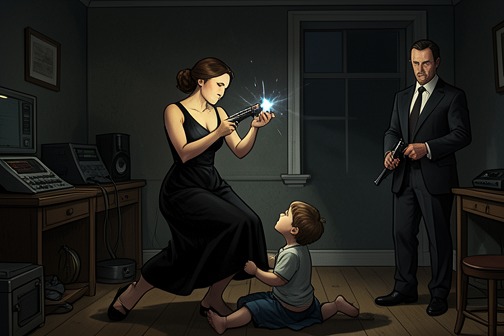
The killing of [Pilar Méndez](entity:character-recall-character-pilar-m-ndez-99df5c97d8c5) and her children exposes the human cost of a cartel order in which family ties and political alliances offer no dependable protection. [Fabián Martínez](entity:character-recall-character-fabi-n-mart-nez-955daedc2732) carries out the attack in the name of [Miguel Ángel Barrera](entity:character-recall-character-miguel-ngel-barrera-6b908727e16a), and [Adán Barrera](entity:character-recall-character-ad-n-barrera-0383f92d92cf)’s assent makes the atrocity a decisive act in his own rise and in the conflict over the [Federación](entity:organization-recall-organization-federaci-n-3cfed113330e).
## Political Background
The event unfolds within a system that Miguel Ángel Barrera has been building through protection, patronage, and carefully positioned alliances. At a meeting with [García Abrego](entity:character-recall-character-garc-a-abrego-f750b0a7673d), he describes [Guadalajara](entity:location-recall-location-guadalajara-1fbbdc6cee32) as a safe base from which to serve the Federación, rather than as a strategic border crossing. He offers to extend his own friendships and protection to those who accept the arrangement, in return for a fee. Adán recognizes that this is the first time his uncle has given the organization a name—and that Miguel Ángel is establishing himself as its head through his position, whether or not he claims the title openly.
That larger system reaches beyond cartel relationships into national politics. Miguel Ángel later refers to money and another contribution whose significance Adán understands: the Federación helped the incumbent government steal the 1988 election. The computers counting the votes malfunctioned as the opposition candidate Cárdenas appeared poised to win. The episode places the killing against a background in which power is maintained not only through personal alliances and violence, but also through interference with the institutions meant to determine who governs. In the years that follow, the Federación’s financial leverage becomes still more visible: after the new president takes office in December [1994](entity:time-recall-time-1994-2c6f52c72808), cartel-controlled brokerage houses buy tesobonos, the cartels withdraw funds from the national bank, and the resulting peso collapse allows the organization to acquire devalued assets. Adán agrees to return cartel dollars only in exchange for a favorable environment for trade. These later developments show the breadth of the political order surrounding the family conflict, without making them the immediate cause of Pilar and her children’s deaths.
## The Killing of Pilar Méndez and Her Children
Fabián Martínez kills Pilar Méndez after she returns from the bathroom and asks him to zip her dress, with her children waiting in the car. He invokes Miguel Ángel Barrera as the source of the order, then places Pilar’s head in a cooler and seals it inside an already addressed package. The killing is thus presented not as a private act but as a message carried out in [Tío](entity:character-recall-character-t-o-00e2ebb81c20)’s name.
Fabián then takes the children to the [Santa Ysabel Bridge](entity:location-recall-location-santa-ysabel-bridge-2b38636fd41e), where Adán Barrera is meeting [Manuel and Gilberto Orejuela](entity:character-recall-character-manuel-and-gilberto-27816f7ffd13). The bridge crosses a gorge above the [Río Magdalena](entity:location-recall-location-r-o-magdalena-14f3e39453cd), roughly seven hundred feet below. Fabián tells the Orejuela brothers that Tío assures them his blood runs through his nephew’s veins. Adán understands that his uncle has arranged the scene to make the children’s deaths a public proof of their family connection and to leave him no safe way to reject the alliance.
When Claudia cries for her mother, Fabián tells her he is taking her to her. He looks to Adán for a signal; Adán nods. Fabián throws Claudia and her little brother from the bridge, killing them. Adán forces himself to watch, while the Orejuela brothers react with shock and leave with the suitcase they brought. The Río Magdalena carries the bodies away. In the moment of assent, Adán recognizes the violence as a momentum that is difficult to stop, but he also sees the political trap: refusing Fabián would expose division before the Orejuela brothers, while allowing the murders binds him to Tío’s design.
## Moral Recognition and Political Succession
The bridge scene becomes a moment of recognition for Adán Barrera, but not a moment of rescue. He understands the violence through the language of physics: “a body at rest tends to stay at rest; a body set in motion tends to stay in motion.” The thought makes the killings seem like a force already underway, yet the possibility of stopping that force remains present. His assent shows the distance between recognizing evil and refusing to participate in it.
Adán also imagines how [Juan Parada](entity:character-recall-character-juan-parada-55ccee69ce7f) might have interpreted the choice. Where Adán sees nature’s cruel laws and the struggle to survive, Parada would have placed the deaths within a moral and religious frame. Adán dismisses that alternative and concludes that there is no God. The contrast does not free him from responsibility; it reveals the survival logic through which he accepts Miguel Ángel Barrera’s design.
The narrative later marks the political result: the Federación returns, with Adán as its patrón. The killings do not alone explain that consolidation, but the bridge scene shows its human and moral cost. Adán’s rise is bound to an act that demonstrates both his uncle’s power to maneuver him and his own willingness to let that power proceed.
## Protection and Exposure
The episode sharpens the contradiction at the center of the Federación’s political order: protection is offered as a bond between allies, yet it can also become the means by which an ally is forced to comply. Miguel Ángel Barrera’s earlier promise to share his friends and protection gives way, at the bridge, to a demonstration that makes family connection a test of loyalty. The contrast links the organization’s public language of mutual security to the private coercion on which its succession depends.
The bridge also turns a family crime into a political performance. The Orejuela brothers witness Adán’s assent, and their shock registers the cost of the message even as the suitcase they brought leaves with them. The scene’s consequence is therefore not only personal bereavement: it makes Adán’s acceptance visible to prospective partners and binds his authority to violence carried out in Miguel Ángel’s name. His later position as patrón of the restored Federación bears the mark of this choice, without erasing the moment when he recognized that the violence could still be stopped.
Event 23
Bloody September
[Bloody September](entity:event-recall-event-bloody-september-6e4de1d60a06) is [Güero Méndez](entity:character-recall-character-g-ero-m-ndez-9416e102d10e)’s retaliation against the Barrera family after members of the [Barrera organization](entity:organization-recall-organization-barrera-organiza-0c3495b505f4) killed his wife and children. The killings claimed nine of [Adán Barrera](entity:character-recall-character-ad-n-barrera-0383f92d92cf)’s relatives, including people with no part in the drug business. Recalled a month later during Adán’s cemetery visits, the event is more than a reprisal: it forces him to recognize that the practice of killing a rival’s family had already been established by his own side.
## Retaliation and Escalation
Méndez’s attack followed the murder of his wife, Pilar, and their children, [Claudia Méndez](entity:character-recall-character-claudia-m-ndez-35b4e2411626) and [Güerito Méndez](entity:character-recall-character-g-erito-m-ndez-36dbb804585a). The Barrera organization’s violence against them made Méndez’s response seem predictable to people who understood the drug trade. The novel presents that expectation without treating it as justification: retaliation belongs to a cycle in which each attack supplies the next one with a precedent.
The response also crossed a boundary even within that violent world. The killing of Méndez’s wife and children had already made the Barrera organization notorious, and the later reprisal against Barrera relatives made the cost of that escalation unmistakable. The episode’s grim logic is not that family members were legitimate targets, but that the drug war had made their vulnerability seem foreseeable to its participants and observers.
## The Nine Victims
Méndez’s men killed nine members of Adán’s extended family in a single night, roughly a month before Adán’s [Day of the Dead](entity:time-recall-time-day-of-the-dead-6b1dfe2fd16d) visits. The victims were two uncles, an aunt, and six cousins, including two women. In [Mexico City](entity:location-recall-location-mexico-city-78f19f654410) and [Guadalajara](entity:location-recall-location-guadalajara-1fbbdc6cee32), people were taken from their homes or abducted from the streets, then killed; their bodies were left in public places to be found the following morning.
The victims’ connections to the cartel were limited or nonexistent. One female cousin was a lawyer working for the pasador, but the others had no involvement in the family’s drug business. Their relationship to [Miguel Ángel Barrera](entity:character-recall-character-miguel-ngel-barrera-6b908727e16a), Adán, and [Raúl](entity:character-recall-character-ra-l-3740edeac878) was enough to expose them to retaliation. That distinction sharpens the event’s significance: the violence does not remain confined to rival operators, but reaches outward through kinship, making family association itself dangerous.
## Adán’s Recognition and the Public Response
When Adán considers Méndez’s retaliation, he does not place its beginning with Méndez. He remembers that the Barrera side had already targeted Méndez’s wife and children, and concludes that his own family started the practice of killing relatives. His recognition complicates any simple division between aggressor and avenger. Méndez’s act is retaliatory, but the larger pattern is one the Barreras helped create.
The local police barely investigated the nine murders. Among people familiar with the drug trade, the general response was that retaliation had been expected because Méndez’s wife and children had been killed. That acceptance does not make the deaths less consequential; it shows how thoroughly revenge had become part of the understood order. The public response marks a bleak contrast between the enormity of the loss and the limited expectation that ordinary law enforcement would address it.
## Graves, Ritual, and Aftermath
On the Day of the Dead in [1994](entity:time-recall-time-1994-2c6f52c72808), Adán spends the day visiting nine graves, building nine small shrines, and laying out meals for the relatives killed in the reprisal. He starts in Mexico City, travels to Guadalajara, and then flies to [Puerto Vallarta](entity:location-recall-location-puerto-vallarta-97c49c5b3780), where his brother Raúl is holding a party at a new disco. Raúl’s celebration that the brothers are still alive sits beside Adán’s work of mourning: the same day accommodates both remembrance of the dead and relief among survivors.
Méndez, too, makes a pilgrimage, to the Jardines del Valle cemetery in [Culiacán](entity:location-recall-location-culiac-n-5de4db1066ec), where his wife and children are buried. He brings toys and sweets for Claudia and Güerito, and flowers, food, and a sugar coffin for Pilar. He sets out water for the dead to wash before the feast, arranges candles and dishes at an altar, and sits with memories of family outings and games. Armed men stand watch while a small band plays outside. The careful offerings preserve intimate family memories within a setting guarded by the machinery of cartel violence.
These separate visits give the retaliation an aftermath measured not only in deaths but in repeated acts of remembrance. Adán’s nine graves make the consequences of his family’s earlier violence concrete; Méndez’s offerings show the family life that the retaliatory cycle has taken from him. Bloody September thus links revenge to bereavement and to an uneasy recognition of responsibility: the dead are mourned, while the pattern that killed them remains embedded in the living world around their graves.
Event 24
Kidnapping of Fabián Ochoa's sister
The [Kidnapping of Fabián Ochoa's sister](entity:event-recall-event-fabi-n-ochoa-18d914a4a8c3), recalled by [Sal Scachi](entity:character-recall-character-sal-scachi-82ddfd8bbc74) as the event that gave rise to MAS, turns a ransom kidnapping into the trigger for a mass mobilization. Ochoa did not answer the abductors by negotiating a payment: he called on his associates for money and gunmen, and his sister was ultimately released unharmed. In Scachi’s account to [Sean Callan](entity:character-recall-character-sean-callan-57035fec3717), the episode establishes both the scale of the response and the retaliatory logic behind the organization he is describing.
## Background and the Kidnapping
Scachi places the kidnapping in [1981](entity:time-recall-time-1981-4636cc9b7e75). The left-wing insurgent group M-19 abducted the sister of Fabián Ochoa, a Colombian cocaine magnate, and held her for ransom. The account gives no further detail about the circumstances of her abduction or the demands made; its focus is on Ochoa’s decision about how to respond. Instead of treating the crisis as a private negotiation, he made it a collective undertaking, drawing a large circle of associates into the matter.
The context in which [Callan](entity:character-recall-character-7b41c2a4b719) hears the story matters. Scachi has asked him about going to [Colombia](entity:location-recall-location-colombia-03c1898e601e) to connect with an organization called MAS. When Callan asks what that means for him, Scachi explains the kidnapping as the organization’s point of origin. The episode is therefore not presented as an isolated crime alone: it is the history Scachi uses to explain the force Callan is being invited to join.
## Ochoa's Mobilization
Rather than pay the ransom, Ochoa convened 223 associates. Each was required to contribute $20,000 in cash and ten of his best gunmen. Scachi sums the result as a war chest of roughly four and a half million dollars and an armed force of more than two thousand men. The numbers give the response its defining character: the kidnapping brought together money and personnel on a scale far beyond a single family’s immediate protection.
The mobilization also depended on public communication. Scachi says the group flew a helicopter over a soccer stadium and dropped leaflets announcing what it intended to do. That gesture made the response visible and declarative. The account does not describe a quiet search conducted solely to recover the hostage; it describes an assembled force announcing its intention to act against the kidnapping network and the wider milieu associated with it.
## Retaliation and Release
Scachi describes the force moving through [Cali](entity:location-recall-location-cali-2672b6865915) and [Medellín](entity:location-recall-location-493cee6c8fc5), raiding homes and taking people away to safe houses for questioning. His account also makes clear that the campaign reached beyond the immediate kidnappers: college students were among those seized, and some were shot. The breadth of the response contrasts sharply with the original demand for a ransom. A kidnapping of one person had become the justification for a campaign directed across two cities and against people treated as connected to the insurgents.
The outcome stated in the account is that Ochoa’s sister was released unharmed. Scachi does not specify when or how her release was secured, or establish precisely what role the campaign played in it. The sequence nevertheless places her safe return alongside the large-scale retaliation, without making the costs of that retaliation disappear. Her release closes the immediate hostage crisis; it does not undo the violence inflicted on others during the response.
## MAS and the Story's Significance
Scachi identifies the organization Callan is being asked to join as Muerte a Secuestradores, or [Death to Kidnappers](entity:organization-recall-organization-61bd054ad56d), and connects its beginning to the 1981 abduction. The name frames the group around opposition to kidnapping, while its origin story rests on a drug lord’s ability to summon an armed force through his network of associates. The episode thus links a stated anti-kidnapping purpose with organized violence and private power.
The story also serves as recruitment context. Callan’s initial question is what he would be going to Colombia to do; Scachi answers with the history of MAS, including the scale of its formation and the release of Ochoa’s sister. Rather than offer an abstract account of the organization, he recounts a concrete chain of events: an insurgent group kidnaps a magnate’s sister, the magnate calls in hundreds of associates, and a force of thousands announces and carries out a campaign. The account leaves Callan to consider what joining such a group would entail.
Event 25
Founding of MAS and its anti-kidnapping campaign
The founding of MAS and its anti-kidnapping campaign began after M-19 kidnapped the sister of Colombian cocaine magnate Fabián Ochoa in [1981](entity:time-recall-time-1981-4636cc9b7e75). Rather than pay the ransom, Ochoa assembled a large body of associates and armed men; the force that followed attacked people it associated with leftist movements, while the kidnapped woman was ultimately released unharmed. The episode is narrated by [Sal Scachi](entity:character-recall-character-sal-scachi-82ddfd8bbc74) to [Sean Callan](entity:character-recall-character-sean-callan-57035fec3717), and its significance lies in the contrast between MAS’s stated purpose of opposing kidnappings and the campaign of intimidation and violence used in its name.
## Formation and Mobilization
As Scachi recounts it, the kidnapping prompted Ochoa to convene 223 associates. Each was required to contribute $20,000 and ten of his best gunmen. Scachi describes the result as a war chest of roughly $4.5 million and an armed force numbering more than two thousand. The response was therefore not a spontaneous rescue effort or a payment negotiated by Ochoa alone: it was a coordinated mobilization that drew money and personnel from a broad network around the drug lord.
The name Muerte a Secuestradores, translated as [Death to Kidnappers](entity:organization-recall-organization-61bd054ad56d), gave the organization a direct public rationale. Its emergence was tied to a specific act of kidnapping, but the scale of the mobilization carried a message beyond the immediate case. A large association of powerful men could answer an attack on one of their families with collective resources and armed force. The account presents that capacity as central to MAS’s formation, rather than detailing formal offices, membership rules, or a lasting organizational structure.
## Public Threat and Raids
The campaign announced its intentions dramatically. According to Scachi, its members flew a helicopter over a soccer stadium and dropped leaflets explaining what they planned to do. The public gesture made the threat visible: MAS did not merely organize its forces in private but advertised the coming campaign to a large audience.
The operations that followed swept through [Cali](entity:location-recall-location-cali-2672b6865915) and [Medellín](entity:location-recall-location-493cee6c8fc5). Armed men broke into homes and seized college students, including some taken directly from their classrooms. Some were shot at the scene; others were carried to safe houses for questioning. The account thus sets the campaign’s anti-kidnapping name against the methods used in its response: people were seized and held by an armed force, and the crackdown extended to young civilians identified with the left. The evidence gives no individual identities for those targeted and does not specify how many were killed or detained, so the campaign’s reach is clear without a complete accounting of its victims.
Ochoa’s sister was released unharmed. Her release is a concrete outcome of the episode, but the narrative does not explain how or when it occurred, or establish that the raids directly secured it. It distinguishes the outcome for the person whose kidnapping precipitated the mobilization from the broader campaign’s treatment of others. The rescue and the violence coexist in Scachi’s account without being collapsed into a single result.
## Political Context and Recruitment
Scachi tells [Callan](entity:character-recall-character-7b41c2a4b719) about MAS while trying to interest him in joining its work. The conversation places the organization’s origin alongside a wider conflict over left-wing movements in [Colombia](entity:location-recall-location-colombia-03c1898e601e). Scachi describes the later political setting in which leftist groups formed the [Patriotic Union](entity:organization-recall-organization-f999a18d221d), which won fourteen parliamentary seats in the 1986 elections after a truce with the Colombian government. His account of MAS therefore reaches beyond the original kidnapping: the campaign is presented as part of a continuing struggle in which drug-linked armed power is directed against political opponents.
Callan hears the pitch but does not accept it. He questions the logic of defending democracy while resisting the choices made by voters, and concludes that Scachi’s political commitment does not make MAS his concern. He tells Scachi that he plans to return to [New York City](entity:location-recall-location-new-york-city-65df0a129d4c), reasoning that Johnny Boy is firmly in charge of the family and can offer him shelter. The recruitment attempt shows how the story of MAS’s founding functions in the scene: Scachi uses the campaign’s scale and purpose to make the organization appear consequential and to solicit Callan’s abilities, but the account does not establish that Callan ever joins it.
## Narrative Significance
The event is presented through Scachi’s explanation rather than a direct scene of the kidnapping or the raids. This embedded account gives the founding a practical sequence—kidnapping, mobilization, public announcement, raids, and release—while limiting what can be known about the victims’ experiences or the precise outcome of each operation. Callan’s reactions also frame the tale: he recognizes the force of the mobilization but resists the political argument used to recruit him.
MAS’s title promises a response to kidnapping, yet the campaign described in the account uses armed raids, detention, and killings against people associated with the left. That contradiction makes the episode more than an origin story for an anti-kidnapping organization. It shows how a specific act of violence could prompt a private network to organize its own punitive force, and how the language of protection could coexist with a campaign whose targets and methods reached far beyond the original victim.
Event 26
Siege of the Palace of Justice in Colombia
The [Siege of the Palace of Justice in Colombia](entity:event-recall-event-c3a4902c46b0) is recalled as a reprisal that turned an already escalating campaign of political violence into a catastrophic confrontation. In [Sean Callan](entity:character-recall-character-sean-callan-57035fec3717)’s account, M-19 seized the Palace after killings of Unión Patriótica candidates; the government’s failed rescue left more than one hundred people dead, including several Supreme Court judges.
## Background in Political Violence
[Callan](entity:character-recall-character-7b41c2a4b719) remembers the siege while reflecting on his work with MAS in [Colombia](entity:location-recall-location-colombia-03c1898e601e). [Sal Scachi](entity:character-recall-character-sal-scachi-82ddfd8bbc74) had recruited him to go to [Medellín](entity:location-recall-location-493cee6c8fc5), and Callan accepted the assignment without asking how it would settle his federal trouble. He came to understand that the organization’s anti-kidnapping campaign had become a campaign against Unión Patriótica candidates: six candidates were killed before taking office. The siege appears in his recollection as retaliation for those killings, not as an isolated clash.
## Seizure and Failed Rescue
M-19 responded by seizing the Palace of Justice. The government’s attempt to retake it became a disastrous rescue operation: more than one hundred people died, among them several Supreme Court judges. Callan’s memory gives the episode a blunt causal shape—political killings, reprisal, then a rescue whose costs extended into the highest levels of the judiciary—while offering no further operational detail about the seizure or the response.
## Aftermath and Callan’s Recollection
Callan judges that the deaths resulted from using police and the army rather than professional forces. That is his assessment, shaped by his own experience as a hired operative; it does not undo the distinction between the original killings and the response that followed. In the same recollection, he places the subsequent professional killing of Unión Patriótica leader Jaime Pardo Leal after the siege, describing it as a further escalation rather than the event’s immediate outcome.
## Narrative Significance
The episode surfaces as a memory rather than a present-tense scene, filtered through Callan’s cynical account of the work he was recruited to do. Its compressed sequence shows how an organization ostensibly formed to oppose kidnapping could become an instrument of political murder, and how retaliation could be followed by state violence with devastating consequences. Callan’s professional language about the later assassination sharpens the contrast: violence is presented as deliberate, efficient work even as the siege’s failed rescue exposes the much wider human cost of that logic.
Event 27
Assassination of Jaime Pardo Leal
The assassination of Jaime Pardo Leal was a professional killing of the leader of the [Patriotic Union](entity:organization-recall-organization-f999a18d221d). In [Sean Callan](entity:character-recall-character-sean-callan-57035fec3717)’s recollection, it marks an escalation from attacks on the party’s elected candidates to a direct strike against its leader—and implicates [Callan](entity:character-recall-character-7b41c2a4b719) in the operation despite his not pulling the trigger.
## Background and Political Violence
Callan recalls the assassination after a series of attacks on the Patriotic Union. Six of its candidates were killed before they could take office. The violence then widened: M-19 seized the Palace of Justice, and more than a hundred people, including Supreme Court judges, died in the rescue attempt. In Callan’s account, the attack on Jaime Pardo Leal follows this cycle of retaliation and counterviolence.
## The Assassination
Callan says that he rode shotgun when professionals carried out the attack. He distinguishes his role from that of the shooter: he did not pull the trigger, but he was present as part of the operation. He remembers the hit as clean and efficient, a judgment that reflects the professional standards by which he measures the killing rather than any claim that it was justified.
## Escalation and Narrative Significance
The recollection presents the assassination as a prelude, not an endpoint. Callan’s thought that it was only a warm-up leads into his recognition that the larger wave of killing began in 1988. The event therefore connects the targeted murder of a political leader to a widening campaign of violence, while Callan’s passenger-seat role makes him both a witness to and a participant in that machinery.
Event 28
Assassination of Luis Carlos Galán
The assassination of Luis Carlos Galán marks the beginning of a succession of killings that eliminated three leading Colombian presidential candidates in less than a year. Galán, the Liberal Party candidate and far ahead in the polls, was killed in the summer of 1989. In the account, the sequence’s political significance is conveyed through both the candidates it removes and its immediate effect on [Sean Callan](entity:character-recall-character-sean-callan-57035fec3717)’s work: after the killings, [Colombia](entity:location-recall-location-colombia-03c1898e601e) is no longer safe for him.
## Political Stakes
Galán’s prominence is established by his standing in the polls. He was not presented as a marginal candidate but as the Liberal Party contender leading by a wide margin. The account’s description of him being taken out of the race makes the assassination consequential beyond the death of one politician: it changes the field of an election by removing its leading candidate through violence.
The evidence does not identify Galán’s killers, an ordering organization, or a motive for this specific assassination. It therefore supports the political stakes of the killing and its place in a broader pattern, but not a claim that a particular cartel, government agency, or covert operation was responsible.
## The Sequence of Killings
The narrative places Galán’s death first. In the summer of 1989, he was killed; the following spring, Bernardo Jaramillo Ossa, leader of the UP, was shot as he stepped off a plane in Bogotá. A few weeks later, Carlos Pizarro, the M-19 presidential candidate, was also gunned down. Their different political affiliations and candidacies are part of the account’s emphasis: the violence struck multiple figures contesting Colombia’s political future.
The three killings are presented in compressed chronological succession rather than as three separately narrated scenes. That structure gives the sequence an accumulating force. Galán’s removal does not stand alone; the deaths of Jaramillo and Pizarro follow, turning an attack on one leading candidate into a wider pattern of political violence. The account supplies no further circumstances of Galán’s death, so the later descriptions of the other killings should not be treated as details of his own assassination.
## [Callan](entity:character-recall-character-7b41c2a4b719) and Colombia
The sequence is also measured by its consequence for Callan. After Pizarro’s killing, the narrative states that Colombia was too dangerous for Sean Callan. Guatemala, [Honduras](entity:location-recall-location-honduras-437b7adfd9e2), and [El Salvador](entity:location-recall-location-6f541c528920), by contrast, remained places where he could work. This transition ties the national political crisis to the movements of a character operating across borders: the killings make Colombia untenable for him, but do not end his work elsewhere in Central America.
Callan’s response is not presented as an explanation of Galán’s death or as evidence that he participated in it. Rather, his changed operating environment provides a concrete measure of the consequences of the escalating violence. The account moves from candidates being removed from the political contest to a criminal operative having to leave the country’s field of activity.
## The Wider Covert-War Frame
Elsewhere in the surrounding narrative, [Sal Scachi](entity:character-recall-character-sal-scachi-82ddfd8bbc74)’s work for [John Hobbs](entity:character-recall-character-john-hobbs-aa4c4c1db101) involves coordinating [Red Mist](entity:expression-recall-expression-red-mist-5e3e3e2788ee), a code name for numerous operations intended to neutralize left-wing movements across Latin America. Scachi’s role is to share intelligence, distribute assets, coordinate targets, and prevent operations from interfering with one another. The network encompasses right-wing militias and their drug-lord sponsors, military officers and troops, and separate intelligence agencies and police forces. This material establishes a regional landscape of organized political violence, but the evidence does not say that Galán’s assassination was part of Red Mist.
The novel also depicts officials presenting covert intervention as a response to an existential security threat. Hobbs argues that [Nicaragua](entity:location-recall-location-fdd3ef235620)’s position in Central America makes it dangerous to the [United States](entity:location-recall-location-united-states-2f533bc8d0b9) and says that [Cerberus](entity:concept-recall-concept-cerberus-bff84c150df6) comes from the highest authority in the country. That rationale belongs to the narrative’s account of U.S. covert action, not to a stated cause of Galán’s killing. Keeping the strands distinct matters: the book places the Colombian assassinations within a region shaped by secret operations and political coercion, but does not establish a direct operational link between them.
Other political mechanisms appear in a separate Mexican strand. The account describes the 1988 election as having been stolen after vote-counting computers malfunctioned, with the [Federación](entity:organization-recall-organization-federaci-n-3cfed113330e)’s help; years later, cartel-controlled brokerage houses bought government bonds, withdrew capital, and profited from the resulting peso devaluation. These episodes are not causes of Galán’s assassination. In juxtaposition with the Colombian sequence, however, they show the novel’s broader concern with power exercised through both violence and the manipulation of political and economic institutions.
Event 29
Assassination of Bernardo Jaramillo Ossa
The [Assassination of Bernardo Jaramillo Ossa](entity:event-recall-event-bernardo-jaramillo-ossa-e21d5024558f) was one of three political killings recalled in quick succession in connection with [Colombia](entity:location-recall-location-colombia-03c1898e601e)’s presidential politics. Jaramillo, leader of the Unión Patriótica, was shot dead as he got off a plane in Bogotá the spring after Liberal candidate Luis Carlos Galán was killed. The account places his death within a widening sequence of violence against political figures, rather than treating it as an isolated incident.
## Political Context
The recollection first notes that Galán, who was far ahead in the polls, was killed in the summer of 1989. The following spring, Jaramillo was killed after arriving by plane in Bogotá. He is identified as the leader of the Unión Patriótica, establishing the political position that made his killing part of the account’s broader pattern of attacks on candidates and party leaders.
## Sequence and Aftermath
Jaramillo’s death is followed in the same recollection by the killing, a few weeks later, of Carlos Pizarro, the presidential candidate of M-19. The three killings form a compressed chronology: Galán in the summer, Jaramillo the following spring, and Pizarro weeks afterward. After these events, Colombia had become too dangerous for [Sean Callan](entity:character-recall-character-sean-callan-57035fec3717), and he turned to work in Guatemala, [Honduras](entity:location-recall-location-honduras-437b7adfd9e2), and [El Salvador](entity:location-recall-location-6f541c528920) instead.
## Narrative Significance
The assassination appears as a remembered turning point in Sean Callan’s account of why his work shifted away from Colombia. Its placement between Galán’s killing and Pizarro’s underscores the accumulation of political violence: each death is presented as another sign that the country had become untenable for [Callan](entity:character-recall-character-7b41c2a4b719). The passage does not identify the assassin or establish who ordered the attack.
Event 30
Assassination of Carlos Pizarro
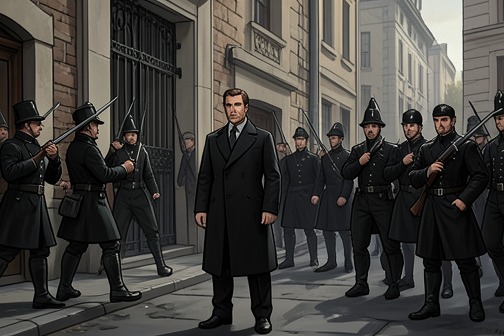
The assassination of Carlos Pizarro is presented as the culmination of a rapid sequence of killings of Colombian presidential candidates, and as the turning point after which [Colombia](entity:location-recall-location-colombia-03c1898e601e) was no longer safe for [Sean Callan](entity:character-recall-character-sean-callan-57035fec3717). The novel recounts it retrospectively, linking the political violence to [Callan](entity:character-recall-character-7b41c2a4b719)’s departure from the country without identifying Pizarro’s assailants or assigning a specific motive.
## Political Sequence
Pizarro was the presidential candidate of M-19. His killing followed the deaths of two other candidates: Luis Carlos Galán had been removed from the race in the summer of 1989, and Bernardo Jaramillo Ossa was shot after getting off a plane in Bogotá the following spring. Pizarro was gunned down just weeks after Jaramillo. The compressed chronology makes his assassination part of an escalating sequence of violence directed at political candidates, rather than an isolated incident.
## Consequences for Callan
The narrative connects Pizarro’s killing to a change in Callan’s circumstances: afterward, Colombia was too dangerous for him to continue working there. He moved on to Guatemala, [Honduras](entity:location-recall-location-honduras-437b7adfd9e2), and [El Salvador](entity:location-recall-location-6f541c528920), places the account presents as available alternatives. The assassination therefore marks a practical turning point in Callan’s movements as well as a moment in Colombia’s political crisis.
## Recollection and Narrative Role
The event appears in Callan’s recollection of receiving further work. Its brief, retrospective placement conveys the killings as a sequence whose consequences have already altered his options. The account establishes Pizarro’s candidacy, the timing of his death, and its effect on Callan, but does not specify who carried out the assassination or explain the perpetrators’ intentions.
Event 31
Operation Red Mist
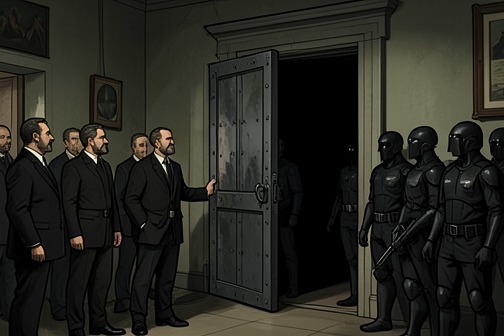
[Operation Red Mist](entity:event-recall-event-operation-red-mist-6641351496e7) is a covert coordination network for political violence across Latin America, bringing together military forces, intelligence agencies, right-wing militias, and drug-cartel sponsors under an anti-Communist rationale. Its significance lies not only in the operations it connects, but in how the novel reveals the machinery behind them: a campaign presented as security policy whose resources and methods cross the boundaries between government, clandestine action, and criminal power.
## Purpose and Structure
[Red Mist](entity:expression-recall-expression-red-mist-5e3e3e2788ee) coordinated scores of operations intended to neutralize left-wing movements across Latin America. The narrative likens its scope to the Phoenix program in South and Central America. Individual operations could be carried out without their participants knowing that they were part of a larger coordinated effort; the work of connecting intelligence, distributing assets, selecting targets, and preventing competing operations from interfering fell to a small organizing structure.
[John Hobbs](entity:character-recall-character-john-hobbs-aa4c4c1db101) oversaw the operation, while [Sal Scachi](entity:character-recall-character-sal-scachi-82ddfd8bbc74) managed its daily coordination. Scachi was suited to the role because he moved among several worlds: he was a Green Beret, had worked as a [CIA](entity:organization-recall-organization-422e0adc2ba6) asset, and had become a member of the Mafia. He could leave army duties under the designation of detached duty and work for Hobbs. Red Mist’s scale was extensive: it encompassed hundreds of right-wing militias and their drug-lord sponsors, roughly a thousand army officers, hundreds of thousands of troops, and dozens of intelligence agencies and police forces.
The operational system also relied on practical assistance, not simply shared ideology. Scachi liaised with officers trained at the [School of the Americas](entity:organization-recall-organization-2db8a9f0acac) at Fort Benning, Georgia, and helped provide training, technical advice, equipment, and intelligence. Assets were lent to Latin American armed forces and militias. [Sean Callan](entity:character-recall-character-sean-callan-57035fec3717) was one such asset, placed where Scachi could use him in the campaign’s operations.
## Ideology and Support
The campaign’s anti-Communist purpose connected it to a wider political and religious conflict. Sal Scachi was both a Knight of Malta and a member of [Opus Dei](entity:organization-recall-organization-32a076a83a96), described as a fervently right-wing, anti-Communist organization of bishops, priests, and laypeople. In the novel’s account, the [Catholic Church](entity:organization-recall-organization-catholic-church-7dfe4f6d7f50) itself is divided: conservative leadership in the [Vatican](entity:organization-recall-organization-136cc7cc097a) is in conflict with liberation theologians, including left-wing and often Marxist priests and bishops working in the developing world. The Knights of Malta and Opus Dei cooperate with right-wing militias and army officers, and with drug cartels when needed.
Red Mist’s resources also expose the economic entanglement behind its stated political aims. Much of the campaign was paid for directly or indirectly with American money. Military aid to countries supplied funds to armed forces whose officers formed much of the death squads; American purchases of drugs sent money to cartels that sponsored those forces. The account therefore ties public expenditure and consumer demand to violence carried out through nominally separate local groups. The distance between the sources of money and the people targeted by operations becomes part of the system’s concealment.
This structure resembles a network more than a single visible command. Hobbs provides overall oversight and Scachi coordinates daily activity, while the participating armed forces, agencies, militias, and cartel sponsors retain separate identities and may not know how their work fits together. That fragmentation allows the campaign to operate across countries and institutions while obscuring shared responsibility. The novel’s later disclosures challenge the appearance that these are isolated acts or unrelated local conflicts.
## Operations and Consequences
[Callan](entity:character-recall-character-7b41c2a4b719)’s role makes the campaign’s human cost personal. Scachi moved him from one assignment to another, using him to remove targets from the political landscape. Among the names associated with these operations are Guadalupe Salcedo, Héctor Oqueli, and Carlos Toledo, followed by many others. Callan began to lose track of the names. Even when he did not understand Red Mist as a coordinated program, he understood the work through its repeated consequence: violence became the condition surrounding his assignments.
The campaign’s effects also appear in the political killings of prominent figures. Luis Carlos Galán, the Liberal Party presidential candidate who led in the polls, was removed from the count in the summer of 1989. The following spring, Bernardo Jaramillo Ossa, leader of the UP, was shot and killed as he left a plane in Bogotá. A few weeks later, Carlos Pizarro, the M-19 presidential candidate, was gunned down. These killings show how the campaign’s anti-left purpose intersects with electoral politics: candidates and movements that might alter the political order are among those exposed to lethal violence.
The operation is also linked to drug-cartel funding and support from the [Institutional Revolutionary Party](entity:organization-recall-organization-6aa2664a0c48). The novel places Red Mist alongside a broader set of covert arrangements, including [Cerberus](entity:concept-recall-concept-cerberus-bff84c150df6) and cooperation connected to the Contra drugs-for-arms operation. In a later account of evidence copied from Father [Juan Parada](entity:character-recall-character-juan-parada-55ccee69ce7f)’s briefcase, Red Mist is named among the operations documented alongside allegations that [Mexico City](entity:location-recall-location-mexico-city-78f19f654410), Washington, and drug cartels sponsored assassinations of left-wing figures. The same material includes evidence of assassinations of officials intended to fix Mexican presidential elections and of Mexico City’s active partnership with the [Federación](entity:organization-recall-organization-federaci-n-3cfed113330e).
## Exposure and the Parada Killing
Red Mist’s concealed structure becomes explicit when [Art Keller](entity:character-recall-character-art-keller-31aa2337649c) confronts Hobbs about the operation. Art identifies it as a Latin American counterpart to the Phoenix program and asks whether the [United States](entity:location-recall-location-united-states-2f533bc8d0b9) is training the AUC. Hobbs does not give a straightforward explanation of the campaign’s full scope. Instead, he argues that FARC committed an atrocity in order to blame the AUC, alienate the local population, and win international sympathy, comparing the alleged tactic to one used by the Vietcong. The exchange places the disputed interpretation of violence within the same security framework that Red Mist serves.
Hobbs then tells Art that he should already understand the operation because he used it during a recent incursion into [Mexico](entity:location-recall-location-f1c6a91e03ea). He further insists that, in the eyes of the law, Art is implicated as a mass murderer and is involved as deeply as the others. This accusation complicates Art’s position: he is trying to expose the campaign while Hobbs argues that his own actions have made him part of it. Red Mist is thus not only an object of investigation but a measure of how clandestine methods implicate the people who use them.
The campaign’s reach extends into the fate of Father Juan Parada. Art concludes that Parada was killed as part of Red Mist and that Hobbs ordered the killing. That conclusion connects the covert network to a personal loss and to Parada’s effort to pass information to the Vatican. The evidence in Parada’s briefcase, copied by Adán and stored in a Grand Cayman safe-deposit box, could bring down two governments; its contents include information about Red Mist, cartel-supported political assassinations, and state cooperation. The campaign’s secrecy is therefore vulnerable not only to investigators’ questions but to documents preserved beyond the reach of those who control its operations.
## Revelation and Narrative Significance
Red Mist is disclosed gradually: first as the name of a far-reaching coordination effort, then through Callan’s work as one of its assets, and finally through the political and personal consequences tied to its participants. Art later declares his intention to take Adán to the district attorney, let justice take its course, and tell everything about Condor, Cerberus, and Red Mist. The statement makes exposure a consequential choice, not an accomplished outcome; the novel establishes the evidence and the intention to reveal it without confirming that the public learns the full record.
The operation’s central contradiction is that a campaign justified as a defense against Communism draws on criminal money and depends on alliances with cartels, while its participants move through military, intelligence, religious, and political institutions. Its fragmented structure can make individual operations look separate, but the recurring names, shared resources, and documented links reveal a coordinated system. In the novel, Red Mist names both an organized campaign and the fog of deniability around it: violence is distributed among actors, while responsibility returns to the people who planned, financed, enabled, and carried it out.
Event 32
La Sirena nightclub attack
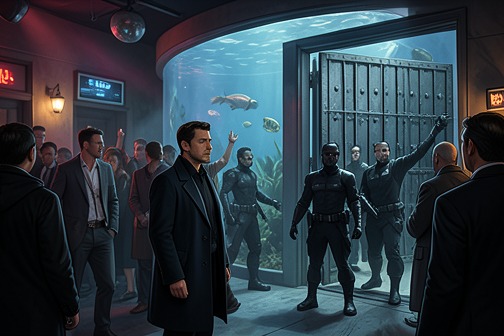
The [La Sirena nightclub attack](entity:event-recall-event-la-sirena-401c92c42388) turns a celebration that seems protected by the holiday and its resort setting into an attempted killing of the Barrera brothers. [Sean Callan](entity:character-recall-character-sean-callan-57035fec3717)’s intervention helps [Adán Barrera](entity:character-recall-character-ad-n-barrera-0383f92d92cf) survive, while the failed attack leaves partygoers dead and deepens the alliance between [Callan](entity:character-recall-character-7b41c2a4b719) and the Barreras.
## The Attack Begins
At a beach resort during a [Day of the Dead](entity:time-recall-time-day-of-the-dead-6b1dfe2fd16d) party, Callan has a couple of drinks because he believes the setting is safe. The sense of security ends when the nightclub’s large aquarium shatters and armed men in black uniforms enter, firing rifles. The sudden assault makes clear that the party’s apparent distance from the drug war offers no protection.
## A Targeted Operation and Escape
The attackers’ method and movement distinguish the assault from an ordinary police raid. When a man reaches for a grenade, Callan shoots him before he can use it; another grenade explodes near the dance floor, and the crowd is caught between the armed men and blocked exits. Callan recognizes that the uniformed attackers are not acting as police: they are searching for the Barrera brothers, and the operation is a hit. He lowers himself into the water and crawls toward the club’s rear rather than trying to escape through the guarded entrance.
The shattered aquarium’s surge knocks Adán from his chair and helps shield him from the first gunfire. He stays low as shots continue, while [Raúl](entity:character-recall-character-ra-l-3740edeac878) fires back through a waterfall that conceals him from the attackers. When Raúl runs out of ammunition, he takes Fabián by the shoulder and urges him toward the back. Adán tries to move in the same direction, but an attacker confronts him; Callan intervenes, pulls him down, and fires at the advancing men. He then gathers grenades from the attackers and helps push Adán toward the rear exit.
Adán soon becomes too exhausted to move under his own power. Callan lifts him and carries him toward a door marked for the bathrooms; Raúl takes Adán’s weight, while another Barrera gunman covers their retreat. The group reaches a hallway, crosses the roof, and descends into the alley. Callan shoots the remaining guard, and Raúl carries Adán to a Ford Explorer, which Callan hot-wires so they can leave.
## Casualties and Immediate Aftermath
Ten minutes after the attack, the survivors reached the emergency room of Our Lady of Guadalupe hospital. The registration nurses recognized the name Barrera and asked no questions, a small but consequential sign of the protection the family’s standing could command. Adán’s femur was chipped, though not broken, and the femoral artery had been spared. Raúl gave blood while using his other arm to make calls, setting his men moving either toward the hospital or back to the [La Sirena](entity:location-recall-location-la-sirena-e57940ed266a) neighborhood to search for any of [Güero Méndez](entity:character-recall-character-g-ero-m-ndez-9416e102d10e)’s gunmen still nearby.
The searchers found none. Their report nevertheless made the cost of the assault plain: six partygoers had been killed, and ten of the attackers were dead or wounded. The Barrera brothers had survived, but the failed attempt had turned a holiday gathering into a scene of civilian loss and open factional violence. Its outcome depended not on an official rescue but on Callan’s intervention and the Barreras’ ability to move quickly once they were clear of the club.
## The Attack’s Reversal
The attack began with the attackers controlling the entrance and searching for the brothers; it ended with the Barreras out of their reach and Güero Méndez’s gunmen unable to claim their intended targets. The reversal was decisive for Callan’s relationship with Adán. After learning that the brothers were alive, Adán told Callan he could have whatever he wanted. The offer registers the practical consequence of the rescue: Callan had not merely helped the Barreras escape, but had earned a place in their debt-bound world of protection and alliance.
## Uniforms and the War’s Blurred Boundaries
Callan’s recognition that the attackers were not carrying out a genuine police raid changes the meaning of their uniforms: he concludes that they are hired gunmen, possibly off-duty officers seeking extra holiday money, deployed to kill rather than enforce the law. The attack therefore makes official appearance part of the violence’s disguise. At a resort party on the Day of the Dead, the supposed agents of order block the exits and turn a public gathering into a private factional operation; the six partygoers killed show that its costs extend beyond the intended targets. The scene’s decisive reversal comes through Callan’s intervention, but its larger implication is bleaker: the distinction between criminal force and law enforcement has become difficult to trust.
Event 33
Sinaloa Swap Meet shootout
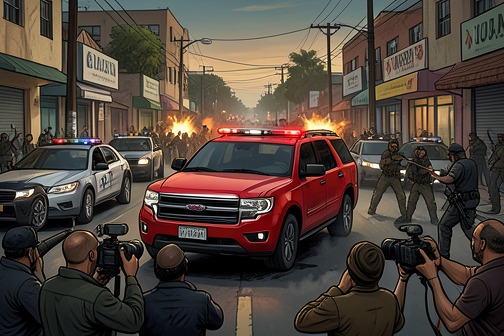
The [Sinaloa Swap Meet shootout](entity:event-recall-event-sinaloa-swap-meet-4341365c6f56) is a street battle in [Tijuana](entity:location-recall-location-tijuana-47bb9d0aad74) in which an attempted interception of [Raúl Barrera](entity:character-recall-character-ra-l-barrera-b24a4deeae21)’s vehicle turns into a prolonged, confused firefight among federal, state, and city police and Barrera gunmen. [Sean Callan](entity:character-recall-character-sean-callan-57035fec3717)’s intervention and a hidden pair of backup vehicles help [Raúl](entity:character-recall-character-ra-l-3740edeac878) escape, but the battle leaves police, cartel gunmen, and bystanders dead or wounded. Its spectacle—played out beside a vast flea market and watched by a crowd that includes a man filming on a camcorder—makes the clash a public display of violence rather than a controlled arrest.
## Approach and Interception
[Callan](entity:character-recall-character-7b41c2a4b719) rides in the back of a stolen fire-engine-red Suburban beside Raúl, who is cruising along Boulevard Díaz Ordaz as if he owns the city. A [Baja State Police](entity:organization-recall-organization-826f7e3f862e) officer drives; another sits in front. Raúl’s conspicuous cowboy clothes and his decision to circulate openly strike Callan as the opposite of the low-profile approach he associates with the old Sicilian mob. The vehicle’s visibility makes the pair easy to follow, and Callan recognizes the danger when two black Suburbans carrying federal officers begin trailing them.
Raúl directs the driver off the boulevard and onto a side street running alongside an enormous flea market. In one of the black vehicles, [Güero Méndez](entity:character-recall-character-g-ero-m-ndez-9416e102d10e) spots the red Suburban and thinks he recognizes Raúl in its back seat. Before he focuses on the passenger, his attention catches on a large painted clown on the market wall: its smiling face, red nose, and wig form a grotesquely cheerful landmark beside the impending violence. Güero orders his driver to stop the red vehicle. The lead Suburban pulls ahead and forces it to the curb; Güero’s vehicle closes in behind, pinning it in place.
A federal commander approaches with his M-16 pointed at the stopped vehicle, two officers following him. Callan lowers himself in the seat and draws his small .22 pistol. Güero lowers the rear window of his own Suburban, rests an AK rifle on the sill, and prepares to fire at Raúl. The Baja State Police driver asks whether there is a problem; at that moment, the federal commander sees Raúl and begins to pull the trigger. The stop has become an imminent execution, and Callan fires first.
## The Firefight
Callan fires from his lap, and two rounds strike the federal commander in the forehead; the M-16 hits the pavement just before the commander falls. The two Baja State Police officers in the front seat shoot through their own windshield, while Raúl, from the back, fires past them and refuses to go quietly. But the federal officers are not alone: two stolen vehicles that had been following the red Suburban from a block behind roar in and trap them. Güero had seen Raúl’s conspicuous car, not the nondescript Ford Aerostar and Volkswagen Jetta shadowing it.
Fabián jumps from the Aerostar and hits a federal officer across the chest with an AK burst. When another federal officer switches sides and kills his wounded partner in hopes of winning Fabián’s favor, Fabián answers by shooting the turncoat twice in the head. Callan pulls Raúl down, then rolls onto the sidewalk and fires from beneath the car at anyone in black pants while Raúl climbs out over the bodies. They shoot their way backward toward the main boulevard as Fabián reverses the Aerostar toward them on its shot-out tires, sparks flying from its rims.
Police converge from every direction: federal, state, and Tijuana city officers arrive in cars, on motorcycles, and on foot, with no clear distinction between sides. Amid the crossfire, a bystander films the ten-minute battle on a Sony 8mm camera and survives, while others do not. Three federal officers are dead and three wounded; two Barrera gunmen, including a Baja state policeman, are dead, two others are badly wounded, and seven bystanders have gunshot wounds. The bishop of Tijuana moves among the casualties, giving last rites to the dead and comfort to the living. The painted clown beside the flea market is left with its smile blasted away, its red nose pocked by bullets and holes through the lower corners of its eyes.
## Escape and Public Aftermath
The escape does not end when Raúl and Callan get away from the battlefield. Antonio Ramos is gathering eyewitnesses when a uniformed city officer tells him that homicide-squad detectives have taken one of the Barreras and two other men. Ramos races to the precinct house, arriving in time to see the back of Raúl’s head vanish through the rear exit. He raises his gun, but a homicide detective grabs its barrel before he can shoot. The arrest has become another contest between police units, and Ramos cannot force the outcome by treating the fugitives as a single, universally recognized target.
When Ramos demands to know who the detectives have let go, he points out that Raúl has just killed officers. The homicide squad nevertheless bunches in the doorway and allows Raúl, [Fabián Martínez](entity:character-recall-character-fabi-n-mart-nez-955daedc2732), and Callan to leave. The scene makes the battle’s confusion institutional as well as physical: federal, state, and city forces have converged in the street, but the aftermath offers no unified pursuit. Ramos sees no shame in the faces of the detectives who have opened the way for the men to escape; the text leaves their reason unstated, while making their intervention unmistakable.
The event reaches [Adán Barrera](entity:character-recall-character-ad-n-barrera-0383f92d92cf) not through an official report but through television: the [Sinaloa](entity:location-recall-location-sinaloa-6302d6b8fe8e) Swap Meet is all over the news, and he watches the coverage. That public visibility sits uneasily beside the [Federación](entity:organization-recall-organization-federaci-n-3cfed113330e)’s quieter exercise of power. Elsewhere, Adán recognizes the organization as a federation headed by his own positioning rather than by a formal title, and offers its protection to other traffickers in exchange for a fee. The shootout does not establish that this arrangement caused the police intervention, but it places the spectacle of armed street power against a wider system in which protection and political influence are negotiated behind the scenes. The clash becomes both a failed interception and a broadcast image of authority divided among armed factions and compromised institutions.
## Street Violence and the Wider Federation
The shootout exposes one face of the Federación’s power: armed men and police units collide in public, while authority elsewhere is secured through bargains that remain largely out of sight. The organization’s political reach predates the battle. Adán understands that it helped the sitting president steal the 1988 election after vote-counting computers malfunctioned, and the arrangement he later offers [García Abrego](entity:character-recall-character-garc-a-abrego-f750b0a7673d) makes protection itself a priced service: friends and security are shared in return for a fee. These details do not explain the homicide squad’s decision to let Raúl, Fabián Martínez, and Callan leave, but they place that divided response within a world where institutional authority and cartel power overlap rather than cleanly oppose one another.
The contrast sharpens in the later peso crisis. After the new president took office on December 1, [1994](entity:time-recall-time-1994-2c6f52c72808), brokerage houses controlled by the Federación bought government tesobonos; the cartels then withdrew capital from the national bank, helping force a 50 percent devaluation. The organization profited by buying devalued pesos and assets and later accepting the president’s invitation to bring its money back in exchange for a favorable trade environment. Set against that longer strategy, the Sinaloa Swap Meet shootout is not evidence of a single coordinated political operation. It is the bloody, televised surface of a broader struggle over power—one in which a public firefight can leave bodies in the street even as the organization’s deeper leverage is exercised through protection, money, and political accommodation.
Event 34
Raid on the Tijuana–U.S. border drug tunnel
The [Raid on the Tijuana–U.S. border drug tunnel](entity:event-recall-event-tijuana-4903083d12f6) uncovers [Güero Méndez](entity:character-recall-character-g-ero-m-ndez-9416e102d10e)’s integrated cross-border supply system: cocaine enters the [United States](entity:location-recall-location-united-states-2f533bc8d0b9) through a concealed underground passage, is disguised in a California cannery, and can then travel through an established commercial distribution network. The operation is more than the discovery of a hidden route. It makes visible the value of the border to the [Federación](entity:organization-recall-organization-federaci-n-3cfed113330e)’s trafficking economy and the difficulty of separating ordinary commerce, political influence, and organized crime.
## Background: The Border as a Trafficking Asset
The raid takes place against a shift in the Mexican drug trade from cultivation toward transportation. [Art Keller](entity:character-recall-character-art-keller-31aa2337649c) reflects that [Operation Condor](entity:event-recall-event-operation-condor-b497472664f4), intended to suppress Sinaloan trafficking, instead dispersed it across [Mexico](entity:location-recall-location-f1c6a91e03ea). The traffickers adapted by treating their access to the two-thousand-mile border with the United States as their essential product: a commodity worth far more on the American side than on the Mexican side. In the arrangement Art describes, the Federación delivered Colombian cocaine into the United States and received a payment for each kilo safely transported; the Colombian organizations then took the shipment onward for processing. Control of routes and border access, rather than control of crops alone, had become a source of power.
That logistical model is embedded in a larger political order. At a meeting with [García Abrego](entity:character-recall-character-garc-a-abrego-f750b0a7673d), [Adán Barrera](entity:character-recall-character-ad-n-barrera-0383f92d92cf) describes [Guadalajara](entity:location-recall-location-guadalajara-1fbbdc6cee32) as a safe place from which to serve the Federación and offers protection in exchange for a fee. The arrangement presents protection not as an exception to the business but as one of its services. Elsewhere, Adán knows the Federación helped the ruling party retain power in the 1988 election after vote-counting computers malfunctioned. Later, the organization profits from the peso crisis and Adán demands a favorable trade environment in return for bringing money back into the country. These episodes do not establish that the tunnel raid was directed by political officials; they show the environment in which a trafficking network could exploit commercial systems while bargaining with the state.
The novel also sets drug enforcement beside the language of national security. [John Hobbs](entity:character-recall-character-john-hobbs-aa4c4c1db101) argues that the threat of regional insurgency warrants intervention, while [Red Mist](entity:expression-recall-expression-red-mist-5e3e3e2788ee) coordinates operations against left-wing movements through a web of militias, military personnel, intelligence agencies, and police. In another instance, military equipment nominally funded to combat drug trafficking is to be transferred for use against insurgents. This broader context is not presented as the cause of the tunnel operation. Rather, it shows how the drug war and counterinsurgency can share institutions and justifications, even as the tunnel raid focuses on a concrete trafficking route.
## Discovery and Entry
Antonio Ramos’s troops search a warehouse on the Mexican side of the border after receiving a reliable tip. They find vacuum-wrapped cocaine and a group of tied-up workers whose attention keeps returning to a forklift. When Ramos moves it, the concealed mouth of a tunnel appears. The discovery transforms what seemed to be a warehouse search into an investigation of a passage running beneath the border.
Ramos descends first. The entrance shaft is sixty-five feet deep; below it, the passage is roughly six feet high and four feet wide, with reinforced concrete walls and floor, fluorescent lighting, an air-conditioning system, and a narrow-gauge track carrying carts. The construction suggests substantial investment and makes the route more than a crude crawlspace. Ramos walks north toward the United States, then turns back to contact authorities on the other side before crossing underground.
Two hours later, Ramos returns with Art Keller, members of the [Special Tactical Group](entity:organization-recall-organization-e6b6bf622e80), and [Drug Enforcement Administration](entity:organization-recall-organization-drug-enforcement-85b22b2a9f98) agents. On the American side, agents from several federal services wait near the tunnel’s far end for the signal to move in. As the group measures the route, it covers about fourteen hundred feet before reaching another vertical shaft and a bolted hatch. Art uses a GPS system to establish their position and coordinate the operation above ground. The two-sided deployment gives the raid its defining form: investigators advance beneath the border while the force on the other side prepares to enter the destination site.
## The Cannery and the Distribution Network
When the hatch opens, agents rush into a cannery and secure the people there. The facility contains orderly conveyor belts, empty cans, sealing and labeling machinery, and piles of red chili peppers. It also contains bricks of cocaine. A label identifies the product as Caliente Chili Peppers, suggesting how the shipment could be concealed within an ordinary packaged food operation.
Art recognizes the company name, [Three Brothers Foods](entity:organization-recall-organization-6ccb07bfb657). The Fuentes family is described as prominent in the Mexican-American community, with important business interests in Southern California and significant contributions to the Democratic Party. Its trucks travel from canneries and warehouses in [San Diego](entity:location-recall-location-san-diego-8089c46f5361) and Los Angeles to destinations around the country. For Güero Méndez, that existing transport network offers a ready-made way to distribute cocaine beyond the border region. [Russ Dantzler](entity:character-recall-character-russ-dantzler-e06d16b564d5) spells out the mechanism: the cocaine comes through the tunnel, is packed as canned peppers, and can be shipped onward. The raid thus exposes connected stages of one operation—underground entry, concealment in a food-processing setting, and distribution through commercial routes.
## Arrests, Political Risk, and Significance
The tunnel’s attribution matters to the investigators. Art asks whether the operation belongs to Güero Méndez rather than the Barrera family, and Antonio Ramos identifies it as Güero’s. That distinction places the discovery within the rivalry among trafficking organizations and gives Art a specific target for the investigation. After learning of the Fuentes connection, Art decides they should be arrested. He recognizes that the decision will carry political consequences: the family’s political contributions include support for the presidential campaign of [Luis Donaldo Colosio](entity:character-recall-character-luis-donaldo-colosi-d0ae0080c6ea).
The raid therefore ends not with the tunnel alone, but with the prospect of confronting a business network whose apparent respectability and political access complicate enforcement. Its concrete evidence—the hidden entrance, engineered passage, cocaine, canning equipment, and nationwide trucking system—turns an abstract account of border power into an operational map. The border is not merely a line to patrol: in this episode it is a route built into the ground, joined to factories and transport, and protected by the same economic and political relationships that make the drug trade difficult to dismantle.
Event 35
Guadalajara airport ambush and killing of Cardinal Parada
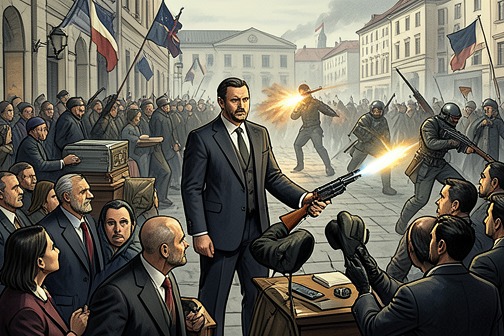
The [Guadalajara airport ambush and killing of Cardinal Parada](entity:event-recall-event-cardinal-parada-aba37362bde0) is a planned cartel attack that collapses into a public gun battle, kills [Juan Ocampo Parada](entity:character-recall-character-juan-ocampo-parada-fe141ae386f9), and fails to capture [Güero Méndez](entity:character-recall-character-g-ero-m-ndez-9416e102d10e). [Adán Barrera](entity:character-recall-character-ad-n-barrera-0383f92d92cf)’s effort to control the timing and appearance of the operation cannot contain its consequences: the intended target escapes, the cardinal dies, and civilians are caught in the crossfire.
## Political Stakes and Preparation
The attack takes place against a wider contest for power in which the [Federación](entity:organization-recall-organization-federaci-n-3cfed113330e) has moved beyond trafficking into political influence. [García Abrego](entity:character-recall-character-garc-a-abrego-f750b0a7673d) questions why Barrera claims a disproportionate share of the world; Barrera answers by presenting [Guadalajara](entity:location-recall-location-guadalajara-1fbbdc6cee32) as a safe base from which to serve the organization and offering protection to those who accept his arrangement. Adán recognizes that the Federación is taking shape around Barrera’s practical command, even without a formal title. The organization’s reach is also tied to political manipulation: Adán knows it helped the governing party steal the 1988 election after the vote-counting computers supposedly malfunctioned. That history gives the coming summit a larger context than a private settlement between rival traffickers: cartel power is already intertwined with the state.
Adán has learned the schedule for the planned meeting by intercepting a call between Juan Ocampo Parada’s driver and the driver’s wife. Parada is due to meet Adán and Güero Méndez at an airport hotel after collecting [Cardinal Antonucci](entity:character-recall-character-cardinal-antonucci-3cd8cbb8e9e4), who is arriving from [Mexico City](entity:location-recall-location-mexico-city-78f19f654410). Adán withholds what he knows from [Raúl](entity:character-recall-character-ra-l-3740edeac878) until the last possible moment, while preparing a separate force in a different safe house. The hired gunmen have arrived on separate flights over several days and are kept out of public view; [Jalisco State Police](entity:organization-recall-organization-jalisco-state-po-f40b323b9f24) uniforms, body armor, and AR-15s are laid out for the operation.
Adán has [Fabián Martínez](entity:character-recall-character-fabi-n-mart-nez-955daedc2732) use a phone he knows has been compromised to tell the team to be in place by 1:45. The call alerts Méndez as well: he learns that Adán plans to ambush him on his way to the airport and decides to arrive early, hoping to ambush the ambush. The opposing plans make the meeting’s announced purpose—peace—an unstable cover for an operation in which both sides expect violence.
## The Airport Turns into a Battlefield
At the terminal, the Barrera party presents itself as a school group preparing to leave: young men crowd the sidewalk with luggage and shopping bags while [Raúl Barrera](entity:character-recall-character-ra-l-barrera-b24a4deeae21) tries to organize them. The casual appearance conceals the operation’s real purpose. When Poptop collapses, the scene erupts into gunfire; [Sean Callan](entity:character-recall-character-sean-callan-57035fec3717) spots the attackers in a green Buick, fires back, and pulls a bystander to the ground. The planned ambush has become a public battle, with people at the airport exposed to fire from both sides.
As the fight spreads, men in Jalisco State Police uniforms shoot at the Buick, helping Fabián Martínez reach a white car. [Callan](entity:character-recall-character-7b41c2a4b719) hesitates to fire toward it because he cannot tell whether its occupants are civilians. Juan Ocampo Parada, focused on the people caught in the shooting, sees a young man who appears to be dying and gets out of his car to give him the last rites. Callan recognizes that Parada is not the person Fabián is targeting and shouts a warning, but the confusion of the battle overwhelms the attempt to stop him.
Parada grabs the rifle and forces its barrel down, trying to prevent Fabián from firing. Fabián shoots him, then kicks him away and fires again. The attack thus kills the cardinal not as its intended target, but as a consequence of his decision to step out and aid a wounded stranger. Callan kneels beside the dying Parada, who tells him that he forgives him and that God forgives him. Parada begins to make the sign of the cross, then dies; Fabián fires again after his death.
At the same time, Güero Méndez is pinned behind the Buick as the Barrera force closes in. He uses a tear-gas grenade to create an opening, and the gas disables Adán Barrera’s attackers long enough for Méndez and his surviving men to flee. Raúl pursues them, but Méndez escapes in a taxi. The ambush therefore fails in its central objective even as the attack claims lives and leaves the terminal in chaos.
## Public Aftermath and Political Consequences
The attack’s public cost becomes unmistakable when the disguised Jalisco State Police remove their uniforms, discard their weapons, and walk toward the departure gate in civilian clothes. The Barrera group and surviving gunmen enter the terminal among the bodies: Poptop, two of Güero Méndez’s shooters, and six bystanders have been hit in the crossfire. Medical personnel try to sort the wounded while passengers cry and scream. Cardinal Antonucci, who had arrived for the meeting, stands amid the confusion asking what has happened; Aeromexico Flight 211 to [Tijuana](entity:location-recall-location-tijuana-47bb9d0aad74) waits on the tarmac. The operation had been concealed behind a staged appearance of ordinary travel, but its aftermath is a public scene that neither side can plausibly present as a peaceful negotiation.
The attack does not end the contest for power. In the later political landscape, the Federación returns under Adán Barrera’s leadership, and apparent peace accompanies its growing prosperity. After the new president takes office on December 1, [1994](entity:time-recall-time-1994-2c6f52c72808), brokerage houses controlled by the organization buy tesobonos; the cartels then withdraw capital from the national bank, helping force a 50 percent devaluation of the peso. The Federación cashes in its bonds and uses the resulting crisis to acquire devalued pesos, property, and businesses. When the president invites the traffickers to bring their money back to revive the economy, Adán makes his return conditional on a favorable trade environment. The episode places the airport violence within a broader pattern: the organization’s power rests not only on armed force, but on its capacity to turn political dependency into protection from meaningful enforcement.
## The Failed Peace and the Event’s Significance
The ambush turns the language of mediation inside out: a meeting presented as a peace summit is used to draw rival leaders into danger, while the attackers’ police uniforms and the Barrera group’s appearance as ordinary travelers disguise the operation until it spills into public view. Yet the event’s decisive reversal is not simply that Güero Méndez escapes. Juan Ocampo Parada’s attempt to aid a wounded stranger places him in the path of a gunman who mistakes or treats him as an obstacle, and Sean Callan’s effort to correct that mistake cannot prevent his death. Parada’s final act of forgiveness, offered to Callan amid the violence, stands against the logic of the operation, in which people become targets, cover, or collateral. The failed ambush therefore exposes the distance between the cartel’s claim to control events and the human consequences it cannot contain.
Event 36
“Justicia” protest at Cardinal Parada's funeral
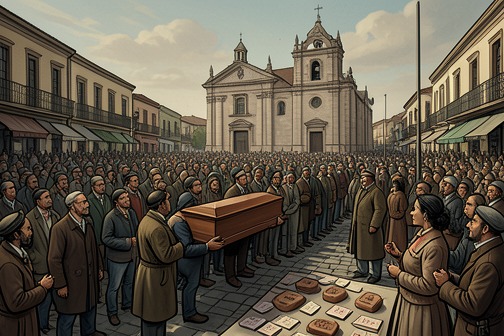
The protest at [Juan Ocampo Parada](entity:character-recall-character-juan-ocampo-parada-fe141ae386f9)’s funeral transforms a day of mourning into a direct public challenge to the Mexican government. In [Guadalajara](entity:location-recall-location-guadalajara-1fbbdc6cee32), thousands of people gather to honor the cardinal, but the official account of his death cannot command their confidence. When the president attempts to address the mourners, a single cry of “¡Justicia!” spreads through the cathedral and beyond it, until the demand follows him out of the plaza.
## The Funeral and Its Public Setting
On an ordinary day, Guadalajara’s Cross of Squares is a busy public space, filled with tourists, couples and residents strolling at midday. Stalls along the cathedral walls sell crosses, prayer cards, plaster saints and small clay memorials left by people who believe prayer has healed them. The funeral changes the character of the plaza. Thousands line up in a winding queue to pass the coffin of the murdered cardinal, and the surrounding streets and cathedral become a place of collective mourning rather than everyday commerce.
The mourners have come from across [Mexico](entity:location-recall-location-f1c6a91e03ea) and represent markedly different communities. Residents of Guadalajara arrive in subdued formal clothing; people from rural areas wear freshly cleaned clothes for the occasion. Visitors from [Culiacán](entity:location-recall-location-culiac-n-5de4db1066ec) and [Badiraguato](entity:location-recall-location-badiraguato-c5530b7e426b) include people whom Juan Ocampo Parada baptized, gave First Communion to, married, or helped bury family members when he was a rural priest. Government officials, clergy and hundreds of nuns also join the crowd. The range of people gathered around the coffin makes the funeral more than a private or institutional observance: the cardinal’s relationships with communities across the country are visible in the line of mourners.
The plaza’s usual sounds—conversation, vendors’ calls and mariachi music—give way to prayers and subdued talk of conspiracy. The contrast matters. The crowd does not arrive as an organized demonstration, and its grief remains restrained while people wait to enter the cathedral. Yet the quiet does not signify agreement with the government’s account of the killing.
## The Official Account and the Interruption
The government has explained Juan Ocampo Parada’s death as a case of mistaken identity: the Barreras’ gunmen supposedly mistook him for [Güero Méndez](entity:character-recall-character-g-ero-m-ndez-9416e102d10e). Few in the crowd accept that explanation. Even so, conspiracy talk remains muted during the funeral procession and Mass, as mourners keep their attention on the coffin and on the acts of prayer and remembrance.
The Mass is long and moving. One after another, people stand to speak about what the cardinal did in their lives, while weeping fills the cathedral. The service is quiet, respectful and subdued until the president rises to speak. His presence is expected: he attends with his cabinet and other government officials. As he approaches the pulpit, the congregation falls silent to hear him.
The president begins by calling the killing a criminal act and describing the cardinal as a good, clean and generous man. He does not get to finish. Someone in the crowd shouts “¡Justicia!” Another person takes up the cry, then another; within seconds, thousands inside the cathedral and thousands more outside are chanting, “Justicia, justicia, justicia—”. The shift is abrupt: the funeral’s disciplined silence becomes an audible demand that the government answer for a death its explanation has failed to settle in the public mind.
## The Chant’s Consequences
As the chant grows louder, secret police communicate anxiously through microphones and earpieces. The president steps back from the microphone with an understanding smile, waiting for the noise to end, but the crowd continues. The repeated word rises from a shouted appeal into a collective declaration. Two police officers eventually hurry the president away from the pulpit and through a side door to his armored limousine. The chant follows him as he leaves the plaza.
By the time Juan Ocampo Parada is interred in the cathedral, most government officials have departed. The funeral has therefore exposed a divide between official authority and public belief: the president can offer the government’s account, but the assembled mourners answer with a demand for justice that his speech cannot contain or silence. The protest does not identify the killers or establish what happened. Its force lies instead in making clear, before national leaders and the cardinal’s communities, that the explanation offered by the government is not accepted as a sufficient resolution.
## Memory and the Aftermath
The funeral’s public demand for justice follows earlier acts of remembrance in the novel, where private rituals preserve losses that violence has made difficult to resolve. On the [Day of the Dead](entity:time-recall-time-day-of-the-dead-6b1dfe2fd16d), Adán visits nine graves and builds shrines for nine family members killed in a single night by Güero Méndez’s men. Güero, too, visits the tombs of his wife and children, arranging food, flowers and candles before sharing memories with the dead. These cemetery observances are intimate and controlled; the cardinal’s funeral brings remembrance into a public space, where it becomes a challenge to power.
[Art Keller](entity:character-recall-character-art-keller-31aa2337649c) is present in the cathedral. He does not join the chant, but watches in amazement as the crowd confronts the country’s leader and demands justice. He privately commits himself to pursuing it. Afterward, he joins the line to pass the coffin and finds [Nora Hayden](entity:character-recall-character-nora-hayden-50dc9c4b1f0c) dressed in black, her blond hair covered by a shawl. He kneels beside her and challenges the contradiction between mourning the cardinal and being involved with his killer. The moment carries the protest’s public question into a personal encounter: grief and demands for accountability remain entangled even after the crowd disperses.
Event 37
Massive manhunt for the Barrera faction after Parada's killing
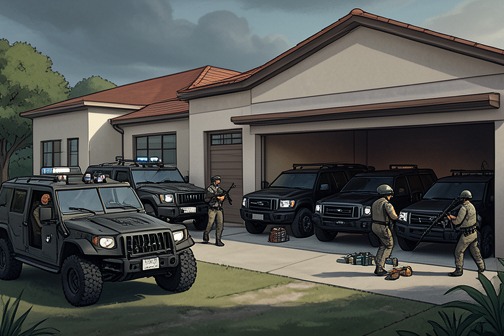
The massive manhunt for the Barrera faction after Cardinal Parada’s killing turned a national promise to confront the cartels into an armed sweep of homes and safe houses. It exposed both the reach of the state’s response and the difficulty of separating enforcement from the institutions that cartel power had penetrated: the raids yielded weapons, properties, and arrests, but [Adán Barrera](entity:character-recall-character-ad-n-barrera-0383f92d92cf), [Raúl Barrera](entity:character-recall-character-ra-l-barrera-b24a4deeae21), and [Güero Méndez](entity:character-recall-character-g-ero-m-ndez-9416e102d10e) escaped capture.
## The Federal Sweep
By the morning after the confrontation that preceded the crackdown, General Rodolfo León, national commander of the [Mexican Judicial Federal Police](entity:organization-recall-organization-mexican-judicial-e9729f82433f), was flying to [Tijuana](entity:location-recall-location-tijuana-47bb9d0aad74) with fifty specially selected elite agents. By afternoon, they had divided into combat-ready squads of six, moving through Colonia Chapultepec in armored Suburbans and Dodge Rams. The deployment was not a quiet inquiry but a visible show of federal force across the city.
That evening, the squads struck six Barrera safe houses, among them [Raúl](entity:character-recall-character-ra-l-3740edeac878)’s personal residence on Caco Sur. The searches uncovered AK-47s, pistols, fragmentation grenades, and two thousand rounds of ammunition. In a large garage, officers also found six armor-plated black Suburbans—vehicles that made the scale and preparedness of the faction tangible.
## Arrests and Seizures
The operation expanded beyond the first set of safe houses. By the end of the week, authorities had arrested twenty-five Barrera associates and seized more than eighty houses, warehouses, and ranches belonging to either the Barreras or Güero Méndez. They also arrested ten airport security police who had escorted the Barreras from Flight 211. That last group of arrests widened the apparent target from cartel members to officials whose access and assistance could help the fugitives move through ostensibly protected channels.
The raids therefore produced more than a cache of weapons: they exposed the breadth of the network’s material base and raised questions about the security apparatus surrounding it. Yet the operation’s extensive seizures did not deliver its most important targets. Adán Barrera, Raúl Barrera, and Güero Méndez remained at large, their whereabouts unknown.
## Violence Beyond Tijuana
The crackdown’s reverberations appeared in [Guadalajara](entity:location-recall-location-guadalajara-1fbbdc6cee32), where a squad of genuine [Jalisco State Police](entity:organization-recall-organization-jalisco-state-po-f40b323b9f24) encountered a pickup carrying men impersonating state officers. The ensuing chase ended with two of the impostors barricaded inside a house, exchanging fire with more than a hundred police officers through the night and into the morning. One was killed and the other surrendered; two genuine officers were killed, and the state police commander was wounded.
The clash showed how the manhunt unfolded amid impersonation, armed resistance, and lethal confusion over who represented the law. The sweeps could seize properties and arrest associates, but the simultaneous firefight in Guadalajara made clear that the contest was not confined to searches or official declarations.
## Public Declaration and Political Contradiction
The following morning, the president appeared before cameras, declared his determination to crush the drug cartels, and announced that more than seventy corrupt Mexican Judicial Federal Police officers had been exposed, dismissed, and would face criminal charges. He also offered a five-million-dollar reward for information leading to the capture of Adán and Raúl Barrera and Güero Méndez. The central contradiction of the announcement was immediate: the state proclaimed a decisive offensive while its principal targets were still free, and corruption within the federal police itself had become part of the public account of the crisis.
That contradiction belongs to a wider pattern in the novel. The Federation’s earlier arrangements joined protection to payment, and the organization was later implicated in helping the ruling party steal the 1988 election. In December [1994](entity:time-recall-time-1994-2c6f52c72808), its financial leverage would become still more explicit when cartel-controlled brokerage houses bought government bonds before the peso crisis, and Adán made the return of the Federation’s money conditional on a favorable operating environment. Those episodes do not resolve the outcome of this manhunt; they place its dramatic show of force against a political order in which cartel influence could reach beyond safe houses into public institutions and national policy.
Event 38
Killing of Cardinal Juan Ocampo Parada
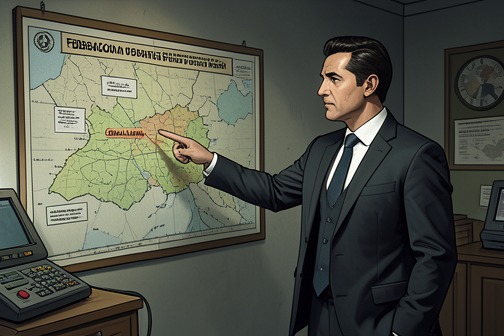
The [Killing of Cardinal Juan Ocampo Parada](entity:event-recall-event-killing-of-cardinal-jua-e38a94c596dd) is both a mistaken-identity killing in the account made public and a political turning point in the novel’s portrayal of the [Barrera organization](entity:organization-recall-organization-barrera-organiza-0c3495b505f4). The death brings federal pressure, arrests, and a national announcement of a war against the cartels; its resolution, however, is shaped by a bargain in which the government’s treatment of the Barrera brothers is linked to the killing itself.
## Background and Stakes
The Barrera organization’s power rests on more than control of trafficking routes. In a meeting with [García Abrego](entity:character-recall-character-garc-a-abrego-f750b0a7673d), [Adán Barrera](entity:character-recall-character-ad-n-barrera-0383f92d92cf) hears the organization’s protective arrangement described as a division of the world that leaves Barrera with a share beyond the territories allotted to others. Barrera presents [Guadalajara](entity:location-recall-location-guadalajara-1fbbdc6cee32) as a safe base for serving the [Federación](entity:organization-recall-organization-federaci-n-3cfed113330e) and offers to extend his protection and alliances to those who accept the arrangement, in return for a fee. The exchange frames the organization as a governing network: protection, territory, and access are negotiated as political resources.
That capacity to negotiate with political power has an electoral counterpart. Adán knows that the Federación helped the president steal the 1988 election, when the opposition candidate Cuauhtémoc Cárdenas appeared poised to defeat the long-ruling PRI. The computers counting the votes then supposedly malfunctioned. This history gives the later response to Parada’s death a context in which official action and cartel interests are not cleanly separate: the public language of enforcement can coexist with private arrangements.
## The Public Account of the Killing
After the cardinal’s death, the federal authorities put pressure on the Barreras, raiding safe houses and arresting associates. [Fabián Martínez](entity:character-recall-character-fabi-n-mart-nez-955daedc2732) tells [Flaco](entity:character-recall-character-flaco-b152524df5e4) and [Dreamer](entity:character-recall-character-dreamer-cbbdeb662f08) that Adán wants them to return to [Mexico](entity:location-recall-location-f1c6a91e03ea) and accept arrest. He gives them the account they are to present: they had been pursuing [Güero Méndez](entity:character-recall-character-g-ero-m-ndez-9416e102d10e), Méndez ambushed them, and Fabián mistook Parada for Méndez and shot him accidentally. In this version, no one intended to hurt the cardinal.
The authorities give Flaco and Dreamer paper and pencils and order them to write their accounts. The next morning, the stories appear in the press as confirmation of what the [Mexican Judicial Federal Police](entity:organization-recall-organization-mexican-judicial-e9729f82433f) had believed: Parada was killed because American gang members mistook him for Güero Méndez. The public explanation makes the death an error rather than an intended attack on the cardinal. It also gives the government a narrative through which it can claim both that the case has been explained and that its campaign against the cartels remains necessary.
The president returns to television beside General León and announces that the news strengthens his resolve to wage a merciless war against drug cartels. The official response thus joins two claims: the cardinal was killed by mistaken identity, and the state will answer the wider criminal threat with intensified force. The announcement does not disclose the private political settlement that shapes the Barreras’ fate.
## Absolution and Political Bargain
Three days before [Christmas](entity:time-recall-time-0cffe7da2c4d), Adán kneels before [Cardinal Antonucci](entity:character-recall-character-cardinal-antonucci-3cd8cbb8e9e4) in the papal nuncio’s private study in [Mexico City](entity:location-recall-location-mexico-city-78f19f654410). Antonucci chants absolution in Latin for Adán and [Raúl Barrera](entity:character-recall-character-ra-l-barrera-b24a4deeae21)’s unintentional role in the accidental killing of Cardinal [Juan Ocampo Parada](entity:character-recall-character-juan-ocampo-parada-fe141ae386f9). The ritual acknowledges the brothers’ part in the death while limiting the absolution to that stated role.
Adán recognizes a sharper distinction in the government’s treatment of the crimes around him. In his understanding, Antonucci does not absolve him for the murders of El Verde, García Abrego, [Luis Donaldo Colosio](entity:character-recall-character-luis-donaldo-colosi-d0ae0080c6ea), and Güero Méndez; the government, by contrast, has already forgiven those killings in advance. Adán understands this as part of a quid pro quo for killing Parada. His insistence that killing an enemy must permit him to kill his own makes the bargain explicit as an exchange of violence and political permission, not a simple legal resolution of the cardinal’s death.
## Wider Consequences and Significance
The later recovery of the Federación’s power under Adán shows how durable the political economy behind such bargains becomes. After the new president takes office on December 1, [1994](entity:time-recall-time-1994-2c6f52c72808), two brokerage houses controlled by the Federación begin buying government tesobonos. The cartels then withdraw capital from the national bank; after the peso is devalued by 50 percent, the Federación cashes in its bonds and the economy collapses. It uses the interval before the American bailout to buy devalued pesos, which rise again when the loan arrives. The sequence is not presented as a direct consequence of Parada’s killing, but it develops the same pattern of criminal wealth operating through public institutions and national decisions.
When the president invites the narco lords to bring their money back to Mexico, Adán demands a favorable trade environment. Public rhetoric about breaking the cartels’ power is thus set against a private dependence on cartel capital and the conditions attached to its return. The cardinal’s death is consequential not only because it prompts raids, arrests, and a televised campaign, but because its settlement reveals how force can be converted into leverage. The official account closes one question about how Parada died; the bargain exposes a larger one about who can define justice, and what the state is willing to trade to preserve its authority.
Event 39
Flaco and Dreamer's coerced confessions and deaths
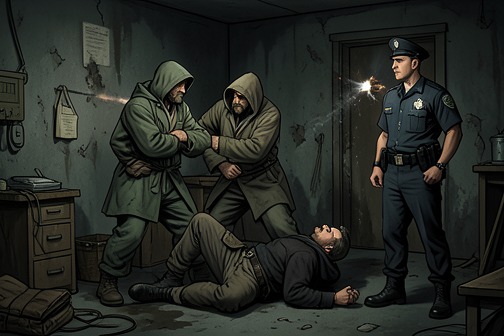
[Flaco](entity:character-recall-character-flaco-b152524df5e4) and [Dreamer](entity:character-recall-character-dreamer-cbbdeb662f08)’s coerced accounts and deaths turn the aftermath of Cardinal [Juan Ocampo Parada](entity:character-recall-character-juan-ocampo-parada-fe141ae386f9)’s killing into an official explanation shadowed by evidence of abuse. Detained by federal officers, the two young men are pressured into writing statements that support a mistaken-identity account of the assassination. Their accounts appear in the news the following morning; soon afterward, both are found dead in their cell, and a coroner rules their deaths a double suicide without addressing unexplained injuries. The episode joins state pressure, public messaging, and a suspicious death in a single chain of events, while leaving the full circumstances of the men’s end unconfirmed.
## Detention and Pressure
The episode begins with Flaco and Dreamer hooded and held in a filthy, isolated place that Flaco identifies as a dump. It is morning, though he can sense only faint light through the hood. His hearing is impaired, and he hears Dreamer pleading nearby. A gunshot follows, and Flaco is made to believe that Dreamer has been killed. The scene establishes the men’s vulnerability without showing who is responsible for the shot or confirming its consequence at that moment.
Flaco is then threatened in turn. An officer places a gun against his head and repeatedly stages the possibility of firing, but the weapon clicks without discharging. The threats leave Flaco terrified and unable to control himself. The account’s emphasis is not simply on physical intimidation: the officers use uncertainty itself as pressure, making him wait for an outcome that may or may not come. The sequence supplies the immediate context for the statements the two men will later be ordered to produce.
After a shot strikes the dirt beside Flaco, officers tell the others to pick him up. They refuse to touch him because he is filthy, and eventually have Dreamer remove Flaco’s soiled clothing and clean him with a wet rag. The practical indignity of this arrangement is also a brief return of human contact between the prisoners: Flaco apologizes, and Dreamer reassures him. The boys then lie together and cry. Their dependence on each other contrasts with the officers’ treatment of them as instruments in a case, rather than as witnesses whose safety matters.
## The Written Account
About an hour later, an officer returns. Flaco trembles, apparently expecting the threats to resume, but instead each young man receives paper and a pencil and is told to write. The change from staged execution to written testimony does not make the process voluntary. Coming after the men have been terrorized and led to believe one of them has been shot, the instruction to write belongs to the same coercive sequence.
Their accounts reach the papers the next morning. They confirm the explanation that the [Mexican Judicial Federal Police](entity:organization-recall-organization-mexican-judicial-e9729f82433f) already believed fit the Cardinal Juan Ocampo Parada case: the cardinal was killed by American gang members who mistook him for [Güero Méndez](entity:character-recall-character-g-ero-m-ndez-9416e102d10e). The event therefore has two linked consequences. It provides the authorities with written support for a particular account of the killing, and it gives the public a seemingly concrete version of how the mistaken identity occurred. The narrative shows the statements emerging from detention after intimidation, not from an independent inquiry into what the two men could safely or freely say.
The political response quickly enlarges the meaning of their account. The president returns to television beside General León and presents the news as strengthening his administration’s resolve to wage a merciless war against the drug cartels. The government’s declaration turns the statements into public justification for further enforcement. The episode does not establish that the account is false, but it places its production under duress beside the state’s use of it, making the distance between a written confession and trustworthy testimony central to the scene.
## Deaths and Official Verdict
After the accounts have become public, Flaco is found dead, hanging in his cell; Dreamer is found beside him. The narrative offers no confirmed explanation of how they died. The coroner returns a verdict of double suicide, attributing it to the young men’s inability to live with guilt over Cardinal Juan Ocampo Parada’s killing. Yet the verdict leaves unexplained blunt-force injuries on the backs of their heads unaddressed. That omission does not identify a perpetrator or establish an alternative cause of death, but it prevents the official finding from resolving the scene’s evident questions.
The sequence creates a stark reversal: the men who have just supplied statements useful to the authorities are no longer alive to clarify how those statements were obtained or what they meant. Their deaths follow the broadcast and occur in custody, while the official verdict converts the circumstances into a story of private remorse. The unexplained injuries remain outside that account. In this way, the episode distinguishes what institutions announce from what the available details leave uncertain, without supplying a definitive answer about responsibility.
## Narrative and Political Significance
The event’s structure moves from terror and enforced silence to written testimony, public declaration, and a verdict that closes the case on terms the unexplained evidence does not settle. Paper becomes the hinge: the men are first reduced to bodies under threat, then made to write, and their written accounts are carried into the public narrative of the killing. Their deaths remove them from that narrative as living witnesses, while the coroner’s conclusion supplies an official ending that leaves significant circumstances unexamined.
The episode also complicates the government’s public language of a merciless campaign against cartels. Its announcement presents the men’s accounts as support for a forceful state response, but the conditions surrounding those accounts—and the deaths that follow—raise questions about the reliability and cost of that response. The story does not prove that the officers killed Flaco and Dreamer, nor does it establish that the mistaken-identity account is untrue. Its force lies in keeping those uncertainties visible: an explanation becomes public, a verdict is entered, and yet the unexplained injuries and coercive setting remain part of the record.
Event 40
Assassination of El Verde
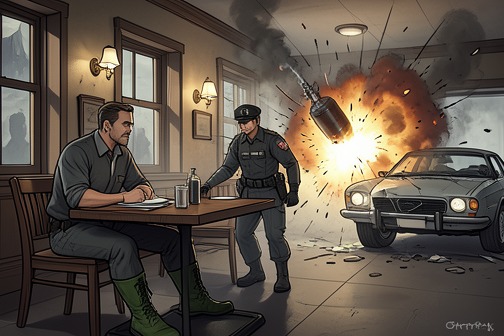
[Chalino Guzmán](entity:character-recall-character-chalino-guzm-n-69f9808662f8), known as El Verde, is assassinated by a bomb at his favorite restaurant in [Ciudad Juárez](entity:location-recall-location-b42163f7dc1f). The scene makes the killing starkly ordinary before it is sudden: El Verde arrives for his habitual breakfast, his men maintain the familiar security routine, and a guard approaches an unfamiliar Ford Bronco just before the explosion tears him apart.
## Identity and Daily Routine
El Verde is the head of the [Sonora Cartel](entity:organization-recall-organization-sonora-cartel-1eee2e4b90c7), a trafficker whose shipments of cocaine, marijuana, and some heroin pass through [El Paso](entity:location-recall-location-ccc0e0d194cb). Yet at breakfast he can appear to be an ordinary farmer from the dry country. His distinctive green lizard-skin boots mark him out, while his regular table, coffee, and morning newspaper give his visits the settled rhythm of a local habit.
He cannot read, but likes to pretend that he can and enjoys looking at the newspaper's pictures. The detail makes his public routine both familiar and theatrical: the paper is less a source of information than part of the appearance he keeps at the table. His security is woven into the same routine. Restaurant staff know where to seat him, and his armed men wait in parked cars outside while waiters carry them thermoses of hot coffee.
## The Bombing
The attack begins with a small disruption. El Verde looks over the newspaper and watches one of his men approach a Ford Bronco parked out front to tell its driver to move. Most locals know the rules at that hour, so El Verde assumes the occupant is from out of town. The guard taps on the window; then the bomb explodes and rips El Verde to pieces.
The scene identifies neither the person who placed or detonated the bomb nor the motive for the attack. Its immediate focus is the fatal breach in a routine that has seemed secure: the regular customers know the morning custom, the gunmen are nearby, and still the vehicle is there. The killing is sudden and decisive, with no account in this episode of an investigation or succession.
## Cartel Power and Political Setting
El Verde's position gives the assassination stakes beyond the restaurant. He leads a cartel moving large quantities of drugs across the border, while the wider criminal order described in the novel is organized through alliances, protection, and political influence. [Don Adán Barrera](entity:character-recall-character-f8d17a8b49ec) presents protection as a shareable asset, offering partners his friends and his protection in exchange for a fee. Elsewhere, the Federation's political reach is shown in its assistance to the ruling party during the 1988 election and, after the [1994](entity:time-recall-time-1994-2c6f52c72808) presidential transition, in a coordinated financial maneuver that helps precipitate a peso collapse.
These episodes establish the scale of the world in which El Verde operates, but they do not identify the bombing as part of any particular cartel or political operation. The contrast is significant without resolving the attack: a leader whose power belongs to an extensive trafficking network is killed through a single vehicle left outside a restaurant.
## Narrative Significance
The assassination is built around the collision between repetition and rupture. Breakfast happens every morning; the restaurant staff know the seating arrangement, the gunmen know their posts, and the local rules make the Bronco seem anomalous. That familiar order does not prevent the attack. Instead, it gives the final movement—from a guard's knock to the explosion—its force.
El Verde's imagined resemblance to a farmer and his staged reading of the newspaper sit beside the practical realities of his position: armed protection and a cross-border trafficking route. The scene holds those scales together without explaining who struck or what political consequences follow. Its decisive revelation is the vulnerability concealed inside the appearance of a well-guarded daily ritual.
Event 41
Assassination of García Abrego
[García Abrego](entity:character-recall-character-garc-a-abrego-f750b0a7673d)’s assassination destroys the public image of a powerful patrón at the very moment it appears most secure: during his village’s annual festival, among the people whose loyalty he has cultivated. His death also marks the violent end of a figure associated with the [Federación](entity:organization-recall-organization-federaci-n-3cfed113330e)’s reach into both criminal commerce and Mexican politics.
## Power and Political Bargains
Before the assassination, García Abrego is identified as head of the Gulf cartel and patrón of the Federación. The organization’s power rests not only on force but on arrangements that turn protection and political influence into instruments of rule. At a meeting with [Adán Barrera](entity:character-recall-character-ad-n-barrera-0383f92d92cf), García Abrego questions Barrera’s division of territory and asks what place remains for him. Barrera answers that [Guadalajara](entity:location-recall-location-guadalajara-1fbbdc6cee32) has no border and is therefore a safe base from which to serve the Federación. He offers to share his resources, friends, and protection in exchange for a fee. The exchange makes the Federation’s structure tangible: local power is negotiated through territory, security, and personal obligations, rather than announced through a formal title.
## Political Leverage and the Cost of Protection
The bargain over Guadalajara’s role was one expression of a wider system in which the Federación converted criminal wealth into political leverage. [Don Francisco Uzueta](entity:character-recall-character-don-francisco-uzuet-92a17cf7e456), known as García Abrego, was not simply head of the Gulf cartel: he was also described as patrón of the federation. When he challenged [Don Adán Barrera](entity:character-recall-character-f8d17a8b49ec) over how power and territory were being divided, the answer placed Guadalajara outside the border-facing plazas and made it a safe base for serving the federation. Don Adán offered to share his resources, friendships, and protection for a fee. García Abrego’s question about the price of that protection exposed the arrangement’s logic: security and political access were services to be purchased, while authority rested on reciprocal obligations as much as on any formal title.
The federation’s influence reached into national politics. Four years before the later confrontation over its power, it had helped the president steal the 1988 election. The opposition candidate, the leftist Cárdenas, appeared likely to defeat the [Institutional Revolutionary Party](entity:organization-recall-organization-6aa2664a0c48), which had governed since the 1917 Revolution; then the vote-counting computers malfunctioned. The account presents the breakdown not as an isolated technical mishap but as the mechanism through which the party remained in power, with the federation implicated in preserving the political order on which its operations depended.
That alliance later became an economic weapon. On December 1, [1994](entity:time-recall-time-1994-2c6f52c72808), a new president took office. The next day, two brokerage houses controlled by the federation began buying government tesobonos. A week later, the cartels withdrew their money from the national bank, forcing a 50 percent devaluation of the peso; the federation then cashed in its bonds, helping collapse the economy. It profited again as the currency moved: after the government invited the narco lords back with their dollars to revive the economy and repay a loan, the federation had used the interval to buy devalued pesos, which rose when the American bailout arrived. Don Adán agreed to return the money only for a favorable trade environment—a demand that made the government’s public promises to break the cartels collide with its dependence on cartel capital.
The political connection was visible in appointments as well as financial transactions. The Americans supplied the president with a list of Institutional Revolutionary Party figures on the federation’s payroll; three were then appointed state governors, another became transportation secretary, and another became the government’s drug czar. The sequence makes García Abrego’s place in the federation consequential beyond the underworld: protection, election-making, market manipulation, and public office formed connected channels of power, allowing the organization to bargain with the state while helping shape who governed it.
## The Festival and the Attack
At the annual festival in [Coquimatlán](entity:location-recall-location-36cbe5be8f20), Don Francisco Uzueta, known as García Abrego, rode a palomino at the head of the parade. In full vaquero costume, he swept his jeweled sombrero toward the cheering crowd. The welcome had been cultivated through concrete gifts: he had built the village clinic, school, and playground, and paid to air-condition its new police station. He recognized people in the crowd and made a point of waving to children, appearing not only as the Gulf cartel’s leader and the Federación’s patrón but as a benefactor among his own neighbors.
That public display of security ended without warning. García Abrego did not see the barrel of an M-60 protruding from a second-story window. The first short burst of .50-caliber bullets destroyed his face; a second tore open his chest. His palomino reared and bucked in terror, while García Abrego’s dead hand remained clenched around the reins. The parade’s symbols of authority and local affection were still in place, but the man at its center had been killed in front of the people whose gratitude he had sought.
## The Patron’s Failed Protection
The scene turns the language of protection back against García Abrego. His standing had been displayed through gifts to the village and the crowd’s gratitude, while the political bargains around the Federación treated protection as a service that could be shared and priced. At the festival, however, that authority cannot shield him from an unseen gunman. His hand remains locked around the reins after his death: the image leaves the patrón physically attached to the symbols of command even as command has become useless. The killing exposes the distance between a public reputation built on care and a power structure ultimately enforced by violence.
Event 42
Assassination of Luis Donaldo Colosio
The [Assassination of Luis Donaldo Colosio](entity:event-recall-event-assassination-of-luis-d-8d21e5cfb222) turns a campaign appearance in [Tijuana](entity:location-recall-location-tijuana-47bb9d0aad74) into a killing whose circumstances later deepen [Art Keller](entity:character-recall-character-art-keller-31aa2337649c)’s suspicions about the [Barrera organization](entity:organization-recall-organization-barrera-organiza-0c3495b505f4). The event unfolds in [Lomas Taurinas](entity:location-recall-location-2849b9f115d5), a poor settlement near the airport, where Colosio’s decision to leave his vehicle and walk among the crowd carries him beyond the security team’s effective control.
## Campaign Stop in Lomas Taurinas
Mario Aburto, a twenty-three-year-old mechanic, is among the large crowd gathered in Lomas Taurinas. The settlement occupies a ravine on Tijuana’s eastern edge, its improvised homes spread across muddy, eroded ground. Although the neighborhood has recently received piped water and electricity as a reward for its loyalty to the [Institutional Revolutionary Party](entity:organization-recall-organization-6aa2664a0c48), much of the ground remains an open sewer and dumping place. The campaign stop thus takes place in a community marked both by political allegiance and by persistent poverty.
[Luis Donaldo Colosio](entity:character-recall-character-luis-donaldo-colosi-d0ae0080c6ea) is accompanied by fifteen plainclothes members of [Mexico’s Estado Mayor Presidential Guard](entity:organization-recall-organization-estado-mayor-690fd0736e7a). A special squad of former Tijuana police officers, hired to protect local campaign appearances, is dispersed through the crowd. Antonio Ramos and his [Special Tactical Group](entity:organization-recall-organization-e6b6bf622e80) take positions along the slope surrounding the natural amphitheater, but the size and movement of the gathering make security difficult. People have already crowded around Colosio’s red Chevrolet Blazer as it made its way into the neighborhood, leaving Ramos concerned about how the candidate will depart.
When the speech ends, Colosio does not return to the vehicle. He chooses instead to walk through the crowd, an effort to be among the people that carries him into a dense gathering where his guards can scarcely see or hear what is happening. That choice sets the immediate conditions for the attack.
## The Attack and Its Immediate Aftermath
As Colosio moves through the crowd, Antonio Ramos can barely keep sight of him. The music and crush of people further limit the guards’ ability to track what is happening. Mario Aburto reaches Colosio through the bodyguards and shoots him at close range. The crowd erupts; some people seize Aburto, while members of the Estado Mayor Presidential Guard form around him and force a path through the gathering to a waiting vehicle.
General Reyes carries Colosio toward a car, but an ambulance arrives and takes him to Tijuana General. Ramos notices that Colosio has been shot twice, a detail that later becomes central to questions about the attack. A helicopter is waiting to transport him to a trauma center in [San Diego](entity:location-recall-location-san-diego-8089c46f5361), but Colosio is already dead, and the planned transfer never takes place.
## Questions About the Shooting
The killing leaves unresolved questions that shape Art Keller’s response. At the hospital, he focuses on the two wounds: one to Colosio’s head and another to his left side. [Shag Wallace](entity:character-recall-character-shag-wallace-8747102d6785) offers an explanation in which Colosio’s body turned after the first shot, but Art notes that the bullet trajectories appear to come from opposite directions. The discrepancy makes the account of a lone gunman harder for him to accept; it does not, by itself, establish who else may have been involved.
Art connects the questions to other details around the campaign. His team has broken [Güero Méndez](entity:character-recall-character-g-ero-m-ndez-9416e102d10e)’s tunnel and traced it to the Fuentes brothers, whom he identifies as Colosio supporters; Colosio was then killed in Tijuana, territory controlled by the Barrera organization. Art’s chain of associations is a suspicion, not a solved case. The assassination therefore becomes both a political killing and a point of uncertainty in his pursuit of the organization: the circumstances invite scrutiny, while the evidence presented here stops short of resolving responsibility beyond Aburto’s arrest as the gunman.
## Political Context and Limits of the Evidence
The assassination occurs against a background in which the [Federación](entity:organization-recall-organization-federaci-n-3cfed113330e)’s influence reaches beyond trafficking into electoral politics. Four years earlier, the organization had helped the president steal the election: the vote-counting computers failed as the opposition candidate appeared poised to win. The account of that episode, alongside the Federation’s offers of protection and political alliance, depicts cartel power as a system capable of shaping public institutions, not merely operating outside them. That context makes Art Keller’s suspicion politically consequential, but it does not establish a connection between the election fraud and Colosio’s murder, or identify anyone beyond Mario Aburto as responsible for the shooting.
Event 43
Killing of Güero Méndez
The killing of [Güero Méndez](entity:character-recall-character-g-ero-m-ndez-9416e102d10e) takes place in a private hospital at the moment he believes he can disappear and return to the conflict on his own terms. Three of [Mexico](entity:location-recall-location-f1c6a91e03ea)’s leading plastic surgeons are preparing to give him a new face; Güero imagines that changed features, dyed hair, and a new name will let him resume his war against the [Barrera organization](entity:organization-recall-organization-barrera-organiza-0c3495b505f4). Instead, a nurse uses the medical setting to deliver a fatal dose and a message from [Adán Barrera](entity:character-recall-character-ad-n-barrera-0383f92d92cf). The planned transformation becomes an execution, and the war Güero intends to continue ends before it can begin again.
## Setting and Intended Escape
Güero lies on a gurney in a private hospital, where the preparations for plastic surgery promise more than a cosmetic alteration. He links the new face to dyed hair and a new name, a complete change of appearance that he expects will make it possible to return to the fight. The scene gives his plan a clear direction: he does not regard the surgery as an end to the conflict, but as a means of surviving it and resuming his campaign against the Barreras.
That intention makes the hospital a place of sharp contradiction. The surgeons are preparing a procedure that Güero understands as the start of another life, while the nurse turns the medical encounter into the end of his existing one. The scene does not show him reaching his hoped-for new identity. It cuts off the future he has constructed around it.
## The Message and the Killing
Before administering the drug, the nurse tells Güero that [Luis Donaldo Colosio](entity:character-recall-character-luis-donaldo-colosi-d0ae0080c6ea) is dead. She identifies the news as a message from Adán Barrera, and then explains that the Dormicum she is giving him is a massive, lethal dose. The announcement and the injection are parts of the same action: the message establishes the Barrera organization’s reach into the hospital, while the dose makes the news a prelude to Güero’s death rather than an opening for negotiation.
Güero tries to resist the drug and call for help, but he is restrained and unable to do so. His awareness fades as his efforts fail. The nurse’s final message attributes the killing to the Barreras, leaving no suggestion that the injection is a medical accident or that Güero’s planned surgery will proceed. The hospital procedure has been turned into a deliberate killing carried out at close range, under the appearance of care.
## The War’s Reversal
The scene’s central reversal is between Güero’s expectation of continuation and the finality imposed on him. He enters the moment imagining that anonymity will allow him to renew his war; the nurse’s announcement instead makes clear that Adán’s power has reached him before the transformation can take place. A new face would have offered concealment, but it cannot protect him from the person who has sent the message or the people who carry it out.
Elsewhere in the conflict, [Sean Callan](entity:character-recall-character-sean-callan-57035fec3717) questions whether the Barrera organization can confront Güero’s professional hitters with the [San Diego](entity:location-recall-location-san-diego-8089c46f5361) gang members available to it. That assessment supplies a contrasting view of the forces arrayed in the war: Güero is associated with professional fighters, while [Callan](entity:character-recall-character-7b41c2a4b719) doubts the strength of the opposing group he sees. The hospital killing does not resolve that comparison through a battle scene. Instead, it presents a private, targeted death, showing that the conflict can reach its decisive moments away from the visible contest between armed groups.
## Narrative Significance
Güero’s death closes the future he has imagined but does not make the wider violence appear settled. His stated intention is to resume the war, and the killing prevents that particular return; the scene offers no account of a peace or reconciliation between the factions. Its emphasis is on the interruption of a plan and on the means by which Adán’s message becomes an irreversible outcome.
The intended new face gives the scene its governing contrast. Güero believes he can change how the world recognizes him and thereby regain the freedom to act. The hospital instead becomes the place where another power decides whether he will act at all. His prospective disguise is never completed, and his intended return to the war is replaced by a message announcing both the death of Luis Donaldo Colosio and the end of Güero’s own plans.
Event 44
Miguel Ángel Barrera's prison escape
[Miguel Ángel Barrera](entity:character-recall-character-miguel-ngel-barrera-6b908727e16a)’s escape from [Almoloya prison](entity:location-recall-location-c0888dbd2dc3) is accomplished not through a break in the walls but through an ordinary laundry cart. Two guards roll him out beneath clean sheets and blankets; he climbs out at a waiting van, and twelve hours later he is living in retirement in Venezuela. The passage’s abrupt movement from helplessness inside a cell to freedom beyond the prison gate makes the escape a measure of how thoroughly the [Federación](entity:organization-recall-organization-federaci-n-3cfed113330e)’s power can reach beyond its declared boundaries.
## The Escape from Almoloya
The sequence first presents a prisoner restrained and losing consciousness. He cannot call out or free himself, and hears a nurse deliver the message that the Barreras say he can rot in hell. The narration then shifts to two guards pushing a cart full of clean sheets and blankets up to Miguel Ángel Barrera’s suite of cells. Without a described struggle or alarm, [Tío](entity:character-recall-character-t-o-00e2ebb81c20) climbs into the cart; the guards cover him with a sheet and wheel him through the yards and out the gate.
The method is deliberately plain. The cart, normally associated with routine prison work, becomes the vehicle for an extraction, while the guards’ participation gives the escape the appearance of ordinary movement through the institution. The account does not explain who arranged their cooperation, how the cart passed beyond the gate, or what part the earlier message plays in the operation. Instead, its clipped sequence emphasizes the result: Tío is out, and the narration calls it simple and easy. The statement that the escape happens as promised confirms a prior assurance, but does not identify its maker or spell out the terms.
## From Prisoner to Exile
The next concrete measure of success is the interval: twelve hours after leaving the prison, Miguel Ángel is living in retirement in Venezuela. The narrative gives no intervening route, confrontation, or pursuit. That compression makes the escape feel less like a desperate flight than a completed transfer from custody into a new life outside [Mexico](entity:location-recall-location-f1c6a91e03ea). The destination is stated, but the arrangements behind his arrival and retirement remain undisclosed.
The change is stark. In the preceding image, the restrained prisoner cannot even turn his neck; moments later, Tío climbs from the cart under his own power and walks to a waiting van. The passage does not linger over an emotional reaction or explain what retirement means for his future. Its emphasis is on the reversal itself: a man apparently enclosed by the prison system has crossed its boundary and reached safety beyond it.
## The Power Behind the Reversal
The escape’s larger significance is illuminated by the book’s account of the Federación’s political reach. In an earlier conversation, [García Abrego](entity:character-recall-character-garc-a-abrego-f750b0a7673d) questions why Barrera takes a fourth share of the world after dividing it into three. Barrera describes [Guadalajara](entity:location-recall-location-guadalajara-1fbbdc6cee32) as a safe place from which to serve the Federación and offers to share his property, friendships, and protection. Adán recognizes the importance of the moment: Barrera has put a name to the organization and positioned himself as its head, not by title but by where he stands. The escape does not establish that this earlier arrangement directly secured Tío’s release, but it takes place in a story where protection is openly treated as a commodity and a source of power.
That political influence is shown at a national scale as well. The Federación helped the [Institutional Revolutionary Party](entity:organization-recall-organization-6aa2664a0c48) steal the 1988 election when the vote-counting computers malfunctioned. Later, after the new president took office on December 1, [1994](entity:time-recall-time-1994-2c6f52c72808), brokerage houses controlled by the organization began buying government bonds; the cartels then withdrew capital from the national bank, helping force a 50 percent devaluation of the peso. The Federación cashed in its bonds and bought devalued assets, while Adán agreed to bring narco-dollars back into the country only in exchange for a favorable trade environment. These episodes do not explain the prison operation step by step. They establish the broader setting in which a prison escape can stand as more than a single guard’s breach of duty: the organization has already been shown manipulating elections, markets, and the terms on which government deals with it.
## Narrative Significance
The escape is rendered through practical objects and compressed actions rather than an account of planning: clean laundry, a sheet, the prison yards, a gate, a van. That sequence keeps the mechanics partly hidden while making the outcome unmistakable. The absence of a described battle is itself telling. Tío’s freedom arrives through access and coordination, not a public confrontation, and the narration moves on almost as soon as the gate is behind him.
The words indicating that the escape was promised connect its success to an unseen prior agreement, while the twelve-hour leap to Venezuela closes the immediate question of whether he got out. The episode therefore presents escape as both a physical departure and a demonstration of an established network’s reach. The prison contains Tío; it does not, in the telling, contain the power that makes his release possible.
Event 45
Adán Barrera's political bargain and consolidation of power
[Don Adán Barrera](entity:character-recall-character-f8d17a8b49ec)’s political bargain and consolidation of power mark the transition from cartel victory to a system in which criminal authority could shape government decisions, economic policy, and the terms of public order. The settlement that followed Cardinal [Juan Ocampo Parada](entity:character-recall-character-juan-ocampo-parada-fe141ae386f9)’s killing helped secure Don Adán’s ascent, while later deals and financial maneuvering restored the [Federación](entity:organization-recall-organization-federaci-n-3cfed113330e) under his leadership and enlarged its reach.
## Background and Political Foundations
The bargain rested on a model of power Don Adán had been assembling well before its final consolidation. At a meeting with [García Abrego](entity:character-recall-character-garc-a-abrego-f750b0a7673d), he described [Guadalajara](entity:location-recall-location-guadalajara-1fbbdc6cee32) as a safe base from which to serve the Federación, rather than a place valuable for crops or a border. He offered to share his protection and connections in return for a fee. García Abrego’s question about why Don Adán divided the world into three parts and took a fourth for himself captured the imbalance beneath this language of partnership: the arrangement could be presented as mutual protection, but Don Adán was positioning himself at its center.
That ambition developed alongside a structural redesign of the drug business. Don Adán rejected the traditional pyramid of bosses, captains, and soldiers, in which lower ranks had little incentive unless they could build a subordinate chain of their own. The pyramid also gave law enforcement a route upward: one informant could expose links through an integrated hierarchy. Don Adán replaced it with a structure that had only two levels, the Barrera brothers above and independent operators beneath them, working on the same level as one another. His preferred participants were entrepreneurs, not employees.
The arrangement made the Federación a broker of access, transport, security, and protection rather than merely a hierarchy of producers. Operators were expected to report the type and weight of product, a prearranged sale price, and a delivery date in the [United States](entity:location-recall-location-united-states-2f533bc8d0b9). Within forty-eight hours of that date, they owed the Barreras 12 percent of the agreed price, or of a higher realized price; selling for less did not reduce the amount owed. Those who could not pay had to negotiate with Don Adán or face [Raúl Barrera](entity:character-recall-character-ra-l-barrera-b24a4deeae21). Operators could arrange their own protection, but still owed the fee if a shipment was seized. The Barreras’ security package added a handling charge and a promise of reimbursement for the shipment’s wholesale purchase cost if it was confiscated in [Mexico](entity:location-recall-location-f1c6a91e03ea).
## The Bargain After the Cardinal’s Killing
The immediate political settlement followed the accidental killing of Cardinal Juan Ocampo Parada. Three days before [Christmas](entity:time-recall-time-0cffe7da2c4d), Don Adán knelt before [Cardinal Antonucci](entity:character-recall-character-cardinal-antonucci-3cd8cbb8e9e4) in his private study in [Mexico City](entity:location-recall-location-mexico-city-78f19f654410) as the papal nuncio recited absolution in Latin for Don Adán and Raúl Barrera for their unintended part in the cardinal’s death. The limits of that religious absolution matter: in Don Adán’s understanding, Cardinal Antonucci did not absolve the murders of El Verde, García Abrego, [Luis Donaldo Colosio](entity:character-recall-character-luis-donaldo-colosi-d0ae0080c6ea), and [Güero Méndez](entity:character-recall-character-g-ero-m-ndez-9416e102d10e).
Don Adán believed the government had already granted a different kind of pardon for those killings, in advance, as part of the exchange for Cardinal Juan Ocampo Parada’s death. His asserted rule was reciprocal: if he killed the government’s enemy, the government had to let him kill his own. The bargain therefore joined political utility to selective impunity. The state’s protection did not erase the deaths; it made their consequences negotiable within an arrangement between the government and the cartel leader.
A further exchange accompanied this settlement. The Mexican government restored the [Catholic Church](entity:organization-recall-organization-catholic-church-7dfe4f6d7f50) to full legal status, while a briefcase containing incriminating information passed from Don Adán to government ministers. The narrative places these acts together as part of the political transaction, not as a simple religious reconciliation. Don Adán left Cardinal Antonucci’s study with what appeared to be an officially cleansed standing, while the government had accepted information from him and granted protection tied to the larger bargain.
## From Victory to Leadership
At the end of the encounter, Don Adán regarded the consequences as settled: Güero Méndez was dead, the war was over, and [Miguel Ángel Barrera](entity:character-recall-character-miguel-ngel-barrera-6b908727e16a) had been removed from prison and taken out of the country. Don Adán concluded that he was now the patrón. That claim was not only personal. It signaled the restoration of the Federación under a single dominant leader, backed by the political accommodation he had secured.
He and [Nora Hayden](entity:character-recall-character-nora-hayden-50dc9c4b1f0c) then converted victory into a program of local alliance-building. At the funerals of El Verde and García Abrego, as later at Güero Méndez’s funeral, Don Adán endowed schools, clinics, and playgrounds in the dead men’s names. In private meetings, he approached their former associates with an extension of the [Baja Revolution](entity:expression-recall-expression-baja-revolution-807b390533ac): peace, amnesty, protection, and lower taxes. These public gifts and private offers were linked methods of consolidation. The memorial institutions made the new order visible to communities; the negotiations offered former adversaries a place within it.
The invitation to choose between meeting Don Adán or [Raúl](entity:character-recall-character-ra-l-3740edeac878) carried a sharper edge. Most chose Don Adán; the few who chose otherwise died. The resulting quiet was described as peace and prosperity, but its terms included both protection and the credible threat of force. The same system that courted former rivals with amnesty and reduced taxation also marked refusal as dangerous. Thus the Federación’s return depended not just on Don Adán’s political deal, but on his ability to convert the defeated network into a new coalition.
## The Peso Crisis and Renewed Leverage
The consolidation extended from political protection into national finance. The new Mexican president took office on December 1, [1994](entity:time-recall-time-1994-2c6f52c72808). The next day, two brokerage houses controlled by the Federación began buying government tesobonos. In the following week, drug cartels withdrew their capital from the national bank, forcing the government to devalue the peso by 50 percent. The Federación then cashed in its tesobonos as the economy collapsed.
The cartel profited again when the government needed its money back in the country. After the American bailout, the devalued pesos the traffickers had bought with dollars rose in value. The Federación had used the crisis to buy assets low and sell high, then reinvest. Don Adán agreed to bring narco-dollars back only in return for a favorable trade environment: the president could publicly promise to break the cartels, but Don Adán expected the government not to act against them. Political accommodation had become a condition attached to economic assistance.
The United States supplied the Mexican president with a list of [Institutional Revolutionary Party](entity:organization-recall-organization-6aa2664a0c48) officials on the Federación’s payroll. Instead of prompting a purge, several listed officials received powerful appointments, including governorships, the transportation secretaryship, and leadership of the National Institute to Combat Drugs. The appointments made the bargain’s reach concrete: cartel influence was not confined to isolated payments but was embedded in offices responsible for governing and combating narcotics.
## Consequences and Significance
The profits from the crisis financed a major expansion of the Federación’s transport capacity. Within two years, Don Adán had twenty-three Boeing 727 aircraft, which carried cocaine from [Cali](entity:location-recall-location-cali-2672b6865915) to civilian airports, military airstrips, and even highways temporarily closed and guarded by the army for unloading. Refrigerated trucks moved the cargo toward border warehouses, where it was divided into smaller shipments. In Baja, specialized vehicle workshops created hidden compartments in roofs, floors, and bumpers; the modified cars then crossed into the United States and delivered drugs to safe houses, often in [San Diego](entity:location-recall-location-san-diego-8089c46f5361) or Los Angeles, for distribution onward to cities across the country.
This logistics network continued the strategic shift from cultivation to transportation. After [Operation Condor](entity:event-recall-event-operation-condor-b497472664f4) dispersed the Sinaloan operators, Don Adán recognized the value of the two-thousand-mile border with the United States: land and crops could be destroyed, but the border remained. The Federación’s agreement with the [Medellín Cartel](entity:organization-recall-organization-medell-n-cartel-aa091d54d244) and Cali Cartel paid the Mexicans $1,000 for each kilogram safely delivered inside the United States. The Colombians then processed the cocaine, which could reach American streets within weeks, sometimes days, of leaving [Colombia](entity:location-recall-location-colombia-03c1898e601e). The border itself, and the ability to move contraband across it, became the organization’s central asset.
The bargain’s decisive result was therefore broader than Don Adán’s personal claim to leadership. Protection for the killings, the transfer of incriminating information, the rebuilding of alliances after the cartel war, political appointments, and financial manipulation reinforced one another. The Federación returned with Don Adán as its patrón, while the appearance of peace concealed a system able to reward cooperation, punish refusal, and turn government institutions and economic crisis to its advantage.
Event 46
Federación-engineered Mexican Peso Crisis
The [Federación-engineered Mexican Peso Crisis](entity:event-recall-event-federaci-n-engineered-m-78d6b8f0a8b0) shows the Mexican drug-trafficking federation extending its power beyond trafficking into the machinery of national finance. In the novel’s account, the crisis is not merely an economic disaster that benefits criminals by accident: the organization helps precipitate the collapse, profits from the rescue, and uses the resulting dependence to bargain for political protection. The cycle ends with the state inviting the narco lords back into the country on terms that leave the organization stronger than before.
## Political and Commercial Background
The episode rests on a history of political exchange. Four years earlier, the Mexican drug-trafficking federation had helped the ruling [Institutional Revolutionary Party](entity:organization-recall-organization-6aa2664a0c48) preserve power in the 1988 election. The opposition appeared poised to win, but the computers counting votes suddenly malfunctioned. The account makes this earlier intervention a precedent: the relationship between cartel wealth and government authority had already reached beyond bribery of individual officials into the preservation of a governing party.
The organization also operated through commercial arrangements designed to make its territory and services indispensable. In its partnership with the [Medellín](entity:location-recall-location-493cee6c8fc5) and [Cali](entity:location-recall-location-cali-2672b6865915) cartels, Mexican traffickers took delivery of cocaine, moved it through staging areas and safe houses across the [United States](entity:location-recall-location-united-states-2f533bc8d0b9), and returned it to the Colombians for processing. The Mexican organization received $1,000 for each kilogram safely delivered inside the United States. It had, in effect, shifted from growing drugs to controlling transportation across the border.
At the local level, the Barreras’ plaza system further joined commerce to protection. Dealers reported the type and quantity of drugs, their agreed price, and their intended delivery date, then owed the Barreras 12 percent of the prearranged sale price within forty-eight hours of delivery. Dealers could arrange their own security, but the fee remained due even if a shipment was seized. Alternatively, they could pay the Barreras to arrange protection and receive reimbursement for a seized shipment’s wholesale cost. These systems do not themselves explain the currency operation, but they show the organization’s established command of routes, payments, and risk before it began treating government bonds and the peso as instruments of profit.
## The Financial Operation
The new Mexican president took office on December 1, [1994](entity:time-recall-time-1994-2c6f52c72808). The following day, two brokerage houses controlled by the Mexican drug-trafficking federation began buying tesobonos, government bonds. In the next week, the drug cartels withdrew their capital from [Mexico](entity:location-recall-location-f1c6a91e03ea)’s national bank. The withdrawals helped force the president to devalue the peso by 50 percent; the federation then cashed in its tesobonos and helped collapse the economy.
The sequence gave the organization an opportunity to profit on both sides of the devaluation. After converting pesos into dollars, the narcos used those dollars to buy devalued pesos while the American bailout was still pending. When the loan arrived and the peso rose again, their purchases increased in value. The narrative condenses the maneuver into a repeated cycle of buying the country, selling it high, buying it low, and reinvesting as its value recovered. The national crisis became, for the federation, a calculated transfer of wealth.
The government could not honor its outstanding tesobonos and was about $50 billion short. With capital leaving the country and bankruptcy only days away, the United States supplied $50 billion in loans to prop up the Mexican economy. The account links that decision to frantic calls from major campaign contributors at Citicorp to the American president and members of the [United States Congress](entity:organization-recall-organization-united-states-co-ed0cec3b50c8). The rescue that kept Mexico from immediate bankruptcy also helped set the conditions for the federation’s recovery and further profits.
## Bargain and Aftermath
The new Mexican president had to invite the narco lords to bring their millions of narco-dollars back into Mexico to help revive the economy and repay the loan. By then, the narcos had billions more dollars than before the crisis: the intervening rise in the value of the pesos they had bought magnified their gains. [Adán Barrera](entity:character-recall-character-ad-n-barrera-0383f92d92cf) accepted the invitation, but demanded a favorable trade environment in return for bringing his organization’s money home.
That bargain exposed the political consequence of the financial operation. The president could publicly threaten to break the cartels, but the novel presents meaningful enforcement as incompatible with the government’s dependence on the money needed to stabilize the economy. The American government also knew that prominent Institutional Revolutionary Party figures were on the federation’s payroll. After receiving a list of those figures, the president appointed three of them as state governors; others became transportation secretary and head of the National Institute to Combat Drugs. The crisis thus leads not simply to renewed cartel activity but to the appointment of politically connected officials to positions with power over transportation and drug policy.
## Significance
The episode makes economic leverage a form of governance. The Mexican drug-trafficking federation does not merely evade the state: it helps create a crisis severe enough that the state must solicit its return, then sets conditions for that return. The sequence connects financial manipulation to the older pattern of election interference and protection deals, while the appointments in the aftermath show how private wealth can shape public institutions.
The novel’s sharpest reversal is that the bailout, intended to rescue the Mexican economy, also increases the leverage of the organization that helped bring it to the brink. The federation’s trafficking network had already made it a powerful intermediary in cross-border commerce; the crisis shows it acting as a financial operator and political creditor as well. Prosperity returns, but the terms of recovery leave the government less able to act independently against the people whose money it now needs.
Event 47
Adán Barrera–FARC arms-for-cocaine agreement
The [Adán Barrera–FARC arms-for-cocaine agreement](entity:event-recall-event-ad-n-barrera-farc-arms-3d82b3453f86) is a bargain between [Don Adán Barrera](entity:character-recall-character-f8d17a8b49ec) and FARC commander [Tirofio](entity:character-recall-character-tirofio-203a81f4aa9e): weapons flown into FARC territory would be paid for with the right to sell cocaine from that territory. Its compact formula, “One kilo equals one rifle,” joins a practical business calculation to the political and military conflicts around it. The deal makes Don Adán’s aircraft and money useful to a left-wing insurgency even as he already supports [Operation Red Mist](entity:event-recall-event-operation-red-mist-6641351496e7), a campaign coordinating operations against left-wing movements across Latin America.
## The Meeting and Its Stakes
Don Adán meets Tirofio in a guerrilla encampment, where the older commander receives him beneath a thatched shelter. Tirofio begins by stating that he knows Don Adán supports Operation Red Mist. Don Adán denies political intent, describing his assistance as business. Tirofio answers with a blunt account of the choices before them: he could hold Don Adán for ransom or have him killed. Their negotiation therefore begins under the pressure of both military vulnerability and mutual utility.
The shortage that gives the meeting its urgency is stark. Tirofio commands twelve thousand fighters and plans to add thirty thousand more, but has only eight thousand rifles. Don Adán has money and airplanes; as he recognizes, the planes that carry cocaine out can carry guns back in. Tirofio wants weapons, while Don Adán needs to protect his cocaine source. The agreement arises where those interests meet, not from any declaration of shared political purpose.
## Terms of the Exchange
Tirofio proposes a simple measure: one kilo of cocaine for each rifle brought in. FARC will permit the corresponding quantity to be sold from its territory at a discounted price that reflects the weapon’s cost. The standard exchange is one rifle for one kilo. The AK-47 is preferred, but an American M-16 or M-2 is also acceptable because FARC can obtain compatible ammunition from captured army troops or right-wing militias.
The rate changes for heavier weapons. Tirofio covets shoulder-held rocket launchers, and other weapons can earn permission to sell one and a half, or even two, kilos of cocaine. The arrangement thus prices military equipment according to its value to the insurgents rather than treating all arms as interchangeable. It also makes cocaine access the currency of the bargain: FARC provides a market opportunity on its territory, while Don Adán supplies the weapons needed to contest control of that territory.
Don Adán accepts without negotiating. He considers haggling unseemly, almost unpatriotic, and believes the arrangement will work—provided he can obtain enough guns. The qualification matters: the agreement establishes an exchange and a logistical plan, but the supply of weapons remains an unresolved practical constraint. He confirms the deal with Tirofio, who responds that Don Adán will one day understand that everything is politics and act from the heart rather than the pocket. Tirofio presents the bargain as more than commerce; he imagines it as a point at which Don Adán might discover a political commitment and, ultimately, his soul. Don Adán’s acceptance, however, is grounded in the immediate need to protect his cocaine source and in the satisfaction of helping arm forces opposed to his enemies.
## A Business Deal Inside a Covert War
The agreement’s political contradiction is sharpened by the context Tirofio names. Don Adán is already helping Operation Red Mist, the code name for coordinated operations to neutralize left-wing movements across Latin America. The campaign’s reach includes right-wing militias and their drug-lord sponsors, as well as military, intelligence, police, and Church actors. Don Adán’s claim that his support is merely business sits uneasily beside that extensive political machinery, even before the new bargain puts weapons on the route in the opposite direction.
The episode also belongs to a wider pattern in which security arguments make covert action appear indispensable. [John Hobbs](entity:character-recall-character-john-hobbs-aa4c4c1db101) has framed [Nicaragua](entity:location-recall-location-fdd3ef235620) as a strategic threat, using the prospect of Communist expansion to justify support for the [Contras](entity:organization-recall-organization-contras-13547523c881) and a secret operation authorized from the highest levels. Later, Hobbs considers the growth of the Zapatistas and the [Popular Revolutionary Army](entity:organization-recall-organization-1f01c4933543) in [Mexico](entity:location-recall-location-f1c6a91e03ea) a danger requiring American assistance, while military aid is made acceptable to Congress and Mexico under the cover of the [War on Drugs](entity:expression-recall-expression-war-on-drugs-a87c72b6c1eb). These surrounding scenes do not make Don Adán’s bargain an extension of those government programs; they show the overlapping and conflicting networks through which weapons, drugs, and political force move.
## Reversal and Consequences
The transaction reverses the direction of Don Adán’s existing association with anti-Communist operations. He has been supporting a campaign against left-wing movements; now he agrees to supply a Communist insurgency in [Colombia](entity:location-recall-location-colombia-03c1898e601e). His motives remain mixed but legible: the deal protects access to cocaine, turns his transport capacity toward the return journey, and offers a measure of revenge against right-wing militias and the Americans. The story does not present this as a conversion to Tirofio’s politics. Don Adán calls it business, and his own reasoning begins with the practical need to safeguard supply.
The agreement later becomes a point of leverage in a different political calculation. [Art Keller](entity:character-recall-character-art-keller-31aa2337649c) argues that allowing an arms shipment to reach Communist insurgents in Colombia—and increasing Chinese influence in Panama—would bring Mexico firmly onto the American side. His argument treats the shipment not only as a threat but as a means of drawing Mexican cooperation. In this way, the deal exposes how the same arms movement can be read as cartel logistics, insurgent reinforcement, and an instrument in state diplomacy. Its significance lies in that collision: a transaction negotiated for cocaine and weapons cannot be kept inside the private world of business, because every shipment enters a conflict already organized by political allegiances and security claims.
Event 48
Barrera cartel's Chinese arms purchase
The [Barrera cartel's Chinese arms purchase](entity:event-recall-event-barrera-cartel-s-chines-349a4bd22bdc) is a business negotiation with consequences reaching far beyond its table: [Adán Barrera](entity:character-recall-character-ad-n-barrera-0383f92d92cf) seeks to convert the cartel's access to American dollars into weapons, while his Chinese counterparts see the sale as both revenue and a means of extending influence in the [United States](entity:location-recall-location-united-states-2f533bc8d0b9)' hemisphere. The agreement brings drug trafficking, military commerce, and [Cold War](entity:time-recall-time-700d9e46b459) politics into one transactional circuit, with [Nora Hayden](entity:character-recall-character-nora-hayden-50dc9c4b1f0c) helping to make the deal possible and to control its terms.
## Background: From Protection to a Transnational Business
The purchase belongs to a wider expansion of the [Federación](entity:organization-recall-organization-federaci-n-3cfed113330e) from a trafficking alliance into a power able to bargain with political and commercial institutions. In an earlier meeting, [García Abrego](entity:character-recall-character-garc-a-abrego-f750b0a7673d) observes that Barrera divides the world into three parts and keeps a fourth for himself. Barrera describes [Guadalajara](entity:location-recall-location-guadalajara-1fbbdc6cee32) as a safe place from which to serve the Federación, then offers to share his friends and protection with those accepting his arrangement, for a fee. The exchange makes protection more than personal security: it is a service through which Barrera organizes partners around his authority.
The organization has also learned to profit from geography rather than rely on growing drugs itself. After [Operation Condor](entity:event-recall-event-operation-condor-b497472664f4) disperses the Sinaloan traffickers, the Federación builds a business moving Colombian cocaine across [Mexico](entity:location-recall-location-f1c6a91e03ea)'s two-thousand-mile border with the United States. Under its arrangement with the [Medellín](entity:location-recall-location-493cee6c8fc5) and [Cali](entity:location-recall-location-cali-2672b6865915) cartels, the Colombians pay $1,000 for every kilo safely delivered inside the United States. The Federación receives cocaine, transports it to border staging areas and American safe houses, and hands it back to the Colombians, who process it into crack. That established transport role helps explain why weapons, cocaine, and cash can be treated as stages in a single commercial chain.
The cartel's political reach provides a further backdrop. Four years before the [Hong Kong](entity:location-recall-location-48649d37d412) meeting, the Federación helped the incumbent party steal Mexico's election: the computers counting votes for the contest expected to bring the opposition candidate Cárdenas to power supposedly malfunctioned. Later, after a new president takes office on December 1, [1994](entity:time-recall-time-1994-2c6f52c72808), the organization buys government bonds, withdraws cartel funds from the national bank, and profits when the peso is devalued by 50 percent. When the president needs its money back in the country, Adán demands a favorable trade environment in return. These episodes do not cause the arms negotiation, but they establish the scale of the power behind it: Adán arrives not merely as a trafficker seeking a supplier, but as the head of an organization accustomed to exchanging money for political accommodation.
## The Hong Kong Negotiation
The meeting takes place the afternoon after [Nora](entity:character-recall-character-nora-09eb671b4c0a) and Adán travel from Kowloon Harbor by motor launch to a waiting junk, then cross to a large sampan near Silver Mine Bay on Lantau Island. The busy fleet of junks and sampans provides a setting where a carefully arranged meeting can merge into the movement of boats. Aboard the sampan, they meet three representatives: General Li, a high-ranking officer in the People's Liberation Army; Chen, a businessman associated with the [Guangdong Overseas Shipping Company](entity:organization-recall-organization-f1ce620759ff); and the younger Yu, who serves as translator.
Tea and elaborate pleasantries precede the transaction. The conversation passes through Mandarin, English, and Spanish, slowing the negotiation but also giving Li time to think and consult Chen. Nora has warned Adán that rushing this ritual would make them appear rude and untrustworthy. The formal performance also preserves the fiction that Nora is simply a translator, rather than Adán's mistress, a relationship already known in diplomatic circles in [Mexico City](entity:location-recall-location-mexico-city-78f19f654410). The men understand why the couple has come; the ceremony lets each side proceed without making the underlying purpose a public declaration.
When Li signals Yu to begin, the actual subject is an arms purchase. Adán asks for rifles, specifically AK-47s, which he notes are called goat horns, and proposes an initial order of perhaps a couple of thousand. Li is impressed both by the size of the order and by the description of it as small: the wording gives the Chinese side face while suggesting that larger purchases could follow if the first goes well. When Li indicates that he normally does not deal in such small quantities, Nora and Adán enlarge the proposal rather than retreat from it. They raise the possibility of buying KPG-2 rocket launchers as well.
The bargaining is about price as much as inventory. Li says that an order of this size cannot receive the price available for larger purchases. Adán answers that he wants a price that will support a long business relationship, then states that he will not pay full price. He has prepared for this discussion: in his assessment, the People's Liberation Army is under pressure to earn revenue and needs foreign currency, giving the buyers leverage. He offers American dollars in cash, not Mexican pesos. The three sides spend the next three hours working out prices and delivery dates.
## The Arms-for-Cocaine Circuit
Adán's proposed payment is part of a cycle he finds commercially attractive: American dollars go to China for guns, the guns go to [Colombia](entity:location-recall-location-colombia-03c1898e601e) for cocaine, and the cocaine returns to the United States for American dollars. The weapons purchase thus gives the cartel a way to turn the proceeds and logistics of drug trafficking into a new commodity that can serve other operations. The book specifies the weapons ordered, the expected shipment, and the financial terms, but does not establish that the shipment arrives or describe its later use.
The Chinese participants have their own reasons to accept. The general and businessman want the deal, and the narrative presents Beijing as wanting it too. The company is building facilities in San Pedro, Long Beach, and Panama, while buying extensive land along the canal. The account connects those investments to the canal's position across the American fleet's route and near left-wing insurgencies in Central America and Colombia. In that context, an arms relationship with the [Barrera cartel](entity:organization-recall-organization-1e9353beb399) could strengthen Chinese influence in the region, occupy American attention, and force the United States to spend more resources on the [War on Drugs](entity:expression-recall-expression-war-on-drugs-a87c72b6c1eb). The meeting is therefore more than a supplier-customer exchange: the interests of the Mexican cartel, the shipping company, and the military representatives overlap without being identical.
## Shipment and Political Irony
The agreed shipment is scheduled for six weeks later: two thousand AK-47s and six dozen grenade launchers, with sufficient ammunition, leaving Guangzhou aboard a GOSCO freighter. At the end of the negotiation, the parties obtain a bottle of wine and toast to friendship; Nora offers a toast in Chinese. The scene closes on a provisional commitment, not on a completed delivery, leaving the planned shipment as the concrete measure of what the agreement has made possible.
The transaction also sharpens the irony of the political arguments surrounding regional security. [John Hobbs](entity:character-recall-character-john-hobbs-aa4c4c1db101) describes [Nicaragua](entity:location-recall-location-fdd3ef235620) as a Soviet foothold and argues that intervention is necessary to prevent a wider communist advance. In a separate explanation, he says the [CIA](entity:organization-recall-organization-422e0adc2ba6)'s [Cerberus](entity:concept-recall-concept-cerberus-bff84c150df6) operation comes from the highest authority. [Sal Scachi](entity:character-recall-character-sal-scachi-82ddfd8bbc74)'s account of [Red Mist](entity:expression-recall-expression-red-mist-5e3e3e2788ee) reveals a coordinated campaign involving right-wing militias, drug-lord sponsors, military officers, intelligence agencies, police forces, and the Church. Meanwhile, Washington can obtain approval for helicopters and aircraft ostensibly supplied to Mexico to fight drug traffickers, then transfer them for use against the Zapatistas and the [Popular Revolutionary Army](entity:organization-recall-organization-1f01c4933543). Against this backdrop, Adán is arranging weapons for Colombian insurgents, while Chinese representatives see the deal as an opportunity to increase influence in the same contested hemisphere. The arms purchase makes the novel's political and criminal economies touch: security arguments authorize covert intervention, trafficking creates the cash and routes for a private arms market, and a toast to friendship seals a transaction whose consequences are intended to reach far beyond the boat.
Event 49
Callan crew's robbery of Barrera cash couriers
The robbery of Barrera cash couriers turns a routine southbound transfer into a lethal, meticulously staged ambush. [Sean Callan](entity:character-recall-character-sean-callan-57035fec3717) and his crew exploit the cartel’s need to move large sums across the border, take the couriers’ money on a California highway, and disappear through a carefully rehearsed sequence of diversions. The job succeeds; for [Callan](entity:character-recall-character-7b41c2a4b719), however, its final measure is not the cash but the three men he has killed and the unfamiliar feeling that follows.
## The Cash Route and the Target
[Jimmy Peaches](entity:character-recall-character-jimmy-peaches-619b989dc2bf) proposes the robbery as a crime whose victims cannot go to the police. The underlying traffic runs in opposite directions: drugs travel north from [Mexico](entity:location-recall-location-f1c6a91e03ea) into the [United States](entity:location-recall-location-united-states-2f533bc8d0b9), while money travels south from the United States to Mexico. The couriers carry the cash in cars, making a cartel transfer vulnerable on the road even as its illegal nature discourages the victims from reporting an attack.
The crew has already carried out three such jobs when it hears of a narco safe house in Anaheim that is full of cash and must send a vehicle south. Their information is unusually specific: they have the address, names, the car’s make and license plate, and an estimate of when the couriers will travel. When Callan asks where the information comes from, Jimmy Peaches gives only the explanation that it comes from a guy. The source remains unnamed, but the detail available to the crew makes the robbery possible to plan as an interception rather than a chance roadside attack.
The job depends on converting that intelligence into precise positions and separate escape routes. [Little Peaches](entity:character-recall-character-little-peaches-6bb14102cdca) waits off Calafia Road, Jimmy Peaches takes the Ortega Highway exit, Callan positions himself on his motorcycle at the Beach Cities exit in Dana Point, [Mickey Haggerty](entity:character-recall-character-mickey-haggerty-9334e8e935ea) waits at the Oceanside Transportation Center, and [O-Bop](entity:character-recall-character-o-bop-adab491f9d67) follows the courier car on Interstate 5. Their arrangement is already familiar enough to them to have been practiced repeatedly, but the operation still requires each person to wait for the others’ cues and for the target to reach the chosen stretch of road.
## The Highway Ambush
The courier car rolls into the ambush, and O-Bop reports its approach by phone. Little Peaches spots it and signals the others. Callan gives the assault its speed: he accelerates his motorcycle and draws level with the car on a long straight section shortly before a sweeping right-hand curve toward the ocean. The driver sees him at the last moment and accelerates, reacting to the immediate danger rather than the possibility of a traffic stop.
Callan follows the curve and comes alongside the driver’s window. He raises a .22, fires once to spiderweb the glass, then fires twice more. The repeated shots are presented as his practiced method: the second shot corrects the first. The car whips into a series of 360-degree turns and leaves the road, remaining upright. Its two passengers are stunned by the crash. Callan stops, fires twice at them, then fires twice more before pulling back onto the highway. The driver is dead; Callan’s later reckoning with having killed three men confirms the fatal outcome of the attack.
Little Peaches arrives within seconds, carrying a shotgun in case it is needed. He opens the driver’s door, reaches across the dead man to take the ignition keys, retrieves the briefcases from the trunk, and leaves. Other motorists have seen fragments of the scene, but none stop: Little Peaches is in a California Highway Patrol car and uniform, so passing drivers assume the apparent officer has the situation under control. His disguise turns the public’s expectation of police authority into cover for the robbery and its aftermath.
## Dispersal and Escape
The crew’s getaway is designed to make its members look like unrelated travelers. At the Oceanside Transportation Center, Jimmy Peaches and Little Peaches wait until they can see the southbound Amtrak train approaching from [San Diego](entity:location-recall-location-san-diego-8089c46f5361). Dressed in conservative suits, carrying briefcases, coffee cups, and overnight bags, they resemble businessmen catching trains in opposite directions. Mickey hands them their tickets as they pass his car. Jimmy Peaches takes one case north toward Los Angeles; Little Peaches takes the other south toward San Diego. They use the meeting of the northbound Amtrak and the southbound commuter train to split up at the station.
Their disguises change again after they leave the platform. Jimmy Peaches changes out of his suit in the train lavatory, gets off at Santa Ana, and checks into a motel. Little Peaches follows a similar routine south, leaving the train at Encinitas and staying in an old roadside cottage motel across the Pacific Coast Highway from the beach. Mickey, who has remained away from the violence, drives back to his hotel. His distance from the action is part of the plan: if questioned, he has little to say about what happened.
Callan and O-Bop also travel separately. With short, Marine-style hair and unremarkable off-duty clothes, they carry duffel bags through the station as if they were [Camp Pendleton](entity:location-recall-location-da6e0714de05) Marines on leave. O-Bop takes a bus to Escondido; Callan boards one for Hemet. O-Bop later lies low at a motel beside a porn shop, where he spends much of the afternoon feeding tokens into video machines. These ordinary, deliberately scattered movements provide the contrast to the violence on the highway: the crew’s escape depends on appearing to be no crew at all.
## The Cost to Callan
Callan waits for news of the others, knowing the delay could mean that the job has gone well or that his friends have been hurt, killed, or arrested. When Little Peaches arrives, the crew completes its transfers and separates. The robbery has worked, and the briefcases have been removed from the courier car, but the successful escape does not restore Callan to his former detachment.
On the bus, he tries to forget that he has just killed three men. Usually, he feels nothing; now he feels something he cannot name. The ending places the emotional consequence beside the logistical success without resolving it: the crew has anticipated the route, the police response, and the need to vanish, yet its planning cannot insulate Callan from the fact of the killing. The robbery therefore marks not only the crew’s ability to exploit the cartel’s cash system, but also a shift in Callan’s experience of violence—from an act he can pass through without feeling to one that remains with him after the getaway.
Event 50
Murder of Little Peaches
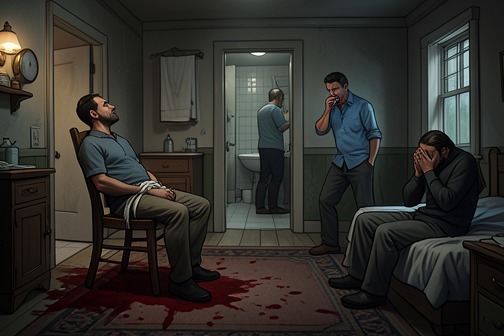
The [Murder of Little Peaches](entity:event-recall-event-murder-of-little-peache-e94731407eb8) is the retaliation that shatters the Piccone brothers’ partnership with [Sean Callan](entity:character-recall-character-sean-callan-57035fec3717) and [O-Bop](entity:character-recall-character-o-bop-adab491f9d67) after their money is stolen. Found dead the morning after the theft, [Little Peaches](entity:character-recall-character-little-peaches-6bb14102cdca) becomes the target of a warning signed only by its implication: the Barreras have recovered most of their money, but the person who supplied the tip remains unnamed. His refusal to identify that person preserves the cartel’s secrecy even as the killing drives his companions into flight and turns the loss into a call for revenge.
## Discovery and the Warning
The discovery comes in the morning. Mickey knocks at [Callan](entity:character-recall-character-7b41c2a4b719)’s door and pulls him into [Big Peaches](entity:character-recall-character-big-peaches-2b36cbb14961)’ room, where Little Peaches is tied to a chair. The scene makes clear that he has been killed, though this account does not need to dwell on the violence to establish its effect. The carpet is soaked with blood; Big Peaches is in the bathroom, crying and vomiting, while O-Bop sits on the bed with his head in his hands. The room has become the immediate consequence of the robbery, and the three men confront the loss together.
The money is gone. In its place, the men find a note in the closet bearing the words, “KEEP YOUR HANDS IN YOUR OWN POCKETS.” The message turns the killing into an explicit warning about taking what belongs to the Barreras. The narrative identifies the Barreras as the implied authors of that warning, but the note itself does not name an individual killer or describe how the message was delivered. Its blunt instruction links the victim’s fate to the theft and cautions the surviving men against repeating it.
## The Robbery’s Aftermath
The circumstances reach beyond the room. [Raúl Barrera](entity:character-recall-character-ra-l-barrera-b24a4deeae21) gets his money back, though three hundred thousand dollars are still missing. He understands that the stolen cash went to whoever had given the Piccone brothers the tip. That missing sum establishes the dispute’s material stakes: recovering most of the money does not resolve the question of who helped the thieves, and the murder accompanies a search for that source.
Little Peaches does not provide the answer. He claims not to know who gave the tip and never tells them. The account presents his silence as deliberate endurance, giving him credit for holding to it despite the consequences. It does not establish whether he truly lacked the information; what it makes clear is that no name emerges from him. His death therefore fails to reveal the informant, while demonstrating the lethal pressure surrounding anyone suspected of exposing the Barreras’ business.
## Flight and Retaliation
Big Peaches responds with grief and a promise of revenge. He says they cannot simply leave Little Peaches behind, then vows to pay the perpetrators back. The vow is not followed by an immediate confrontation. The men do not pack; they leave in separate vehicles. Callan drives north past San Francisco and takes refuge in a small motel near the beach. The killing thus breaks up the group’s shared course of action and sends its members into separate flight rather than a coordinated response.
The money’s partial recovery does not bring the episode to a clean conclusion. [Raúl](entity:character-recall-character-ra-l-3740edeac878) knows an informant enabled the robbery, but Little Peaches’ silence leaves that suspicion unresolved in the evidence presented here. For Callan, the murder marks the end of the relative security of the group’s arrangement: he leaves the others behind and hides. For Big Peaches, it becomes a personal loss joined to a stated intention to retaliate. O-Bop’s silent distress registers a different response, with no action or words attributed to him in the immediate aftermath.
## Significance
The event joins punishment to a code about possession and betrayal. The note’s pocket metaphor makes the warning memorable and specific: the theft is answered not only by the return of the money but by the killing of one of the men associated with it. At the same time, the episode withholds a full account of the informant’s identity and the perpetrators’ individual roles. The Barreras are implicated through the message and the recovered cash, while the precise chain of responsibility remains unstated.
Little Peaches’ refusal to name the tipster is the event’s unresolved center. His silence does not undo the killing or restore the stolen balance; it protects the identity of the person Raúl is seeking and leaves the surviving men with grief, suspicion, and the prospect of further violence. The note speaks plainly, but the answer that might explain who exposed the brothers never comes.
Event 51
Nora Hayden exposes Adán's false alibi
[Nora Hayden](entity:character-recall-character-nora-hayden-50dc9c4b1f0c) exposes [Don Adán Barrera](entity:character-recall-character-f8d17a8b49ec)’s false alibi through a recording of [Father Esteban Rivera](entity:character-recall-character-father-esteban-rive-668f4f0f67ed)’s testimony, which turns a church record into evidence of deliberate deception. Rivera confirms that the christening record falsely placed Don Adán at a [Tijuana](entity:location-recall-location-tijuana-47bb9d0aad74) church on May 24, [1994](entity:time-recall-time-1994-2c6f52c72808), and says Don Adán had asked him to claim otherwise. The testimony establishes how the alibi was manufactured, though Rivera cannot say where Don Adán actually was that day.
## The Recording and Its Setting
The revelation reaches [Nora](entity:character-recall-character-nora-09eb671b4c0a) not in a church or courtroom, but through a tape [Art Keller](entity:character-recall-character-art-keller-31aa2337649c) carries with him. She has been smirking as the recording begins; her expression changes when a young priest appears on-screen, seated on a metal folding chair behind a metal table. A bar at the bottom of the image displays the date and time, giving the recording the impersonal look of documented evidence rather than a story told from memory.
Nora asks who the priest is. Art identifies him as Father Esteban Rivera, Don Adán’s parish priest, and Nora hears Art’s voice on the tape asking questions. The arrangement makes her both viewer and witness: she watches a past interview while Art controls what she sees and when it ends. The priest’s image, the visible timestamp, and the paper placed before him all contribute to a scene built around verification—who wrote the record, what it says, and whether its claim can survive questioning.
## The Alibi in the Church Record
Art’s questions establish the relevant occasion precisely. Rivera is asked whether, on May 24, 1994, he was performing a christening in his church in Tijuana. He confirms that he was. The interview then turns from the ceremony itself to a document: Nora sees a hand slide a paper across the table, and Rivera picks it up, examines it, and puts it back. Asked whether he recognizes it, he confirms that the handwriting is his.
The document records Don Adán as the godfather and states that he was present at the christening. Rivera acknowledges that he entered Don Adán’s name and indicated that he attended. The decisive question is not whether the record exists or whether Rivera wrote it, but whether its claim is true. After a long pause, Rivera answers that it is not. The distinction matters: the supposed alibi is supported by an authentic church entry, but the priest who created the entry disavows the event it purports to record. The record’s official-looking form cannot make its assertion reliable.
## Who Made the False Claim
Rivera does not leave the lie as a vague error or a mistaken recollection. He admits that he knowingly recorded Don Adán’s presence when it was untrue and says he is ashamed. Asked who told him to say Don Adán had been there, he answers that Don Adán did. Rivera also confirms that the signature shown on the document is Don Adán’s, then gives a specific detail about its timing: Don Adán signed it a week before the christening.
Those admissions supply separate parts of the deception. Rivera wrote the false entry; Don Adán requested it; and Don Adán’s signature had been placed on the document in advance. The testimony therefore changes the record from a seemingly straightforward confirmation of attendance into evidence that the alibi was prepared before the event it claims to describe. It establishes the priest’s role and Don Adán’s request, but does not establish the actual location Don Adán occupied on May 24. When asked whether he knows where Don Adán was, Rivera says he does not.
## Nora’s Reaction and the Limits of the Proof
The disclosure registers physically for Nora. As Rivera admits that Don Adán was not present, she cannot breathe through the pause; after hearing the admission that the entry was a lie, she feels sick and bends forward with her head between her knees. Her reaction gives the testimony a consequence beyond its evidentiary value: this is not a neutral review of a file, but the moment the claim she has been shown is dismantled in front of her.
Art draws the implication for her without explaining the missing whereabouts. He tells Nora, “But we do, don’t we?” then gets up, removes the tape from the machine, and puts it back in his pocket. His words indicate that he and Nora have grounds to know what Rivera does not; the scene itself does not disclose those grounds or name Don Adán’s location. The proof on the screen has a firm boundary: it establishes that the christening record was false and that Don Adán arranged the false claim, not where he actually was.
Art leaves with a brief New Year’s greeting, while Nora does not look up. The scene closes not with a full account of Don Adán’s whereabouts but with the evidentiary object taken away and its meaning left between them. The tape’s power lies in that narrow certainty: the paper that seemed to secure an alibi has become proof of its fabrication.
Event 52
Nora Hayden's cash-smuggling run
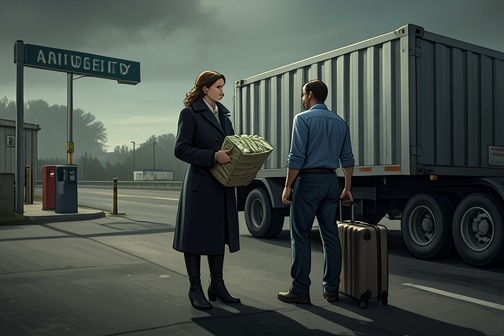
[Nora Hayden](entity:character-recall-character-nora-hayden-50dc9c4b1f0c)’s cash-smuggling run is a carefully staged transfer of millions of dollars from [Mexico](entity:location-recall-location-f1c6a91e03ea) into the [United States](entity:location-recall-location-united-states-2f533bc8d0b9), and a turning point in the contest to track her. The operation depends on the [Barrera organization](entity:organization-recall-organization-barrera-organiza-0c3495b505f4)’s command of border crossings, paid protection, and covert logistics. Its success is measured not only by the cash reaching its next destination, but by [Nora](entity:character-recall-character-nora-09eb671b4c0a)’s ability to leave the surveillance net behind.
## The Route and Its Political Economy
The run reverses the usual direction of the cross-border trade. The [Federación](entity:organization-recall-organization-federaci-n-3cfed113330e)’s earlier arrangement with the [Medellín](entity:location-recall-location-493cee6c8fc5) and [Cali](entity:location-recall-location-cali-2672b6865915) cartels had made Mexican traffickers into transporters: they moved cocaine across the border for a fee, while the Colombian organizations retained the product and its later processing. [Don Adán Barrera](entity:character-recall-character-f8d17a8b49ec)’s organization built on that logistical advantage. Under its plaza system, traffickers declared the product, weight, expected price, and delivery date, then owed the Barreras a 12 percent fee after selling. In return, they could obtain security for shipments moving through Baja California; the organization also offered money laundering for a further charge. The cash Nora carries belongs to the southbound-money leg of a system in which drugs move north and proceeds return south.
That system made the border more than a line to cross. It was a valuable passage whose routes, checkpoints, and surrounding infrastructure could be managed or exploited. The book connects the increased profitability of the trade to relaxed border security under the [North American Free Trade Agreement](entity:rule-recall-rule-0d55419a67d5), which facilitated ordinary traffic and, alongside it, drug traffic. Against that backdrop, sending cash north is conspicuous: the shipment runs against the normal flow of money, so the operation relies on concealment, carefully selected timing, and coordinated assistance rather than on the assumption that the crossing will go unnoticed.
## The [San Ysidro](entity:location-recall-location-san-ysidro-63c8c9b41abb) Crossing
Nora approaches the [San Ysidro border crossing](entity:location-recall-location-37cfca14156f) in a nondescript Toyota Camry loaded with millions of American dollars. A skilled car modifier has built hidden compartments throughout it, while the cash has been treated to reduce the chance of detection by scent. The car has never carried drugs, avoiding residual drug odor; traces of sand, damp towels, a hooded sweatshirt, and old flip-flops help support the appearance of an ordinary vehicle returning from a weekend trip. The modifier watches from an apartment tower overlooking the checkpoint, aware that [Raúl Barrera](entity:character-recall-character-ra-l-barrera-b24a4deeae21) expects the vehicle and money to get through safely.
The timing is deliberate. Don Adán Barrera has Nora cross on a late Sunday afternoon, when thousands of people are returning from inexpensive resort weekends in [Ensenada](entity:location-recall-location-4724e2feff2e) and the crossing is crowded. The Barreras own the three apartment towers on the Mexican side that overlook the border. From one of them, [Raúl](entity:character-recall-character-ra-l-3740edeac878) uses binoculars to watch the lanes and a paid [U.S. Border Patrol](entity:organization-recall-organization-30edb33b17e3) agent take up position. When Nora receives the pager code 666, she understands that the route is clear. Other drivers help create space for her to move into the chosen lane, despite the delays and irritation this causes in the queue.
The crossing is arranged to make Nora look like one traveler among many. She buys conspicuous tourist clothing and a souvenir shirt from vendors moving between the cars, adding to her cover while also buying from the street sellers. The plan includes a decoy vehicle packed with passengers, intended to hold the agent’s attention longer. The agent checks that vehicle and has a golden retriever sniff around it before Nora reaches the checkpoint. Nora waits through the delay, keeps her manner restrained, and presents her California driver’s license while leaving her passport visible. The agent recognizes her and welcomes her back. She passes the checkpoint.
## The Second Check and the Change of Vehicle
Getting through San Ysidro does not end the risk. Don Adán Barrera worries about the [San Onofre checkpoint](entity:location-recall-location-580178937421) north of [San Diego](entity:location-recall-location-san-diego-8089c46f5361), an isolated stretch of Route 5 near [Camp Pendleton](entity:location-recall-location-da6e0714de05) with electronic surveillance and radio jammers. He fears that the [Drug Enforcement Administration](entity:organization-recall-organization-drug-enforcement-85b22b2a9f98) could intercept Nora there, beyond the immediate reach of the Barrera lookouts in [Tijuana](entity:location-recall-location-tijuana-47bb9d0aad74). The route north therefore remains a source of danger even after the first crossing succeeds.
Nora drives past San Diego and continues toward a rest stop south of Camp Pendleton. Barrera gunmen are nearby to guard the Camry and its cargo while she steps away. Farther north, agents inspect the car and place a tracking device between the headrest and the seat as one of them leans in to examine the back. Nora is waved through after a prolonged check. The concealed device creates a second, unplanned contest within the run: the authorities have a means of following the vehicle, but the cash transfer is not yet complete.
Raúl directs Nora to a small garage in Costa Mesa, about two miles from the address he gives her. A man carrying a [MAC-10](entity:object-recall-object-mac-10-7f3b8022328c) opens the door, and the Camry is taken apart with power tools. The crew removes the money, packs it into Halliburton briefcases, and loads it into the trunk of a black Lexus. The work takes thirteen minutes. The speed and orderliness of the transfer turn a vulnerable stop into a tightly controlled handoff, while the armed presence and the threat of consequences for the workers’ families help prevent anyone from attempting to steal the money.
## The Color Code and Nora’s Disappearance
After the transfer, Nora uses a new cell phone to report that the work is done. Raúl asks her to name a color. She answers blue, the agreed signal that she is not being held against her will; any other color would mean that she needs help. Raúl tells her to go. The code is brief, but it distinguishes a completed, voluntary handoff from a compromised one and lets the operation continue without exposing its circumstances over the phone.
Nora drives the Lexus out of the garage, returns to the freeway, and heads toward San Pedro. She passes beneath a traffic helicopter. [Art Keller](entity:character-recall-character-art-keller-31aa2337649c) is waiting for word and has agents monitoring the earlier vehicle, but the switch leaves him staring at an empty screen. He finally acknowledges that Nora is gone from his view. The cash has been transferred, the tracking device has not secured her location, and the route has carried Nora beyond the surveillance that Art had relied on.
## Significance
The run brings the organization’s different forms of power into one operation: route knowledge, access to a paid border agent, lookout towers, coded communications, armed escorts, vehicle specialists, and a rapid cash-transfer crew. These are not incidental supports to the shipment; together they make the passage workable. The operation also shows how ordinary border congestion and tourist traffic can be incorporated into a criminal plan, with decoys and lane changes used to make a heavily controlled crossing look routine.
Nora is not simply cargo’s driver. She performs the crossing, sustains the tourist cover, follows the signals, and carries the operation through the change of vehicle. Meanwhile, the tracking device marks Art Keller’s effort to regain control of her movements. The final contrast is decisive: the authorities obtain access to the car, but the cash and courier move on in another vehicle. The run succeeds materially for the Barreras and, at the same time, leaves Art unable to say where Nora has gone.
Event 53
1997 Long Beach arms bust
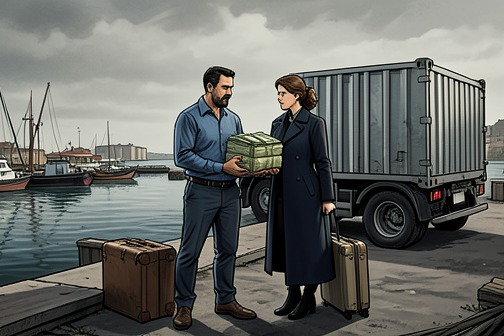
The [1997 Long Beach arms bust](entity:event-recall-event-1997-long-beach-arms-bu-95cfc998d7a0) turns a weapons transaction into a test of whether [Art Keller](entity:character-recall-character-art-keller-31aa2337649c) can reach beyond a seizure and strike at [Adán Barrera](entity:character-recall-character-ad-n-barrera-0383f92d92cf)’s organization. At [Long Beach Harbor](entity:location-recall-location-d744cb617f99), a federal operation interrupts a deal involving [Fabián Martínez](entity:character-recall-character-fabi-n-mart-nez-955daedc2732) and Chinese arms dealers, frees [Nora Hayden](entity:character-recall-character-nora-hayden-50dc9c4b1f0c) from captivity, and uncovers thousands of weapons. The seizure is described as the largest arms bust in history; for Art, however, its value depends on whether the evidence can lead beyond the cargo to Adán himself.
## Background and stakes
The bust unfolds against the larger reach of the [Federación](entity:organization-recall-organization-federaci-n-3cfed113330e), whose power rests not only on drug shipments but on its capacity to make political and commercial arrangements. The novel has already shown Adán defining a protective order that draws other traffickers into his sphere: his protection and connections are offered in return for a fee. That model of influence helps explain why a cargo of weapons matters beyond its immediate criminal transaction. The arms trade can link cartel wealth to armed conflicts and political interests far beyond [Mexico](entity:location-recall-location-f1c6a91e03ea).
The wider political setting is also marked by a succession of transactions in which public authority and private power become difficult to separate. The Federación helped the ruling party secure the disputed 1988 election, and later profited from the Mexican peso crisis before Adán agreed to return cartel dollars in exchange for a favorable environment for doing business. These episodes do not establish the precise arrangements behind the Long Beach shipment, but they give the bust its wider significance: it occurs in a world where cartel power is sustained through political bargains as well as force and money.
A related concern is the movement of weapons to insurgent groups. [John Hobbs](entity:character-recall-character-john-hobbs-aa4c4c1db101) frames Central American and Mexican left-wing movements as security threats and uses that argument to justify covert operations; [Red Mist](entity:expression-recall-expression-red-mist-5e3e3e2788ee) coordinates numerous anti-left operations across Latin America. Later, Hobbs sees the possibility of Adán supplying weapons to Communist insurgents in [Colombia](entity:location-recall-location-colombia-03c1898e601e) as a way to bring Mexican officials more firmly into cooperation with the [United States](entity:location-recall-location-united-states-2f533bc8d0b9). This political context makes the Long Beach cargo consequential, while the seizure itself supplies the concrete weapons and trafficking evidence that Art hopes to turn into leverage against Adán.
## The transaction and [Nora](entity:character-recall-character-nora-09eb671b4c0a)’s warning
At the warehouse, Fabián speaks with the Chinese man overseeing the transaction. The contact says that Nora is being kept elsewhere and will be returned once the deal is safely completed. Fabián’s concern is not personal affection: he knows that Adán cares about Nora and holds him responsible for her safety. Her absence therefore places Fabián between the demands of the transaction and the risk of failing Adán.
Fabián asks to speak to Nora by phone and requests a color. She answers with red. The exchange functions as a warning within the cash-transfer color code associated with the Barrera operation: Nora’s response signals danger without openly explaining her situation. Fabián reacts by putting his [MAC-10](entity:object-recall-object-mac-10-7f3b8022328c) in the Chinese contact’s face and ordering him to reassure his associate that the deal is proceeding normally. The intervention brings the armed men on both sides to weapons readiness. With the Chinese men positioned above on catwalks and Fabián’s men below, neither side has an easy advantage; the situation becomes a standoff.
## The raid and seizure
The standoff ends when the office door is forced open. Art leads the first group of agents inside, then opens the metal cargo door to reveal another force from the DEA, [FBI](entity:organization-recall-organization-c3b9c0848e8c), and ATF. The agents enter heavily equipped and order the men to stop and surrender their weapons. Faced with the numbers and firepower, Fabián abandons the prospect of shooting his way out, lets his MAC-10 fall, and raises his hands. Art takes him into custody and secures him in a DEA van.
The raid’s success does not immediately settle Nora’s fate. Amid the confusion, Art cannot find her and radios for [Shag Wallace](entity:character-recall-character-shag-wallace-8747102d6785) to proceed, hoping that the rescue is still in time. At the separate vehicle where Nora is being held, a SWAT sniper kills the Chinese guard. Shag reaches Nora, leads her away from the vehicle, and places her in his car. Her rescue is a distinct result of the operation, but it comes at the cost of a death during the intervention.
The cargo gives the raid its extraordinary scale. Art inspects two containers, each twenty feet long, eight feet wide, and eight feet high. Inside are crates containing two thousand Chinese-made AK-47s disassembled into barrels, magazines, and stocks, as well as two dozen KPG-2 rocket launchers. The launchers are especially valuable because they can be carried by hand and can threaten helicopters. The agents also find six truckloads of M-2 rifles, converted from M-1s, whose automatic-fire setting can be engaged with a switch. Among the other weapons are LAWS launchers, the American counterpart to the KPG-2, useful against armored vehicles. Taken together, the arsenal is suited to a guerrilla war, not merely ordinary criminal enforcement.
## Consequences and significance
For Art, the seized weapons can be measured against the drug trade they may enable: he thinks of two thousand rifles as equivalent to two thousand kilos of cocaine, while recognizing that the launchers may command an even greater return. That calculation makes the cargo legible as both an arsenal and a commodity. The bust exposes the scale at which arms and narcotics can be exchanged, and makes the investigation about more than the possession of weapons.
The event also produces immediate arrests and evidence without delivering Art’s ultimate objective. Fabián is captured, Nora is recovered, and the containers reveal a major arms shipment. Yet Art regards the haul as insufficient if it cannot contribute to Adán’s downfall. The contrast defines the operation’s unresolved ending: the agents have stopped the transaction and documented its cargo, but the cartel leader who gives the case its larger stakes remains beyond the raid’s immediate reach.
In the novel’s broader account of power, the bust is an instance of law enforcement confronting a network whose influence extends into politics, cross-border commerce, and armed conflict. Its factual triumph is immense, but its narrative measure is more demanding. The weapons fill the containers; the real question for Art is whether their seizure can open a path to the man behind the organization.
Event 54
Nora Hayden's disappearance after the failed operation
[Nora Hayden](entity:character-recall-character-nora-hayden-50dc9c4b1f0c)’s disappearance after the failed operation turns an attempted escape into a vanishing whose consequences spread from a hidden device in a decoy car to a major search across Baja. [Nora](entity:character-recall-character-nora-09eb671b4c0a) reaches out to [Adán Barrera](entity:character-recall-character-ad-n-barrera-0383f92d92cf) and follows their emergency plan, but the rendezvous that should have reunited them leaves no trace: the safe house is empty, and the search for both Nora and Adán begins in earnest.
## The Failed Run and the Escape
Nora’s flight begins after the operation has gone wrong and she believes she is in danger. She drives the new Lexus to the first highway exit, pulls into a gas station, and throws up in the ladies’ room. Once her stomach is empty, she abandons the car at the Santa Ana train station, shuts herself inside a phone booth, and calls Adán. The sequence is practical and abrupt: she leaves the vehicle, changes her mode of travel, and contacts the person most closely connected to the plan she is trying to salvage.
Nora tells Adán that something went wrong and that a man was going to kill her. She also worries that the police are looking for her. Adán does not tell her to come straight back; he says it is too soon and gives her a route south. She is to dump the car, take the train to [San Ysidro](entity:location-recall-location-san-ysidro-63c8c9b41abb), and cross the pedestrian bridge. When she says she is scared, he tells her to go to the city place and wait for him to get in touch. Their exchange briefly makes the escape sound controlled, even intimate: they tell each other they love one another while Nora follows the instructions.
## The Emergency Plan and the Device
The city place is a condominium they keep in [Colonia Hipódromo](entity:location-recall-location-colonia-hip-dromo-ec3ecf0f0e98) in [Tijuana](entity:location-recall-location-tijuana-47bb9d0aad74). Nora knows that this phrase is a code they devised long before the emergency, specifically for a crisis like this one. The safe house is therefore more than a destination: it is part of a prearranged communication system, a way for Nora and Adán to coordinate while exposed to the danger of detection. Their plan gives her a route and a place to wait, but it cannot ensure that either will reach the other.
Nora boards the next southbound train to [San Diego](entity:location-recall-location-san-diego-8089c46f5361), transfers to the trolley for San Ysidro, climbs the pedestrian bridge, and walks across the border. Meanwhile, in Costa Mesa, mechanics preparing the tricked-out Toyota Camry for another run find an electronic device jammed between the passenger seat and headrest. The crew chief makes a phone call. The discovery interrupts the apparent escape with a sign that the operation has left something behind; the evidence identifies the object only as an electronic device, not what it does or who placed it there. Its presence makes the missing car and the silent phone call part of a larger exposure, without resolving what Nora herself knows about the find.
## The Empty Rendezvous
The narrative shifts to Tijuana in [1997](entity:time-recall-time-1997-ea4cc00b4673) and frames Nora’s absence through [Art Keller](entity:character-recall-character-art-keller-31aa2337649c)’s attempt to understand it. The chapter calls the blunt fact that she is gone being “in the wind”; for Art, the missing check-in and silence revive the memory of [Ernie Hidalgo](entity:character-recall-character-ernie-hidalgo-53e66cdb267f). The danger is not described as a confirmed death. Instead, the passage dwells on the uncertainty faced by people handling undercover agents: a missed signal offers no answer, and repeated attempts to make contact return nothing. The waiting itself becomes a source of dread because it leaves room for both hope and catastrophe.
Nora was supposed to reach the condominium in Colonia Hipódromo and meet Adán, but she never appears. [The Lord of the Skies](entity:expression-recall-expression-the-lord-of-the-sk-b1d7066e23ec) does not appear either. Antonio Ramos arrives instead, bringing two platoons of special troopers in armored cars to seal off the block and storm the condominium. The operation finds it empty: neither Adán Barrera nor Nora is there. The planned meeting has become a failed rendezvous, and the raid confirms only absence, not what happened to either person.
## Search and Uncertainty
The empty condominium widens the consequences of Nora’s disappearance. Antonio Ramos turns his attention to tearing Baja apart in search of the Barrera brothers. [John Hobbs](entity:character-recall-character-john-hobbs-aa4c4c1db101) has convinced [Mexico City](entity:location-recall-location-mexico-city-78f19f654410) that Adán is dealing arms to left-wing insurgents in [Chiapas](entity:location-recall-location-chiapas-b5a347c76ae1) and elsewhere; with the leash taken off Ramos, the investigation becomes an aggressive campaign. Within a week, his forces have hit seven safe houses in the exclusive neighborhoods of Colonia Chapultepec, Colonia Hipódromo, and Colonia Cacho. The search reaches well beyond the room where Nora was meant to wait, transforming a private emergency into a regional manhunt.
The episode ends without revealing where Nora has gone or whether she will contact Art again. Its reversals are concrete but incomplete: she uses a prepared route and coded destination, the mechanics uncover a device in the abandoned Camry, and Ramos’s troops find the intended safe house vacant. The result is not a resolved escape but a widening silence. For Art, Nora’s absence recalls an earlier loss; for Ramos, the empty address is a reason to intensify the pursuit. The same disappearance thus registers both as an intimate rupture and as a development in the hunt for the Barrera brothers.
Event 55
Ramos's crackdown on the Barrera cartel
Ramos’s crackdown on the [Barrera cartel](entity:organization-recall-organization-1e9353beb399) turns a long-awaited opportunity to pursue the brothers into a conspicuous, militarized campaign through [Tijuana](entity:location-recall-location-tijuana-47bb9d0aad74). Its defining contradiction is visible from the outset: Ramos announces a deadline for breaking the organization and publicly challenges the city to support him, but the Barrera brothers evade the opening raid, and the methods used to hunt them unsettle the very elite whose cooperation he needs.
## Political and Financial Backdrop
The crackdown takes place against a history in which cartel power extends beyond trafficking into political and economic arrangements. Four years before the new president took office in [1994](entity:time-recall-time-1994-2c6f52c72808), the [Federación](entity:organization-recall-organization-federaci-n-3cfed113330e) had helped the incumbent party steal an election. The opposition candidate, the leftist Cárdenas, had seemed likely to win and dislodge the party that had governed since the 1917 Revolution. This account establishes the breadth of the cartel’s political reach, though it does not identify the election episode as a direct cause of Ramos’s later operation.
The new president took office on December 1, 1994. The next day, two brokerage houses controlled by the Federación began buying government tesobonos. The following week, cartels withdrew capital from the national bank, forcing a 50 percent devaluation of the peso; the Federación then cashed in its bonds as the economy collapsed. When the president invited Adán to bring his narco-dollars back into the country, Adán accepted, but demanded a favorable trade environment in return. These events give the crackdown a larger political setting: the state is confronting an organization whose resources and bargaining power have already reached into national affairs.
## The Opening Raid
The immediate operation begins at a condo in [Colonia Hipódromo](entity:location-recall-location-colonia-hip-dromo-ec3ecf0f0e98). A woman was expected to meet Adán there, but she never arrived; neither did the man known as the Lord of the Skies. Antonio Ramos arrived instead, bringing two platoons of special troopers in armored cars. They sealed off the entire block and stormed the condo. The absent targets make the raid an unsuccessful opening attempt to seize its intended quarry, even as the scale of the force signals that the pursuit has entered a new phase.
Ramos’s authority had changed before the operation began. [John Hobbs](entity:character-recall-character-john-hobbs-aa4c4c1db101) convinced [Mexico City](entity:location-recall-location-mexico-city-78f19f654410) that Adán was supplying arms to left-wing insurgents in [Chiapas](entity:location-recall-location-chiapas-b5a347c76ae1) and elsewhere. The capital then removed the restraints on Ramos, who had been waiting for an opportunity to act against the brothers. This chain of authorization matters: the campaign is not presented simply as a local police initiative, but as an operation enabled by a shift in the central government’s willingness to let Ramos use force.
## The Search Across Tijuana
After the condo raid, Ramos tears through Baja California in search of Adán and [Raúl](entity:character-recall-character-ra-l-3740edeac878). In the first week, his forces hit seven safe houses in the wealthy neighborhoods of Colonia Chapultepec, Colonia Hipódromo, and Colonia Cacho. The search is not discreet. Troopers use armored trucks and Humvees, force entry with explosive charges, ransack homes, block traffic, and disrupt businesses for hours.
The sweep makes the campaign’s costs visible beyond the people directly suspected of cartel ties. Tijuana’s elite are divided over whom to blame: Ramos, for the scale and intrusiveness of the raids, or the Barrera brothers, whose fugitive status has brought the operation to the city. The crackdown therefore produces a political problem even as it applies pressure: the more visibly Ramos acts, the harder it becomes for residents and business owners to separate the pursuit of the cartel from the disruption imposed on their neighborhoods.
## The Public Challenge
Ramos takes the campaign to television and addresses the city directly. Standing beside stacks of captured weapons and piles of seized drugs, he promises that within fourteen days he will put Adán and Raúl behind bars and destroy their organization. He names both brothers and Fabián, then identifies the sons of several prominent Tijuana families as Juniors and says they too will go to jail. The broadcast expands the declared targets from cartel leaders to a social circle that includes privileged local families.
Ramos also announces that he has fired five dozen Baja federal officers for lacking the moral qualifications to serve as police. He accuses many officers in Baja of serving the Barrera cartel rather than opposing it. The dismissals make official corruption part of the public account of the crackdown: Ramos presents the police force itself as compromised and his campaign as an effort to confront both the cartel and its institutional servants. His closing appeal asks who will stand with him, turning the operation into a contest for public allegiance as well as a manhunt.
## Significance and Immediate Outcome
The episode portrays enforcement and cartel influence as forces operating inside the same political landscape. Earlier dealings show the Federación assisting an election theft and later leveraging control of money and bonds in a confrontation with the national government. Against that background, Ramos’s televised accusation that local police serve the Barrera cartel is more than a claim about individual officers: it points to the difficulty of pursuing an organization able to cultivate protection within the institutions meant to oppose it.
Yet the campaign’s public promises exceed its immediate results. The condo targets are absent, the brothers remain the object of an expanding search, and the first week yields raids on safe houses rather than their capture. Meanwhile, the operation disrupts affluent neighborhoods and divides their residents over responsibility. Ramos has secured central authorization, taken visible action, and put his accusations before the country; the supplied events do not show him meeting his fourteen-day pledge. The crackdown thus stands as an escalation, not a resolution: the state’s pursuit becomes more forceful and more public, while the cartel’s reach and the consequences of confronting it remain unsettled.
Event 56
Adán Barrera evades the Tijuana raids
[Don Adán Barrera](entity:character-recall-character-f8d17a8b49ec) evades the [Tijuana](entity:location-recall-location-tijuana-47bb9d0aad74) raids by relying first on an unremarkable choice—walking instead of driving—and then on a hurried network of decoys, encrypted communications, and armed escorts. The escape is a tactical success, but it also reveals how precarious his power has become: the political relationships that helped the [Federación](entity:organization-recall-organization-federaci-n-3cfed113330e) shape government and profit from crisis offer no advance warning when federal forces move against him.
## Political Power Before the Raids
The Federación’s influence rests on more than control of drug routes. In an earlier arrangement, Don Adán describes [Guadalajara](entity:location-recall-location-guadalajara-1fbbdc6cee32) as a safe base from which to serve the organization and offers partners a share of his protection in exchange for a fee. [García Abrego](entity:character-recall-character-garc-a-abrego-f750b0a7673d) recognizes the scale of the ambition: Don Adán divides the world into pieces and claims another for himself. The exchange makes protection a political and commercial system, not simply a promise of armed defense.
That system reaches into electoral power. Don Adán knows that the Federación helped the president steal the 1988 election from the opposition candidate, Cárdenas. The decisive irregularity is described as the vote-counting computers mysteriously malfunctioning. The revelation places the organization’s later influence over public institutions in a longer history: it has not merely bought individual favors but helped preserve the governing order from which its influence grows.
The Federación later turns economic upheaval into another instrument of power. After the new president takes office on December 1, [1994](entity:time-recall-time-1994-2c6f52c72808), two brokerage houses it controls begin buying tesobonos the next day. The following week, the cartels withdraw their capital from the national bank, forcing a 50 percent devaluation of the peso. The organization cashes in its government bonds and uses the crisis to acquire devalued pesos, property, businesses, and land; after an American loan helps the peso recover, its investments appreciate. The president must invite the narco lords back with their money, and Don Adán makes his return conditional on a favorable environment for trade. Public talk of breaking the cartels’ power therefore coexists with a practical dependence on their capital.
## The Federal Sweep
Against this background, the raids arrive as a rupture. Don Adán’s well-paid friends in [Mexico City](entity:location-recall-location-mexico-city-78f19f654410) have given him no warning—not even a whisper. He fears that the authorities mean to kill him, and the lack of notice matters as much as the presence of police: an organization accustomed to purchasing access and protection cannot tell him when the state is about to act.
His first escape depends on being overlooked. Had he driven to meet [Nora Hayden](entity:character-recall-character-nora-hayden-50dc9c4b1f0c) in the Tijuana [Hipódromo neighborhood](entity:location-recall-location-6a227a57e84f), police would probably have caught him. Instead, he walks. When police vehicles begin pouring into the neighborhood, he turns around and strolls down the sidewalk past roadblocks in the streets. The plainness of the maneuver defeats the expectation that a cartel leader will be inside a conspicuous vehicle. For one moment, the city’s barriers work in his favor because he does not behave as the authorities expect.
The advantage does not last. He is forced out of two further safe houses after [Raúl Barrera](entity:character-recall-character-ra-l-barrera-b24a4deeae21) passes along warnings, and he hides in the Río district while uncertain where officers will strike next. Most of his cell phones are unencrypted, so he hesitates to use them; the encrypted phones may also be compromised, since a signal could disclose his location even if the messages remain unreadable. He cannot determine who has been arrested, which houses have been searched, what police have found, or how long the operation will continue. The raids have turned communication itself into a danger.
## Improvised Escape Network
Don Adán responds by making his phones serve as decoys. He gives most of them to his men, who scatter across the city and state, place calls, and discard the devices. Reports then place him in the Hipódromo neighborhood, Chapultepec, [Rosarito](entity:location-recall-location-rosarito-1d5a780ad5ae), [Ensenada](entity:location-recall-location-4724e2feff2e), Tecate, and across the border in [San Diego](entity:location-recall-location-san-diego-8089c46f5361), as well as elsewhere. These sightings multiply possible locations rather than provide a reliable one.
[Raúl](entity:character-recall-character-ra-l-3740edeac878) buys additional phones at Radio Shack and tries to reach police contacts on the cartel payroll, including Baja federal officers, [Baja State Police](entity:organization-recall-organization-826f7e3f862e), and Tijuana municipal police. The answers expose a divide between local influence and federal authority: the officers who respond say they know nothing and identify the operation as a federal effort. Local federal officers are unreachable. Raúl and Don Adán have influence among police, but that network cannot make the federal action legible or halt it.
They leave the Río district safe house only ten minutes before police arrive and move to a condo in Colonia Cacho. Raúl brings in a computer specialist, who sends encrypted email through the organization’s computer network using a system of his own design. The encryption is described as so dense that even the [Drug Enforcement Administration](entity:organization-recall-organization-drug-enforcement-85b22b2a9f98) has been unable to crack it. Meanwhile, the men watch both the street for armored cars and the computer for messages. Raúl summons several gunmen, obtains untraceable work cars, and establishes observation posts to track police movements.
## Flight to Las Bardas and Its Meaning
At sunset, disguised as a laborer, Don Adán climbs into the back of a 1983 Dodge Dart with Raúl. An armed driver and another gunman ride in front. Scouts and listening posts clear a route through the dangerous city, allowing the car to reach [Las Bardas family ranch](entity:location-recall-location-ba4257f1cadc). There, the brothers pause and try to understand the operation. Their escape is not a return to security so much as a brief interval in which they can assess a threat they still cannot explain.
The contrast with the earlier political bargains is stark. The Federación has helped manipulate an election, profited from a currency collapse, and negotiated the terms on which its money would return to [Mexico](entity:location-recall-location-f1c6a91e03ea); yet, when federal forces arrive, its paid contacts do not warn it, and local police cannot provide answers. The raids expose the difference between influence over ordinary institutions and control over the state’s federal reach.
The episode closes with a public declaration that sharpens the danger. On the evening news, Ramos announces at a press conference that he will shut down the Baja cartel within two weeks. Don Adán and Raúl hear the announcement from their refuge at Las Bardas. The man who escaped by walking past roadblocks now faces a campaign whose scale and timing remain uncertain; his survival has bought him distance from the police, not knowledge of what comes next.
Event 57
Rancho las Bardas raid
The [Rancho las Bardas raid](entity:event-recall-event-rancho-las-bardas-raid-b9d269240446) is a night assault on [Raúl Barrera](entity:character-recall-character-ra-l-barrera-b24a4deeae21)’s stronghold that ends with the Barreras gone and its commander, Antonio Ramos, dead. The operation brings an armed force across the desert and into a chaotic battle among the ranch’s buildings, fences, and animal enclosures. Its outcome is a reversal: the attackers breach the property and inflict heavy losses, yet fail to seize their principal target; Ramos’s final search for an escape route instead leads him to an explosive trap.
## Approach and assault
Ramos’s men arrive after dark by airplane, attempting a lights-out landing on an old drug-running strip. They then cross the desert on foot and crawl for the final thousand yards, keeping low to avoid Barrera patrol jeeps. The sequence makes clear that reaching the ranch is an operation in itself: darkness, distance, and the possibility of detection shape the assault before the first exchange of fire.
The attack begins when Ramos and his men come over the wall. A guard’s warning sends the ranch into alarm, while the animals in the menagerie add their cries to the commotion. Ramos shoulders a grenade launcher and fires twice at a guard tower, opening the way under return fire. When he notices two deer trying to escape, he enters their pen and opens its door. Their flight is one brief act of release amid an assault that otherwise leaves little room for anything but tactical movement and survival.
## The firefight
Ramos advances through alternating bursts of fire, moving forward while his men cover him and then providing cover as they leapfrog ahead. The force is not untouched: one of his soldiers is hit and dies, and Ramos takes the man’s ammunition before moving on under fire. The raid’s progress therefore comes at a direct cost even before its larger failure becomes apparent.
The scene’s moonlit confusion blurs the distinction between pursuer and target. Ramos sees armed figures to either side, struggles to distinguish one of his own men from an opponent, and catches what may be a glimpse of Raúl Barrera running and firing. He aims toward Barrera but loses sight of him. The moment offers a possible chance to intercept the ranch’s leader, then withdraws it: Ramos moves toward where he saw him, but the encounter remains uncertain and Barrera disappears.
The sounds and movement of the menagerie run alongside the gunfire. Birds and monkeys react to the assault, and Ramos hears the growls of lions he had heard were kept at the ranch. Later, a wild donkey moves through the fighting. These animals are not simply scenery; their confinement and panic sharpen the contrast between the ranch’s carefully controlled grounds and the disorder created when the attack breaks in.
## Escape and discovery
As the firefight subsides, Ramos searches among the dead, wounded, and prisoners for [Raúl](entity:character-recall-character-ra-l-3740edeac878). The Barreras are gone. The main house has been badly damaged, cars are burning, and rare birds remain in the trees, while some animals have returned to their cages. The aftermath makes the scale of the assault visible, but the property’s destruction has not produced the result the attackers sought: the family has escaped the immediate sweep.
Ramos continues looking for Raúl and notices a possible tunnel. At its entrance he sees that a trapdoor has been opened recently, with a narrow line where dirt has fallen through. He brushes away the covering material, finds the recessed handle, and lifts the door. The small click reveals an explosive charge. There is no time to retreat: the explosion kills him. The discovery changes the meaning of his final search. What appeared to be a route toward the fugitive becomes the mechanism that ends the commander’s pursuit.
## Aftermath and significance
The raid leaves no captured Raúl Barrera and costs Ramos his life, despite the force’s difficult approach and penetration of the ranch. Its ending is not a clean defeat on the battlefield so much as an intelligence and escape failure: the family has already gotten away, and the property’s hidden route carries a final danger for the man searching it. The trapdoor also makes the ranch’s defenses legible only after the assault has passed its decisive point.
In the surrounding narrative, the loss does not resolve the search for [Nora Hayden](entity:character-recall-character-nora-hayden-50dc9c4b1f0c). After Ramos’s death, [Art Keller](entity:character-recall-character-art-keller-31aa2337649c) has tried multiple avenues to find her, with [John Hobbs](entity:character-recall-character-john-hobbs-aa4c4c1db101) making resources available; satellite photographs, listening posts, and Internet searches yield nothing. That continuation places the raid within a wider pursuit in which military force and extensive surveillance still fail to provide the information Art needs. [Rancho las Bardas](entity:location-recall-location-rancho-las-bardas-20b5b2e1149b) is breached and devastated, but neither the assault nor its aftermath brings the missing person within reach.
Event 58
Baja Coast Hideout Raid
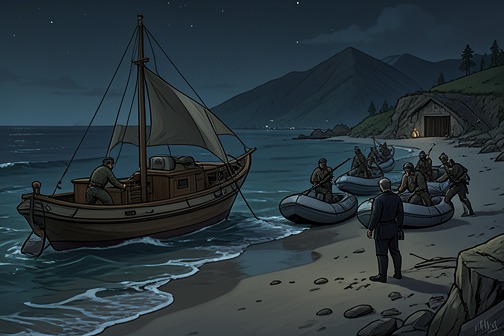
The [Baja Coast Hideout Raid](entity:event-recall-event-7a074cf5073c) is a [Red Mist](entity:expression-recall-expression-red-mist-5e3e3e2788ee) assault on a coastal hideout associated with [Adán Barrera](entity:character-recall-character-ad-n-barrera-0383f92d92cf)’s organization, and a rescue mission whose tactical precision cannot guarantee its human objective. Planned as an approach from the sea, it brings [Art Keller](entity:character-recall-character-art-keller-31aa2337649c) into direct contact with [Raúl Barrera](entity:character-recall-character-ra-l-barrera-b24a4deeae21) and ends with Adán escaping, [Nora Hayden](entity:character-recall-character-nora-hayden-50dc9c4b1f0c) left on the slope, and Art firing at a departing vehicle without a confirmed result. The operation’s decisive tension lies between its stated purpose of saving a life and the confusion of a raid in which the people it means to reach are separated by gunfire, terrain, and competing demands for escape.
## Objective and Approach
The operation is framed as an effort to save someone rather than take a life. [Sal Scachi](entity:character-recall-character-sal-scachi-82ddfd8bbc74) recruits [Sean Callan](entity:character-recall-character-sean-callan-57035fec3717) for this purpose, and the team settles on coming in from the water as the fastest way to reach the hideout. Art and [Sal](entity:character-recall-character-efb5cde11000) study detailed area maps before settling on the route, so the landing is not improvised: a fishing boat is to travel north from the south at night, carrying the team toward a beach landing in Zodiac boats.
The assault force is divided among three Zodiacs covered with canvas tarps and lashed to the deck. Each boat is to carry eight men, with the boats landing fifty yards apart. The two northern boats are assigned to the larger house; the third is to head for the smaller cottage. This arrangement divides the approach between two targets while keeping the landing parties spaced along the beach. The planning turns geography into a tactical scheme, but the men cannot know whether the occupants have been warned.
[Callan](entity:character-recall-character-7b41c2a4b719) recognizes the danger before the landing. If the Barreras have received advance notice, the team may face fire from stone houses while pinned on a bare beach, with fog as its only cover. His thought that the beach could be littered with bodies registers the operation’s precariousness, not a result that the narrative confirms. The raid advances despite that uncertainty; maps, boat placement, and timing can organize the assault, but cannot make the exposed shore safe.
## Landing and Breakdown
Art jumps from the boat before it reaches the beach. He stumbles through shallow surf, falls face-first, gets up, and moves crouched up the slope. At the top of this movement he sees Raúl Barrera. The encounter makes the operation personal and immediate: Art has come ashore amid a raid whose larger plan is already giving way to separate, urgent decisions.
A grenade lands close to Adán and [Nora](entity:character-recall-character-nora-09eb671b4c0a) and knocks them both down. Nora is left concussed and unable to hear Adán shouting. He tries to pull her up, while Manuel Orejuela pulls Adán away; Adán struggles to return to her, but Manuel is stronger. When two sicarios try to seize Nora, gunfire stops them. The sequence leaves Nora incapacitated on the rocks and Adán being carried away from her, reversing the rescue objective at the moment when she most needs help.
The raid’s violence also divides the people trying to leave. Adán later finds drinking water in a seat pouch and gives it to [Raúl](entity:character-recall-character-ra-l-3740edeac878), who drinks as the vehicle moves uphill. Adán looks back down the slope, sees Nora’s limp body, and calls for the group to go back. Manuel refuses. With the vehicle already moving in four-wheel drive and another Rover behind it, the escape continues under covering fire. Adán’s appeal shows that he does not simply forget Nora; the practical decision to keep moving is made against his demand to return.
## Escape and Uncertain Outcome
The Rovers continue up the hill as the sicarios fire from the rear. Adán shoots, but both men miss. When their vehicle crests the ridge and begins its descent, Raúl screams and Adán holds him as it gathers speed. Art remains at the ridge, watching the Rover rumble away. He catches his breath, raises his rifle, and aims at the rear left windshield where he last saw Adán. He fires on the exhale, but the account does not reveal whether the bullet strikes Adán, Raúl, or the vehicle.
That unresolved shot is the raid’s final action, not a confirmed capture or death. Adán and Raúl have escaped the immediate assault; Nora has been left behind, and Art’s attempt to stop the fleeing Rover has no stated outcome. The ending therefore withholds the certainty that a conventional action climax might supply. The reader is left at the instant of firing, with the consequences still beyond the scene.
## Context and Significance
The operation’s focus on an arms supply has a wider context in the book’s account of trafficking routes. Art identifies an older Cuba–Miami–Mafia connection operating again: cocaine moves from [Colombia](entity:location-recall-location-colombia-03c1898e601e) through Central America and [Mexico](entity:location-recall-location-f1c6a91e03ea) to Mafia dealers in the [United States](entity:location-recall-location-united-states-2f533bc8d0b9), while armaments travel in payment and go to the [Contras](entity:organization-recall-organization-contras-13547523c881). At a [SETCO](entity:organization-recall-organization-setco-e74417df6792) hangar, Art recognizes [David Núñez](entity:character-recall-character-david-n-ez-d7ed9b9ec314), [Ramón Mette](entity:character-recall-character-ram-n-mette-08fb91f18d3b)’s partner in the company and a Cuban expatriate and Operation 40 veteran, among armed men unloading cargo. This background helps explain why Scachi describes the mission as interdicting a terrorist arms supply at its source; the raid is directed at a weapons network, not merely a local refuge.
The earlier scenes also establish the cross-border enforcement world surrounding the operation. Art arrests Quito for the murder of [Ernie Hidalgo](entity:character-recall-character-ernie-hidalgo-53e66cdb267f) by pulling him through a cut in the border fence into the United States, despite Quito’s insistence that he is in Mexico. In a separate case, after taking statements from [Dr. Álvarez](entity:character-recall-character-dr-lvarez-b2f471ae2a0b), Art arranges for him to travel to the United States, where he expects to be safer after informing on the Barreras and [Güero Méndez](entity:character-recall-character-g-ero-m-ndez-9416e102d10e). These episodes do not establish the legal basis or outcome of the coastal raid, but they show a campaign in which borders are both operational obstacles and objects of deliberate circumvention. Against that backdrop, the raid’s sea approach is another effort to reach its target by choosing a route the opposing force may not anticipate.
The event contrasts the order of its plan with the disorder of its end. The boats have assigned targets, spacing, and landing points; on the slope, a grenade separates Adán from Nora, Raúl needs help, and the retreating party will not turn back. The mission’s stated purpose of saving a life thus remains in tension with its actual result: an escape under fire, a wounded woman left behind, and a rifle shot whose meaning cannot yet be known.
Event 59
Putumayo River Villagers Massacre
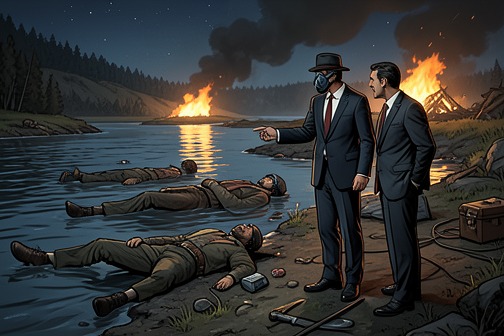
The [Putumayo River Villagers Massacre](entity:event-recall-event-4f5b8d0d2cd1) is revealed to [Art Keller](entity:character-recall-character-art-keller-31aa2337649c) through its aftermath and a survivor’s account: a village was attacked, its people killed, and their bodies cast into the [Río Putumayo](entity:location-recall-location-a74eed199190) as a warning to others. The scene turns Art from an observer of distant policy into a witness to its human consequences, while [Javier](entity:character-recall-character-b799804170ae) makes clear that the account is meant to travel beyond the riverbank—to people in the [United States](entity:location-recall-location-united-states-2f533bc8d0b9) who might otherwise support the forces responsible.
## Reported Attack
According to a masked man who speaks to Art, the AUC went to the village the day before. The account describes an assault on its inhabitants, followed by the confinement of survivors in a barn that was set on fire. The attackers then took people to a bridge over the Río Putumayo, killed them, and threw their heads and bodies into the river. The masked man presents the killings as a deliberate warning to villages downstream, making terror and public display part of the attack’s purpose.
The account is delivered at the scene rather than as an omniscient history of the massacre. Art asks whether guerrillas were responsible; the masked man denies it and identifies the AUC. The distinction matters: what Art can see directly is the aftermath, while responsibility and the sequence of events reach him through testimony. The novel thus marks both the scale of the violence and the conditions under which it becomes knowable.
## Art as Witness
Javier rows Art across the river. On the opposite bank, four armed, masked men are waiting. At Javier’s direction, they lead Art along the shore to a clearing, where he sees the dead scattered between the water and the riverbank. The account’s stark physical evidence interrupts any distance Art might maintain from the violence: the villagers are not an abstraction in a political argument but the people whose deaths that argument concerns.
Javier explains why he brought Art. He hopes that seeing the truth will make Art return home and tell it, and that people in America, if they knew what was happening, would stop sending money and soldiers to support it. The massacre therefore becomes an act of witnessing as well as a crime: the surviving witnesses seek to turn what happened into information capable of changing public understanding.
## Responsibility and American Support
The account draws a direct line from the AUC’s violence to American military involvement. When Art questions what Javier means by American soldiers, a masked man says that the AUC there had been trained by U.S. Special Forces. The statement does not make the massacre an American operation; it exposes the connection asserted by the witnesses between the perpetrators and the training they received.
That connection sharpens the scene’s political challenge. Javier appeals not to an abstract policy debate but to the possibility that Americans would refuse support if they were made to confront its consequences. Art’s presence is consequently more than a rescue or an encounter: he is being asked to carry testimony across a national boundary and to hold official claims about intervention against what local people say they have seen.
## Violence, Memory, and the Demand to Tell
Elsewhere, the novel shows how violence persists through acts of remembrance. Adán spends a day visiting nine graves and building shrines for relatives killed by [Güero Méndez](entity:character-recall-character-g-ero-m-ndez-9416e102d10e)’s men; Güero, in turn, brings food, flowers, toys, and other offerings to the tombs of his wife and children. These distinct acts of mourning do not erase the violence or settle responsibility. They show how the dead remain present in the lives of those left behind.
The public mourning for Cardinal Parada offers another contrast: at his funeral, a crowd’s quiet grief gives way to a demand for justice, while Art resolves to pursue it. At the Río Putumayo, the appeal is more urgent and more precarious. Javier asks Art to tell what he has seen because the villagers’ suffering can otherwise be obscured from those who help sustain the armed forces. The massacre’s significance lies not only in the warning directed at downstream villages, but also in the struggle over whether its victims and its alleged perpetrators will be known beyond them.
Event 60
Luis Donaldo Colosio Assassination
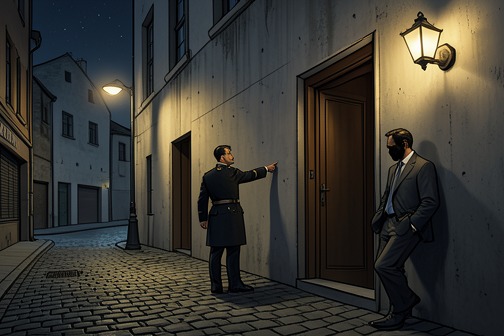
The [Luis Donaldo Colosio Assassination](entity:event-recall-event-60417a98d35b) is an offstage political crime whose importance lies in what it reveals about the reach of the [Federación](entity:organization-recall-organization-federaci-n-3cfed113330e) and the dangers of exposing its ties to government. The novel gives no account here of the attack itself; instead, it makes the assassination part of the hidden record that [Adán Barrera](entity:character-recall-character-ad-n-barrera-0383f92d92cf) can use to threaten officials and challenge the boundary between criminal power and the state.
## Political Setting
The assassination belongs to a story in which political influence is built through money, protection, and carefully arranged exchanges. At a meeting with [García Abrego](entity:character-recall-character-garc-a-abrego-f750b0a7673d), Adán Barrera describes [Guadalajara](entity:location-recall-location-guadalajara-1fbbdc6cee32) as a safe base from which to serve the Federación, offering to make his friends and protection available in return for a fee. The arrangement is more than a local business deal: it gives the organization a role in structuring political and commercial security.
The reach of that power becomes clearest in the account of the 1988 election. Four years before the later confrontation over Adán Barrera’s secrets, the opposition candidate Cuauhtémoc Cárdenas appeared poised to defeat the [Institutional Revolutionary Party](entity:organization-recall-organization-6aa2664a0c48). The computers counting the votes then malfunctioned, and the election was stolen with the Federación’s help. When [Tío](entity:character-recall-character-t-o-00e2ebb81c20) later refers to money and another contribution, Adán understands that the unspoken part of the bargain was the organization’s assistance in fixing the result. The novel thus places political violence within a wider pattern of influence over elections and government, without making every concealed crime identical or interchangeable.
## A Crime Held in Reserve
The assassination is not reconstructed as a scene. Its presence emerges through the difference between the evidence Adán has copied and the knowledge he keeps to himself. The contents of [Juan Parada](entity:character-recall-character-juan-parada-55ccee69ce7f)’s briefcase, stored in a Grand Cayman safe-deposit box, include evidence that could bring down two governments: records concerning [Operation Cerberus](entity:event-recall-event-operation-cerberus-876574b88d74), the Federación’s cooperation with the Americans in the [Contras](entity:organization-recall-organization-contras-13547523c881)’ drugs-for-arms operation, [Operation Red Mist](entity:event-recall-event-operation-red-mist-6641351496e7), and assassinations of left-wing figures in Latin America. They also include evidence that two officials were assassinated to fix Mexican presidential elections and proof of [Mexico City](entity:location-recall-location-mexico-city-78f19f654410)’s active partnership with the Federación.
Separately, Adán knows about the Luis Donaldo Colosio Assassination. The narrative distinguishes this knowledge from the briefcase’s documented evidence about two officials killed to fix elections; it does not establish here that Colosio was one of those officials or specify who ordered his death. That separation matters: Adán’s power derives not just from one file, but from the combination of documentary evidence and information he carries in his own memory.
## Political Violence and Secret Operations
The election crime sits within a larger landscape of covert action. Operation Red Mist coordinates operations to neutralize left-wing movements across Latin America, distributing intelligence and assets among right-wing militias, their drug-lord sponsors, army officers, troops, intelligence agencies, police forces, and the Church. The operation’s sprawling scale makes it difficult to separate official policy from the violence of its partners. The briefcase’s evidence of political assassinations therefore points beyond individual acts: it implicates a system in which state and criminal actors can cooperate while the coordination itself remains concealed.
The novel also shows how claims of national security can authorize clandestine measures. [John Hobbs](entity:character-recall-character-john-hobbs-aa4c4c1db101) describes [Nicaragua](entity:location-recall-location-fdd3ef235620) as a strategic threat and insists that the secret operation [Cerberus](entity:concept-recall-concept-cerberus-bff84c150df6) comes from the highest authority in the country. Later, Hobbs regards Mexican insurgency as a danger and supports military equipment being transferred to the [Mexican Army](entity:organization-recall-organization-86a9a46dbc81) under the public cover of the [War on Drugs](entity:expression-recall-expression-war-on-drugs-a87c72b6c1eb). These episodes do not identify the perpetrators of Colosio’s assassination, but they establish the political climate in which covert violence and public policy repeatedly overlap.
## Exposure as Leverage
Adán’s knowledge becomes a bargaining weapon when he confronts [Art Keller](entity:character-recall-character-art-keller-31aa2337649c). He warns that, unless they reach a satisfactory arrangement within thirty-six hours, he will send tapes and documents to a Senate subcommittee. The threat draws together the copied records and what he knows about the Colosio assassination, as well as Keller’s perjury before the congressional committee investigating Cerberus. Adán accepts that he may end up in federal prison, but points out that Keller could be imprisoned alongside him.
The assassination’s narrative force comes from this delayed disclosure rather than a dramatization of its violence. It is one part of a concealed political history that Adán can make public, and its mention turns the conflict between Adán and Keller into a struggle over who can expose whom. The event remains unresolved in the account: its specific circumstances and responsibility are not supplied, while its existence as dangerous knowledge is enough to threaten both political and law-enforcement power.
Event 61
Adán Barrera's Hospital Arrest
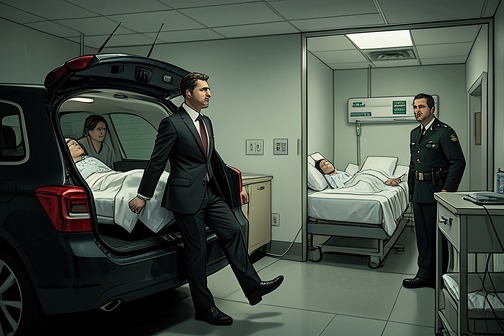
[Adán Barrera's Hospital Arrest](entity:event-recall-event-44a3ce44cf2a) is the covert capture of [Adán Barrera](entity:character-recall-character-ad-n-barrera-0383f92d92cf) by [Art Keller](entity:character-recall-character-art-keller-31aa2337649c) during Adán’s attempt to reach his daughter in a hospital. The scene brings the novel’s political scale down to a family crisis: Adán crosses a guarded international border for a personal reason, only to find that the hospital room has become the setting for his arrest.
## Political Power and the Stakes
The capture takes place against a history in which the [Federación](entity:organization-recall-organization-federaci-n-3cfed113330e) has built power not only through drug trafficking but through its ability to shape political and economic outcomes. Earlier, [García Abrego](entity:character-recall-character-garc-a-abrego-f750b0a7673d) questions Adán’s growing influence, and Adán answers by describing the Federación’s protection as an arrangement he can extend to others. The exchange suggests a system in which protection, friendship, and payment are bound together, while Adán’s authority is already taking shape through position rather than a formal title.
The organization’s political reach is made explicit in the account of the 1988 election. The Federación had helped the [Institutional Revolutionary Party](entity:organization-recall-organization-6aa2664a0c48) retain power when the opposition candidate Cárdenas seemed likely to win; the vote-counting computers then malfunctioned. The episode places Adán’s later arrest within a conflict in which criminal power and government authority have become difficult to separate. The capture is not simply the pursuit of one trafficker: it occurs in a world where the organization has helped influence the state that is supposed to contain it.
The Federación’s financial power further raises the stakes. After the new Mexican president took office on December 1, [1994](entity:time-recall-time-1994-2c6f52c72808), brokerage houses controlled by the organization bought government tesobonos. The following week, the cartels withdrew capital from the national bank, helping force a 50 percent devaluation of the peso; the Federación then cashed in its bonds and profited from the economic collapse. Adán later agreed to return narco-dollars to [Mexico](entity:location-recall-location-f1c6a91e03ea) in exchange for a favorable trade environment. These details establish the scale of the power he carries into the hospital scene: an arrest that appears intimate and quiet comes amid a contest over political institutions, national finances, and enforcement.
## The Border Crossing
Adán’s immediate purpose is to see his daughter. He resolves to arrive that night, or by the following morning at the latest, despite the warning that she may not recognize him. His answer is that he will know he was there. The distinction matters: his decision is driven by what the visit means to him, not by any assurance that his daughter will understand it.
Twelve hours later, Adán waits in a penthouse overlooking the [San Ysidro border crossing](entity:location-recall-location-37cfca14156f). Through nightscope binoculars, he watches for two arrangements to coincide: a bribed guard on the Mexican side and a bribed agent on the American side must both come on duty. The crossing is planned for ten o’clock, but Adán intends to make the run even if the timing fails. His passage therefore depends on corruption on both sides of the border, and on the narrow interval when the two compromised officials can make it possible.
The border has already been established as the Federación’s central economic asset. Art Keller’s reflections on [Operation Condor](entity:event-recall-event-operation-condor-b497472664f4) describe how an effort to suppress the Sinaloan trade instead dispersed it, while traffickers recognized the value of moving contraband across the two-thousand-mile border with the [United States](entity:location-recall-location-united-states-2f533bc8d0b9). Their arrangement with the [Medellín](entity:location-recall-location-493cee6c8fc5) and [Cali](entity:location-recall-location-cali-2672b6865915) cartels made Mexican operators responsible for delivering cocaine safely into the United States, earning payment by the kilo. In Adán’s hospital journey, the border appears in a different but related role: not as a route for the organization’s business, but as an obstacle he attempts to cross through purchased access.
## The Hospital Capture
After crossing, Adán gets into a car with a gang member, who gives him directions from a dirt road to the freeway. Fifty minutes later, he arrives at the hospital. He crosses the parking lot expecting that agents may emerge and order him to the ground, but no one appears. He enters the building and learns that his daughter’s room is on the eighth floor. The quiet approach allows the scene to hold two possibilities at once: Adán has made it to the hospital, yet he remains alert to the possibility that the journey is a trap.
[Lucía](entity:character-recall-character-luc-a-af6dd0c3b873) is waiting on a hallway bench, bent forward and crying. Adán puts his arms around her and asks whether he is too late. She shakes her head without speaking. He asks to see his daughter and opens the room door. Art Keller is there with a gun aimed at him. Art tells him that his daughter is fine; Adán then feels a sharp sting through his shirt, and his consciousness gives way.
Art and [Shag Wallace](entity:character-recall-character-shag-wallace-8747102d6785) remove the unconscious Adán on a gurney and take him to the morgue. They place him in a body bag, strap him back onto the gurney, and roll him out to a van painted with the name Hidalgo Funeral Home. Forty-five minutes later they have reached a secure location. The method turns the hospital’s ordinary equipment and a funeral vehicle into cover for a clandestine transfer. The arrest is carried out not as a public confrontation but as a deception that moves Adán from the room where he hoped to see his daughter into the custody of his pursuers.
## Meaning and Consequence
The decisive reversal comes when Adán reaches the room: the apparent purpose of his journey, seeing his daughter, is also the moment Keller has chosen to capture him. The revelation that she is fine removes the fear that he has arrived too late, but it does not restore the visit he sought. Instead, the reassurance precedes his incapacitation and removal. Family devotion has brought Adán across the border and into Keller’s reach.
The scene also contrasts the scale of Adán’s power with the vulnerability of his position. He has presided over an organization capable of exploiting government bonds, influencing political appointments, and demanding favorable conditions from the president. Yet at the hospital, his ability to command institutions offers no protection. He depends on bribed individuals to cross the border, and Art and Shag can move him out of the building under the guise of a funeral service. The arrest thus marks a personal defeat while exposing the limits of the power Adán has accumulated: the federation can manipulate systems, but its patrón can still be isolated and taken when he leaves those systems behind for a family visit.
Event 62
Death of Gloria Barrera
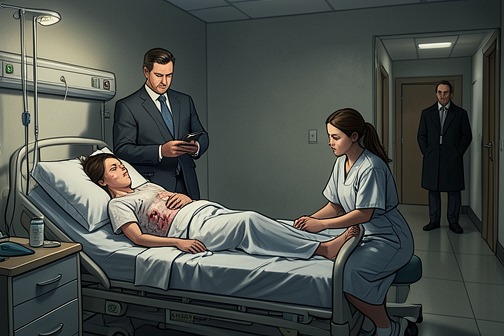
[Gloria Barrera](entity:character-recall-character-gloria-barrera-f41e6841080f)’s death exposes the limit of [Don Adán Barrera](entity:character-recall-character-f8d17a8b49ec)’s power: he can command a criminal empire, but he cannot cure his daughter or be beside her when she dies. Her fatal congenital illness, her father’s absence, and his conviction that [Art Keller](entity:character-recall-character-art-keller-31aa2337649c) is to blame make the loss both intimate and entangled with the violence of his larger conflict.
## Illness and the Search for Care
[Gloria](entity:character-recall-character-gloria-74d2fbb2cafc) was born with cystic lymphangioma, a deformity affecting her head, face, and throat that would eventually prove fatal and could not be cured. The condition made her future precarious from birth, beyond the reach of the resources her father could command. The contrast is stark: Adán’s millions and influence could not buy her a normal life.
A little over four years before her death, Gloria’s health deteriorated. With Adán’s approval, his then-wife, [Lucía](entity:character-recall-character-luc-a-af6dd0c3b873), took their twelve-year-old daughter to [San Diego](entity:location-recall-location-san-diego-8089c46f5361), where the [Scripps clinics](entity:location-recall-location-fe7f1649584c) housed leading specialists. When Lucía called Adán at his safe house in [Mexico](entity:location-recall-location-f1c6a91e03ea), she told him that Gloria might have only days, perhaps hours, left. He crossed the border concealed in the trunk of a specially outfitted car, smuggling himself as he might smuggle his own product. The journey underscores both his determination to reach his daughter and the criminal conditions that shape even this act of family devotion.
## Death and Absence
When [Ben Tompkins](entity:character-recall-character-ben-tompkins-210528156ce3) tells Adán that the news concerns Gloria, Adán already knows what is coming. The confirmation is devastating: Gloria has died. She died in her sleep, her breathing cut off by the weight of her heavy, misshapen head. The manner of her death is inseparable from the condition she had lived with since birth, and from the fact that her father was not there.
Adán’s thought fixes on that absence: Gloria died without him beside her. Her death is therefore not only the loss of his daughter but also an irreparable failure of presence. His earlier effort to cross the border could not undo the circumstances that kept him from her at the end.
## Grief and Its Consequences
The news follows another family loss: Adán thinks of his brother, then his daughter. The juxtaposition makes Gloria’s death part of a mounting personal bereavement, rather than an isolated tragedy. Yet Adán directs his grief outward as well as inward. He blames Art Keller, binding his daughter’s death to the antagonism that already structures his life.
The funeral is to be held in San Diego, and Adán declares that he will go. That decision gives the immediate aftermath a concrete destination, but it does not resolve the loss: the journey he plans comes after Gloria’s death, when the chance to be with her in life has passed. The episode turns the limits of Adán’s power into a defining fact of his grief, while showing how readily personal suffering becomes another grievance in his conflict with Keller.
Event 63
Capture of Adán Barrera
[Adán Barrera](entity:character-recall-character-ad-n-barrera-0383f92d92cf)’s capture occurs at the intersection of private grief and public power: he crosses the border to reach his dying daughter, only to find [Art Keller](entity:character-recall-character-art-keller-31aa2337649c) waiting to take him. The scene reverses the scale on which Adán has built his authority. A man who helped shape the [Federación](entity:organization-recall-organization-federaci-n-3cfed113330e) and bargain with the Mexican government is vulnerable when family draws him across a border he has spent years evading.
## Power Built Beyond the Border
Adán’s capture is framed by the political and criminal order he has helped create. At a meeting with [García Abrego](entity:character-recall-character-garc-a-abrego-f750b0a7673d), Adán’s uncle [Tío](entity:character-recall-character-t-o-00e2ebb81c20) describes a system in which Barrera divides territory and takes an additional share for himself. Adán recognizes the significance: the name Federación has now been put to the arrangement, with Barrera positioned at its head even without a formal title. He offers García Abrego friendship and protection in exchange for accepting the structure, while treating protection as something for which payment is due. Power here is not simply a title or a territory; it is a network of obligations that Adán can extend to others.
That network reaches into national politics. The Federación helped the sitting party steal the 1988 election after the opposition candidate appeared likely to win; the vote-counting computers then malfunctioned. Later, after a new president took office on December 1, [1994](entity:time-recall-time-1994-2c6f52c72808), brokerage houses controlled by the Federación bought government bonds. The cartels withdrew capital from the national bank, the peso was devalued by half, and the organization cashed in its bonds as the economy collapsed. Adán agreed to bring drug money back into [Mexico](entity:location-recall-location-f1c6a91e03ea) only for a favorable environment in which the government would not seriously act against the cartels. This history does not cause the hospital encounter, but it sharpens its reversal: Adán can bargain over political and economic conditions, yet cannot buy his daughter a healthy life or control the moment he must cross into Keller’s reach.
## The Journey to [Gloria](entity:character-recall-character-gloria-74d2fbb2cafc)
Gloria was born with cystic lymphangioma, an incurable condition affecting her head, face, and throat that would eventually prove fatal. A little more than four years before the later prison scene, her health worsened. With Adán’s approval, [Lucía](entity:character-recall-character-luc-a-af6dd0c3b873), his wife at the time and an American citizen, took their twelve-year-old daughter to [San Diego](entity:location-recall-location-san-diego-8089c46f5361) for care at the [Scripps clinics](entity:location-recall-location-fe7f1649584c), where specialists treated her. A month later, Lucía called Adán at his safe house in Mexico and told him that Gloria might have only days, perhaps hours, to live.
The news turns the border from a line Adán’s organization could manage into an obstacle he must personally cross. He smuggles himself into the [United States](entity:location-recall-location-united-states-2f533bc8d0b9) in the trunk of a specially outfitted car, an inversion of his usual role in the drug trade: rather than moving his product across the border, he hides himself in a vehicle to reach his child. His power and wealth have not made him able to change Gloria’s prognosis. They have only made possible a clandestine journey to her bedside.
## Keller’s Interception
Art Keller is waiting in the hospital parking lot. The encounter is brief and stark. Adán’s first concern is his daughter; Keller tells him that she is fine, then jabs a needle into his neck. Adán loses consciousness. The sequence makes the capture a personal betrayal as well as a law-enforcement action: the man who intercepts him is not a stranger but someone with whom he had once been friends.
The reassurance about Gloria belongs to the instant before Adán is rendered helpless. In the later recollection, that assurance sits beside the knowledge that she is dead and that the condition she was born with could not be cured. The scene therefore holds two kinds of uncertainty in tension: Adán crosses the border because he has been told time may be running out, while Keller’s words briefly offer hope before the capture interrupts the journey. The account does not present Adán as having chosen a political bargain or a cartel obligation over his family at this moment; it shows him responding to an urgent call from Lucía.
## Custody and the Reversal of Distance
By [2004](entity:time-recall-time-2004-6a1ee508d408), Adán is in protective custody at a federal facility in downtown San Diego. For more than a year he has spent twenty-three hours a day in a windowless, twelve-by-six-foot cell in the special housing unit on the top floor. A horn wakes him at six in the morning; rather than joining the general population for breakfast, he receives cold cereal and weak orange juice through a slot in his door. He does not mind missing the other prisoners’ company, because their conversation seems foolish to him and the danger is real: people in [Tijuana](entity:location-recall-location-tijuana-47bb9d0aad74), elsewhere in Mexico, and in the United States want him dead.
The imagined view from the cell makes the capture’s geography part of its consequence. If the cell had a window, Adán could see the brown hills of Tijuana, the city he once ruled, only a few miles away across land and closer across the water. Yet proximity offers no return to his former life. His position as the head of a far-reaching organization has become confinement in a small cell on the other side of the border he crossed for Gloria. The arrest does not erase the political reach he once possessed, but it reduces that reach to a memory measured against a locked door, a daily routine, and the nearby city he can no longer command.
Event 64
Adán Barrera's Offer to Cooperate for Funeral Attendance
[Adán Barrera](entity:character-recall-character-ad-n-barrera-0383f92d92cf)’s offer to cooperate for funeral attendance is a desperate bargain that places his daughter [Gloria Barrera](entity:character-recall-character-gloria-barrera-f41e6841080f)’s funeral above the protections ordinarily built into a cartel informant deal. With the funeral only days away, he rejects the chance to fight for permission in court and instead tells [Ben Tompkins](entity:character-recall-character-ben-tompkins-210528156ce3) to promise that he will give authorities everything they want. Tompkins recognizes the choice as potentially suicidal: unlike his other clients’ carefully limited, cartel-prearranged disclosures, this offer appears to put Adán’s entire position at risk.
## The Deadline and the Proposed Legal Challenge
The decision comes under a sharply narrowing deadline. It is Friday afternoon, and [Gloria](entity:character-recall-character-gloria-74d2fbb2cafc)’s funeral is scheduled for Sunday. Tompkins argues that the request can be taken before a judge; he says he can reach one that night and names Johnny Hoffman as a judge who would issue an order. He also proposes offering to pay for federal marshals and the expense of security. His plan is to seek legal protection and arrange the practical safeguards needed for Adán to attend, rather than concede the terms being sought from him.
Adán refuses that course. He says there is no time, and then makes the deadline decisive: he cannot take the chance of waiting for a court order. The funeral’s imminence, rather than an expressed change in his view of the law or his attorney’s ability, governs his choice. He instructs Tompkins to tell the other side that he will talk, converting a request for permission into an offer of cooperation.
## The Terms and Their Risk
The exchange Adán proposes is stark: if he is allowed to attend Gloria’s funeral, he will give the authorities everything they want. The terms are tied directly to attendance; the evidence does not describe a broader negotiation over sentence, immunity, or the scope of any testimony. What makes the offer exceptional is its breadth. Adán does not describe a narrow disclosure or specify information that can be safely surrendered. He offers everything in return for being present at the funeral.
Tompkins’s reaction explains why the offer represents a break with his professional experience. He has had clients inform before, even for lesser sentences, and says that doing so is standard practice. But those clients’ information was carefully arranged in advance with the cartels to minimize damage. Adán’s proposal lacks that protective coordination. Tompkins blanches and begs him not to proceed, insisting that they can win in court. The narration characterizes the proposed arrangement as a death sentence and a suicide pact: not because Adán states that he intends to die, but because an unrestricted disclosure could expose him to consequences his previous strategy would have contained.
## A Farewell Set Against the Bargain
Adán’s insistence that the funeral is on Sunday gives the offer its personal urgency. The account places the decision in the short interval between Friday afternoon and the service, and presents his willingness to risk everything as the price he is prepared to pay for attending his daughter’s funeral. Tompkins’s proposed legal route would preserve the possibility of resisting the demand while still seeking attendance; Adán will not accept the uncertainty of waiting for that route to work.
The preparations surrounding the funeral make the scale of the occasion visible. Fifty thousand red roses fill [St. Joseph’s Cathedral](entity:location-recall-location-2d23177141c7) in downtown [San Diego](entity:location-recall-location-san-diego-8089c46f5361), a few blocks from the correctional center. Adán orders them through Tompkins, who arranges the money through clean bank accounts in [La Jolla](entity:location-recall-location-7f22f3d6e004). Thousands more flowers, in bouquets and wreaths, arrive from major narcos in [Mexico](entity:location-recall-location-f1c6a91e03ea) and line the cathedral steps. These details place the private urgency of Adán’s bargain amid an elaborate public display of mourning and cartel power. The offer’s decisive significance lies in the contrast: he can command an immense floral tribute, but securing his own presence at the funeral may require him to surrender the safeguards that normally make cooperation survivable.
Event 65
Funeral of Gloria Barrera
[Gloria Barrera](entity:character-recall-character-gloria-barrera-f41e6841080f)’s funeral turns a private bereavement into a public measure of [Adán Barrera](entity:character-recall-character-ad-n-barrera-0383f92d92cf)’s losses and remaining power. Held under federal guard in [San Diego](entity:location-recall-location-san-diego-8089c46f5361), the service brings together an almost empty cathedral, a conspicuous abundance of flowers, and a final change in Adán’s purpose: after watching his only child buried, he offers a cash reward for [Art Keller](entity:character-recall-character-art-keller-31aa2337649c)’s death.
## Flowers, Money, and Surveillance
Fifty thousand red roses fill [St. Joseph’s Cathedral](entity:location-recall-location-2d23177141c7), downtown and only a few blocks from the [Metropolitan Correctional Center, San Diego](entity:organization-recall-organization-metropolitan-cor-a97c1b7510d9). Adán arranged the display through [Ben Tompkins](entity:character-recall-character-ben-tompkins-210528156ce3), who obtained the money through clean bank accounts in [La Jolla](entity:location-recall-location-7f22f3d6e004). The flowers make grief visible on a scale associated with Adán’s wealth, but their arrangement also exposes that wealth to scrutiny. Thousands of additional bouquets and wreaths, sent by major drug traffickers in [Mexico](entity:location-recall-location-f1c6a91e03ea), line the cathedral steps.
The [Drug Enforcement Administration](entity:organization-recall-organization-drug-enforcement-85b22b2a9f98) is present among the flowers. Its agents walk past the arrangements, recording who sent each one. They also track the hundreds of thousands of dollars contributed in [Gloria](entity:character-recall-character-gloria-74d2fbb2cafc)’s name to a foundation researching cystic lymphangioma. The gifts therefore serve two purposes at once: they honor Gloria and make the reach of Adán’s network legible to investigators. The funeral’s public gestures of mourning become evidence that can be catalogued, from the senders’ identities to the money given in his daughter’s name.
Inside, the contrast is sharper still. The cathedral is crowded with flowers but largely empty of mourners. Adán imagines how different the turnout would be in Mexico, where hundreds might come to pay their respects. Here, most of his family is dead, while those still living cannot cross the border without risking arrest. His sister Elena calls to express grief and support, and regrets that a U.S. indictment prevents her from attending. Other friends, business associates, and politicians on both sides of the border stay away rather than risk being photographed by the agents. Their absence is not presented as indifference alone; the surveillance around the funeral has made attendance consequential.
## A Small Congregation and a Broken Marriage
Most of the other mourners are women connected to the drug trade who are U.S. citizens and already known to the Drug Enforcement Administration. They have no reason to fear arrest simply for attending. They bring their children to school in San Diego, shop there at [Christmas](entity:time-recall-time-0cffe7da2c4d), take spa days, and vacation at beach resorts in La Jolla and [Del Mar](entity:location-recall-location-947757685410). At the cathedral, they walk past the agents in elegant black clothing. Some pass angrily; others stop, pose for photographs, and make sure the agents have spelled their names correctly. Their deliberate response turns the agents’ documentation into part of the funeral’s public scene.
[Lucía](entity:character-recall-character-luc-a-af6dd0c3b873)’s relatives—her parents, siblings, cousins, and a few friends—form another part of the small congregation. Lucía looks grief-stricken and frightened when she sees Adán. She has betrayed him to Art Keller to avoid prison for herself and to prevent Gloria from being taken by the state. She also knew that Adán would not have harmed his daughter’s mother. With Gloria dead, however, Lucía fears that this restraint no longer protects her. The possibility that she could disappear remains in her mind as she looks anxiously toward Adán.
Adán turns his face away and regards Lucía as dead to him. Yet his response is not an immediate threat. As the mourners leave, she glances at him and lowers her head; unable to speak with her directly, he decides to have Ben Tompkins tell her that she is in no danger. He is willing to let her live out her life, but not to continue supporting her. She may keep the La Jolla house if the Treasury Department does not take it. His decision separates the guarantee of her safety from the material support that had been her lifeline, making the betrayal a permanent rupture rather than an occasion for reconciliation.
## The Funeral Under Guard
Adán sits in the third row, flanked by five U.S. marshals. His black suit was bought by Ben Tompkins at Nordstrom, where Adán’s measurements are already on file. His hands are cuffed in front of him, but he is not shackled; he can kneel, stand, and sit as the Mass requires while the bishop speaks. The details register the limits of his situation without removing his place in the ceremony: he is a prisoner, yet the service allows him to perform the ordinary gestures of a father attending his daughter’s funeral.
When the Mass ends, Adán waits for the other mourners to file out. He is not permitted to speak to anyone except the marshals and his lawyer. The service’s formal completion does not end his participation: the marshals escort him to a waiting limousine, which follows Lucía’s car behind the hearse to [El Camino Memorial Park](entity:location-recall-location-91f4f35d8771) in Sorrento Valley. At the graveside, they allow him to bend down, scoop up a handful of dirt, and throw it onto Gloria’s casket. With his hands still cuffed, the small act of burial becomes the clearest expression of his grief in the scene.
## Grief Becomes a Vow of Revenge
At the grave, the narrative marks the funeral as an ending: for Adán, everything is over, and the future has collapsed into what has already happened. He has lost his only child; his family is diminished, his wife has betrayed him, and his presence at the burial has been permitted only within the restrictions of custody. The funeral does not restore the family or the authority that once surrounded him. It leaves him with memory and with the ability to issue an order through Ben Tompkins.
Straightening from Gloria’s grave, Adán quietly sets a price of two million dollars in cash on the man who kills Art Keller. The offer follows the burial, not as a separate political calculation but as the immediate consequence the scene gives to his loss. The flowers and donations have displayed the resources still connected to Adán; the last words redirect those resources toward revenge. The service closes on this reversal: the father who has just prayed over his daughter’s grave turns from mourning toward a new act of violence, while Keller becomes the target of a reward issued in the presence of the dead.
Event 66
Bounty on Art Keller
[Bounty on Art Keller](entity:event-recall-event-bounty-on-art-keller-5c41cacea2fe) is the final act of [Don Adán Barrera](entity:character-recall-character-f8d17a8b49ec)’s grief at his daughter’s grave: as marshals escort him from [Gloria Barrera](entity:character-recall-character-gloria-barrera-f41e6841080f)’s funeral, he offers two million dollars in cash to the person who kills [Art Keller](entity:character-recall-character-art-keller-31aa2337649c). The announcement transforms private bereavement into a public danger and leaves Adán’s conflict with Keller pointed toward the future he can still shape through violence.
## The Bounty at the Grave
After [Gloria](entity:character-recall-character-gloria-74d2fbb2cafc)’s funeral, the marshals take Don Adán Barrera to [El Camino Memorial Park](entity:location-recall-location-91f4f35d8771), where he watches his only child being buried. Though handcuffed, he raises his hands in prayer. The marshals allow him to stoop, gather a handful of dirt, and toss it onto Gloria’s casket. The small gesture marks his last physical farewell before he turns to [Ben Tompkins](entity:character-recall-character-ben-tompkins-210528156ce3) with the offer.
## A Threat Against Art Keller
Adán tells Tompkins that he will pay two million dollars in cash to the person who kills Art Keller. The target is explicit, and so is the form of the reward: the announcement makes Adán’s enmity with Keller an active threat rather than a private grievance. The scene does not establish who will accept the offer or what follows from it; it ends on the bounty itself.
## Grief and the Past
The announcement follows Adán’s recognition that, for a man who has lost his only child, the future consists only of what has already been. Against that sense of finality, the bounty is a last consequential action, directing his remaining power toward Keller. The movement from prayer and earth scattered on a coffin to a cash reward for killing gives the ending its stark reversal: mourning does not close the conflict, but carries it forward.